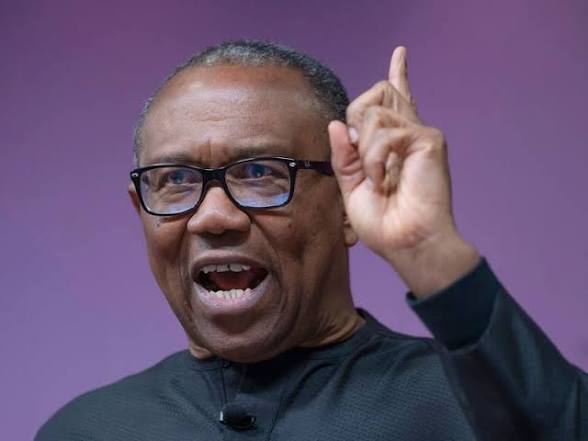
Presidential candidate of the National Democratic Congress (NDC), Mr Peter Obi, has reiterated that national unity and human capital development will form the cornerstone of his leadership agenda.
Obi made the statement on Wednesday while outlining his vision for what he described as a productive and prosperous Nigeria in a post shared on his official X (formerly Twitter) handle.
He said his political ambition is driven by a commitment to rebuild Nigeria through inclusion, social justice, equity, and national cohesion.
According to him, his administration would prioritise reforms capable of improving the quality of life of citizens and restoring public confidence in governance.
Obi explained that education and healthcare would serve as the foundation of his human capital development strategy if elected president.
He described human capital as a critical national asset required for economic growth, productivity, and effective public service delivery.
He added that Nigeria must invest heavily in its youthful population to unlock long-term demographic advantages.
As part of his proposed reforms, Obi said a special task force would be created to tackle the problem of out-of-school children across the country.
He also stressed the need to expand Technical and Vocational Education and Training (TVET) to support industrial growth and job creation.
According to him, Nigeria must transition from a consumption-based economy to a production-driven one supported by skilled manpower and industrial capacity.
Obi proposed linking agriculture, value addition, and industrial parks across geopolitical zones to strengthen local production and economic diversification.
He further advocated stronger collaboration between government, private sector actors, and social enterprises to improve vocational training and apprenticeship systems.
He referenced models similar to Germany’s dual education system as a possible framework for skills development in Nigeria.
The presidential candidate also expressed concern about unemployment levels and the migration of skilled labour due to limited opportunities at home.
He said addressing these challenges is essential for national development and economic sustainability.
Obi added that character and civic education would play a key role in shaping values such as trust, responsibility, and national identity.
He described such values as essential for building leadership capacity and strengthening governance systems.
He concluded by reaffirming his belief in a “New Nigeria,” anchored on unity, productivity, and inclusive development.