The Federal Government has called on more Nigerian businesses to participate in the ECOWAS Trade Liberalisation Scheme (ETLS), revealing that approximately 3,500 companies and 20,000 products have been registered under the regional trade initiative.
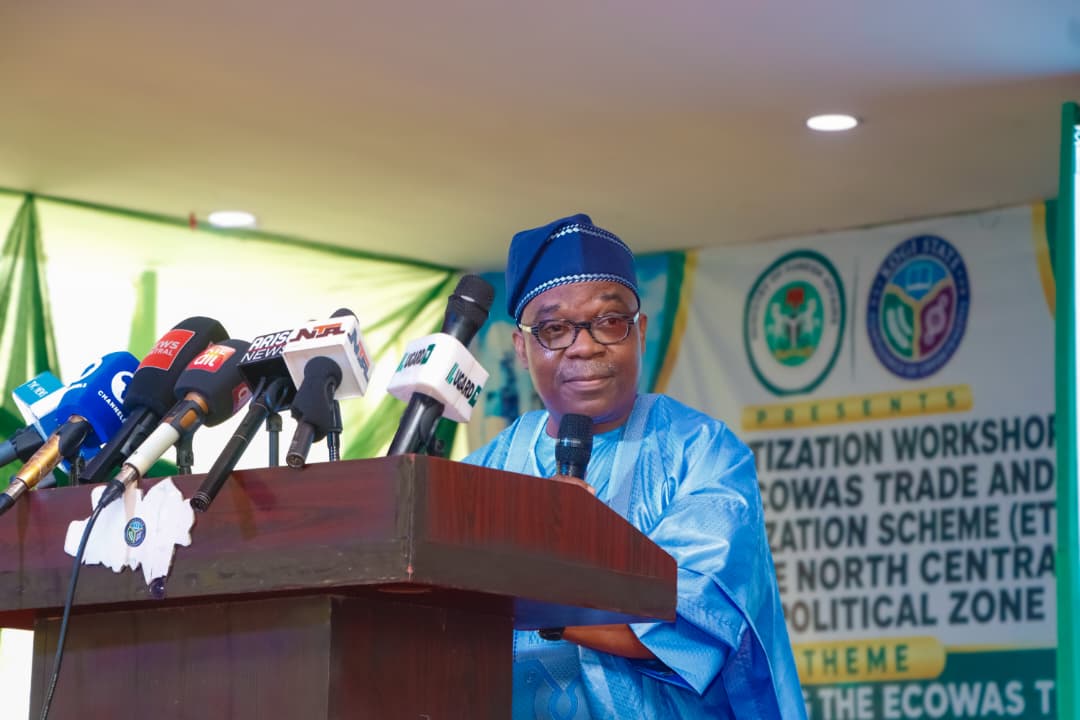
Minister of State for Foreign Affairs, Ambassador Sola Enikanolaiye, disclosed the figures on Monday, November 2, 2026, during a sensitisation workshop in Lokoja, Kogi State.
The workshop, organised by the ECOWAS National Unit of the Ministry of Foreign Affairs in collaboration with the Kogi State Government, focused on improving awareness of regional trade opportunities among businesses in North-Central Nigeria.
Its theme was *Harnessing the ECOWAS Trade Liberalisation Scheme to Promote Nigeria’s Intra-Regional Trade and Economic Growth*.
Nigeria Seeks More Businesses Under ECOWAS Trade Scheme
Enikanolaiye described the ETLS as an important mechanism for strengthening economic integration among West African countries.
He explained that the arrangement provides qualifying products originating from participating ECOWAS countries with preferential access to regional markets, including exemptions from customs duties and quotas.
Although about 3,500 Nigerian companies and 20,000 products had been registered, the minister said participation remained below the country’s economic potential.
He identified inadequate awareness and limited understanding of registration procedures as major barriers preventing businesses from fully benefiting from the scheme.
The minister encouraged Nigerian manufacturers, exporters and entrepreneurs to explore opportunities in regional markets, particularly through the processing of agricultural produce and other natural resources.
FG Targets Non-Oil Exports and Made-in-Nigeria Products
Enikanolaiye said greater participation in regional trade would support President Bola Tinubu’s economic priorities, including the expansion of non-oil exports and increased patronage of locally manufactured goods.
He linked the initiative to the Nigeria First policy, which seeks to strengthen domestic production and economic opportunities.
According to him, the workshop would help businesses understand product registration, rules of origin, certification requirements and other procedures necessary to access the ECOWAS market.
He also said stronger commercial relationships among West African countries could promote regional cooperation, stability and economic development.
Kogi Positions Itself as Trade and Industrial Hub
Kogi State Governor Ahmed Ododo reaffirmed his administration’s commitment to industrial development, investment promotion and regional economic integration.
Represented by Deputy Governor Joel Salifu, Ododo said the state’s location at the confluence of the Rivers Niger and Benue offered significant opportunities for trade and commerce.
He also highlighted Kogi’s agricultural resources, solid mineral deposits and road networks as advantages that could attract investment.
The governor identified the proposed Ajaokuta Free Trade Zone and Agro-Processing Zone as initiatives intended to strengthen industrial activity and local production.
He encouraged businesses to explore the ECOWAS market and assured prospective investors of the state government’s readiness to support projects that would create jobs and expand economic opportunities.
Kogi Seeks Support for Airport and International Market
Kogi State Secretary to the Government, Dr Folashade Ayoade, said the state was prepared to participate more actively in regional and international trade.
She identified the proposed international airport and ongoing Lokoja International Market project as infrastructure developments expected to improve commercial activities and market access.
Ayoade appealed to the Federal Government to support the completion of critical infrastructure projects in the state.
She also reiterated the administration’s commitment to providing a secure environment for businesses and investors.
Understanding the ECOWAS Trade Liberalisation Scheme
The ETLS is designed to facilitate trade among ECOWAS countries by reducing customs barriers for eligible goods produced within the region.
Businesses seeking preferential treatment must comply with applicable rules of origin, certification and other regulatory requirements.
The initiative provides potential opportunities for Nigerian producers to expand beyond the domestic market, although registration alone does not guarantee successful exports or eliminate all cross-border trading costs.
The Federal Government’s latest sensitisation campaign aims to improve business awareness and encourage more eligible companies to explore regional trade opportunities.