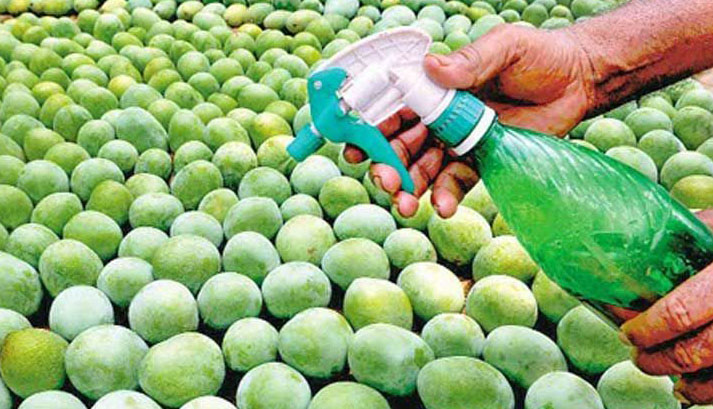
The National Agency for Food and Drug Administration and Control (NAFDAC) has intensified warnings against the use of unsafe chemicals to ripen fruits and the sale of adulterated food products in Nigeria’s South-East, citing potential risks to consumers.
NAFDAC officials in Anambra and Ebonyi states disclosed the measures on Monday, November 2, 2026, as health professionals called for improved food handling, stronger market surveillance and greater public awareness.
The warnings followed concerns about the use of calcium carbide for fruit ripening, unauthorised colouring agents in food products and improper processing or preservation of canned foods.
NAFDAC Threatens Sanctions Against Food Safety Violators
NAFDAC Coordinator in Anambra State, Dr Louis Madubuatta, said the agency would take enforcement action against traders who violated food safety regulations.
Speaking in Awka, Madubuatta explained that the agency had continued to educate vendors and consumers about the dangers of using unauthorised chemicals to accelerate fruit ripening.
He said public awareness campaigns were being conducted through text messages, mass media and other communication channels.
According to him, traders who ignored regulatory requirements after sensitisation could face sanctions.
Madubuatta also disclosed that NAFDAC was working with other government agencies to restrict the misuse of calcium carbide and other unsafe chemicals in food production and distribution.
Medical Expert Explains Risks of Calcium Carbide
A retired Director of Medical Services at Nnamdi Azikiwe University, Awka, Dr Emmanuel Umenweke, warned that the misuse of industrial-grade calcium carbide in fruit ripening could expose consumers to harmful contaminants.
He explained that some industrial-grade calcium carbide products could contain impurities associated with arsenic and phosphorus compounds.
According to him, exposure to unsafe substances could cause symptoms including nausea, vomiting, abdominal pain, diarrhoea and dizziness.
However, Umenweke cautioned against attributing kidney disease solely to chemically ripened fruits or adulterated canned foods without sufficient scientific evidence.
He noted that kidney disease has several possible causes and requires proper medical assessment.
The physician also distinguished between unsafe fruit-ripening practices and the appropriate use of ethylene, a recognised ripening agent when applied under suitable conditions.
Ebonyi NAFDAC Intensifies Market Surveillance
In Ebonyi State, NAFDAC Coordinator Emeka Orajiaka said the agency had strengthened monitoring of markets, shops and food distribution outlets.
He explained that routine inspections, product sampling, laboratory analysis and enforcement activities were being used to identify potentially unsafe food products.
Orajiaka said NAFDAC was working with market associations, fruit sellers, food distributors and other stakeholders to improve compliance with food safety regulations.
He also raised concerns about the use of unauthorised colouring agents, including Sudan III and certain azo dyes, to alter the appearance of palm oil.
According to him, the agency was collaborating with the Ebonyi State Government, environmental health officers and other relevant institutions to strengthen food safety monitoring.
Traders Acknowledge Use of Artificial Fruit-Ripening Chemicals
A fruit seller at the International Market in Abakaliki, Jude Nwokedi, acknowledged that some traders used calcium carbide to accelerate fruit ripening.
He mentioned fruits such as bananas, mangoes and oranges among produce that traders sometimes attempted to make appear ripe more quickly.
However, the colour or appearance of fruit alone cannot reliably establish whether an unsafe chemical has been used.
A nutritionist, Nkechinyere Ekwe, emphasised the importance of fruits as sources of essential nutrients while advising consumers to avoid produce suspected of contamination with harmful chemicals.
Enugu Doctor Warns Against Improperly Preserved Canned Foods
In Enugu State, medical practitioner Dr Chikezie Obasi warned that poorly processed or preserved canned foods could expose consumers to serious foodborne illnesses.
He explained that inadequate processing and storage could create conditions in which harmful microorganisms survive or grow.
Obasi specifically highlighted Clostridium botulinum a bacterium capable of producing a dangerous toxin associated with botulism.
He urged consumers to avoid canned foods with swollen containers, leaks, damaged seals or other signs of compromised packaging.
He also advised buyers to check expiry dates and follow manufacturers’ storage and preparation instructions.
Consumers Urged to Report Suspected Food Adulteration
NAFDAC officials encouraged consumers to purchase food from reliable sellers, inspect packaging and report suspected food adulteration to appropriate authorities.
The agency said cooperation with market operators, government institutions and consumers would remain important in identifying unsafe products and preventing their circulation.
Health professionals also stressed that not all artificially ripened fruits are unsafe, but the use of unauthorised or contaminated chemicals presents avoidable health risks.
The warnings highlight the need for stronger food safety compliance, reliable testing and informed consumer choices across the South-East.