


The European Union (EU) and the International Press Centre (IPC) have warned that artificial intelligence-generated deepfakes, fabricated election information and coordinated disinformation could undermine public confidence in Nigeria’s 2027 general elections.
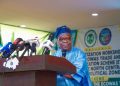
The warning came on Monday, November 2, 2026, at the opening of a two-day Summit on Electoral Information Integrity in Abuja.
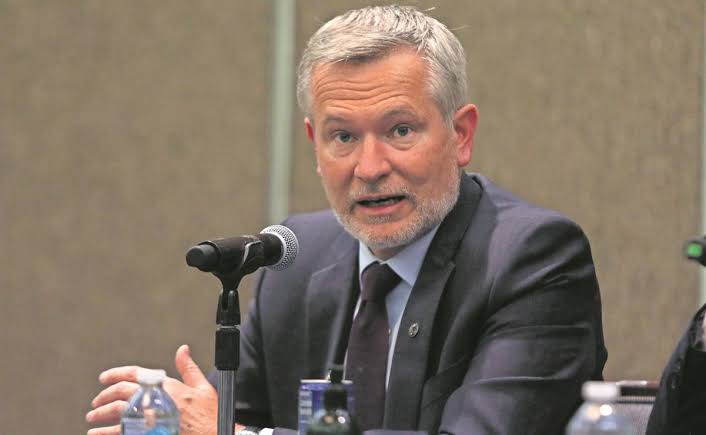
EU Ambassador to Nigeria and ECOWAS Gautier Mignot and IPC Executive Director Dr Lanre Arogundade called for early coordination among electoral authorities, journalists, technology companies and civil society organisations to protect voters from misleading information.
The summit, themed Beyond the Ballot: Safeguarding Electoral Information Integrity in the Age of AI, brought together stakeholders to discuss emerging threats to credible election communication.
EU Warns False Election Information Can Damage Public Trust
Mignot said election integrity involved more than protecting ballot papers and voting systems.
According to him, false announcements about polling locations, fabricated election results and manipulated political messages could confuse voters and undermine confidence in democratic institutions.
He warned that misinformation could spread rapidly before electoral authorities and independent fact-checkers had an opportunity to correct it.
The ambassador said protecting the information environment was essential to ensuring that citizens could make informed electoral choices.
He urged relevant institutions to communicate promptly, accurately and transparently throughout the election period.
Artificial Intelligence Creates New Electoral Risks
Mignot acknowledged that artificial intelligence could improve communication through translation, accessibility tools and other digital services.
However, he warned that the technology could also make it easier to produce convincing false audio, images and videos.
He explained that electoral disinformation did not always require sophisticated technology, as ordinary misleading messages could also cause significant harm.
The ambassador therefore urged stakeholders to focus on verifying the authenticity of information rather than relying exclusively on detecting AI-generated content.
He also highlighted the need to strengthen fact-checking capacity in Nigerian languages so that credible election information could reach more communities.
EU Identifies Three Priorities Ahead of 2027 Elections
Mignot outlined three areas requiring attention before the next general elections.
The first was early preparation, including the establishment of verification contacts, clear institutional responsibilities and procedures for correcting false information.
The second was stronger cooperation among Nigerian institutions, international partners, journalists, fact-checkers and technology platforms.
The third was the protection of democratic rights while responding to harmful information manipulation.
He stressed that journalists must retain editorial independence and that fact-checking organisations should be free to reach evidence-based conclusions.
Mignot also urged the Independent National Electoral Commission (INEC) to communicate within its legal responsibilities, while technology platforms should explain their content decisions and provide appropriate review mechanisms.
Fighting Disinformation Must Not Silence Political Criticism
The EU ambassador cautioned against using anti-disinformation measures to restrict legitimate political expression.
He said criticism of public institutions, investigative reporting and peaceful political disagreement should not automatically be classified as misinformation.
According to him, efforts to protect electoral information must respect freedom of expression and other democratic rights.
Mignot reaffirmed the EU’s commitment to supporting Nigerian-led initiatives without attempting to determine political outcomes.
IPC Raises Concerns Over Social Media Misinformation
Speaking at the summit, Arogundade said Nigeria’s electoral information environment had changed considerably since the 2023 general elections.
Citing findings attributed to the Nigeria Fact-Checkers Coalition, he said 63 per cent of the presidential and National Assembly election claims reviewed in 2023 were classified as entirely false.
He also cited research suggesting that false election-related claims could spread to additional social media platforms within an average of 11 minutes.
Arogundade expressed concern about the influence of social media on political information consumption and the difficulty of correcting misleading claims once they circulated widely.
He warned that fabricated election result sheets, voice-cloning technology and manipulated recordings could complicate efforts to establish what had actually happened during an election.
He also identified the possibility that authentic evidence could be dismissed as AI-generated, making accountability more difficult.
IPC Proposes Electoral Information Integrity Response Protocol
Arogundade called for a coordinated system to identify, verify and respond to potentially harmful election-related misinformation.
He proposed an Electoral Information Integrity Response Protocol that would clarify how participating institutions should report suspicious content, assess evidence and communicate verified information.
He also urged stakeholders to adopt an Abuja Commitment outlining practical responsibilities ahead of the 2027 polls.
According to him, public awareness campaigns alone would not adequately address the scale of emerging information threats.
He said electoral institutions, security agencies, political parties, media organisations, telecommunications operators, technology platforms, fact-checkers and civil society groups needed to establish working arrangements before election activities intensified.
INEC’s AI Measures Highlight Need for Coordination
The IPC executive director referred to recent steps announced by INEC, including the establishment of an artificial intelligence unit.
He also noted the commission’s assurance that algorithms would not determine electoral outcomes.
Arogundade maintained that technological safeguards should be supported by institutional preparedness, credible communication and effective public verification mechanisms.
He urged summit participants to translate their discussions into operational measures before the 2027 elections.
The two-day summit was organised by the IPC, IDA and other partners, with support from the European Union Support to Democratic Governance in Nigeria programme.