


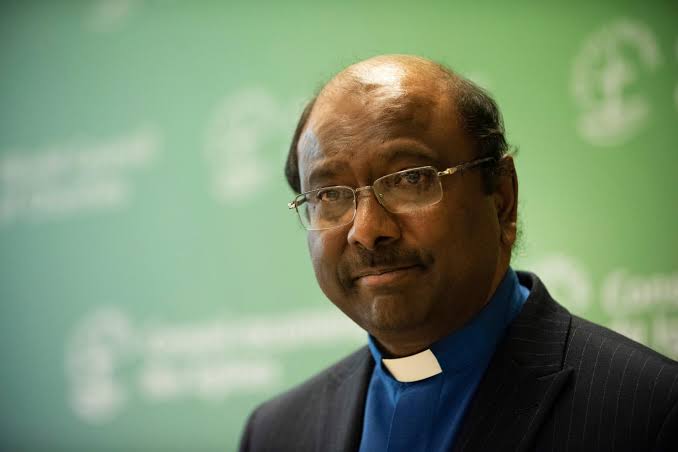
The General Secretary of the World Council of Churches (WCC), Prof. Jerry Pillay, has called on Nigerians to reject messages that promote division and work towards peaceful coexistence between Christians and Muslims ahead of the 2027 general elections.
Pillay made the call during a consultative meeting with church leaders and ecumenical stakeholders in Abuja on Wednesday.
The WCC leader stressed that Nigeria’s religious and ethnic diversity should be viewed as an advantage rather than a source of conflict.
He urged citizens to embrace unity, saying differences in faith, ethnicity and region should not be used to create hostility among Nigerians.
“A Muslim is not the enemy of a Christian, and a Christian is not the enemy of a Muslim. The North is not the enemy of the South, nor is one ethnic group the enemy of another,” Pillay said.
He described Nigeria’s diversity as a potential strength capable of driving national progress if citizens choose cooperation over division.
Pillay also advised political leaders and citizens to remember that the country will continue beyond election periods, warning against campaigns that create lasting resentment among communities.
“Nigeria will remain Nigeria after the election. Neighbours will remain neighbours. Muslims and Christians will continue to live together, sharing the same markets, schools and workplaces,” he said.
He challenged political actors to consider the impact of their messages and campaigns by asking whether they would leave behind hope or bitterness, confidence or fear, and unity or division.
According to Pillay, the church has an important responsibility to promote peace, justice and reconciliation in society.
He cautioned religious institutions against becoming platforms for political hostility or attacks on people with different opinions.
“The church must be a school of peace. Our preaching must not plant hatred, and our churches must not become instruments for demonising those who vote differently,” he said.
He encouraged faith leaders to teach citizens how to disagree respectfully without turning political differences into personal conflicts.
Addressing governance challenges, Pillay said democracy must go beyond elections by ensuring justice, protecting vulnerable groups and addressing issues affecting citizens’ welfare.
He identified poverty, youth unemployment and rising living costs as some of the challenges requiring urgent attention.
The cleric also called for greater participation and protection of women and young people in Nigeria’s political and socio-economic development.
“Nigeria is one of the world’s great nations of young people. They are citizens and leaders; they are the present, not merely the future of Nigeria,” he said.
Pillay urged authorities to protect young Nigerians from political violence and provide meaningful opportunities for their development.
He reaffirmed the WCC’s support for Nigeria’s journey towards peace, justice and national reconciliation.
According to him, the global Christian organisation, which represents more than 600 million Christians worldwide, remains committed to standing with Nigerian faith leaders and communities.
The meeting concluded with special prayers led by Pillay for peace, security, justice and a peaceful electoral process ahead of the 2027 general elections.