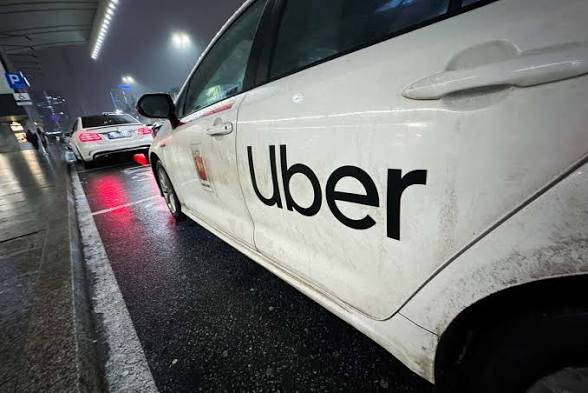
The Federal Airports Authority of Nigeria (FAAN) has clarified that Uber’s decision to withdraw from the Nigerian market was not connected to the newly introduced Airport Car Hire Rank Management System (ACHRAMS).
FAAN Managing Director, Mrs Olubunmi Kuku, made the clarification on Friday during a media briefing in Lagos, explaining that Uber’s exit was based on the company’s own business and regulatory considerations.
According to Kuku, FAAN’s mandate is limited to ensuring passenger safety, security and efficient transportation services within airport environments.
“I am sure that they had their own reason, and I know that they had been considering exiting Nigeria for a while,” she said.
She noted that airport operations represented only a small part of Uber’s activities in Nigeria and that FAAN had no authority over the company’s broader commercial decisions.
FAAN explains purpose of ACHRAMS
Kuku explained that ACHRAMS was introduced to improve oversight of airport transport services and address complaints from passengers using car-hire and e-hailing platforms.
She said the authority received several complaints, especially during peak travel periods, involving issues such as intimidation, excessive charges and passengers being dropped at unintended locations.
According to her, some concerns involved drivers operating around airports without proper identification or accountability.
She said the system was designed to provide transparency by helping passengers identify registered transport operators and know the driver assigned to convey them.
“The app that was developed was strictly to focus on the fact that you have visibility on who the car-hire companies are. You know who the driver that is taking you from Point A to Point B is,” Kuku explained.
The FAAN managing director stressed that ACHRAMS was not an e-hailing platform and was not created to replace services such as Uber or Bolt.
She added that FAAN does not determine transport fares or collect payments on behalf of drivers.
“All we do is to give you a sample of the rates based on the destination that you’re going,” she said.
Passengers still have transportation choices
Kuku said travellers remain free to choose their preferred transportation options, including pre-booked vehicles, e-hailing services or airport-approved car-hire operators.
She explained that airport car-hire operators often charge higher fares because their operations involve transporting passengers from airports and returning vehicles back to airport locations.
The FAAN chief executive said the authority’s goal was not to limit passenger choice but to improve safety and accountability within airport transportation services.
FAAN, e-hailing firms disagree over driver responsibility
Kuku disclosed that discussions between FAAN and e-hailing companies had included issues surrounding responsibility for drivers operating through digital platforms.
She said e-hailing companies requested dedicated airport pick-up zones, which FAAN agreed to provide.
However, she said the authority also wanted the companies to accept greater responsibility for the conduct and safety of drivers using their platforms.
According to her, the companies argued that drivers were independent operators rather than direct employees.
“They wanted us to give them dedicated pickup zones, which we agreed to, but we also wanted them to take responsibilities for the drivers,” she said.
Kuku said FAAN considered reliance solely on in-app safety measures insufficient, as airport transport required stronger accountability mechanisms.
She reiterated that Uber’s withdrawal from Nigeria should be viewed separately from ACHRAMS, insisting that the system was introduced only to improve passenger safety and visibility.
Background Information
Uber announced its withdrawal from Nigeria and Uganda effective September 2, 2026, citing a review of business priorities and investment focus.
The exit generated public debate, particularly following discussions around airport transportation regulations and FAAN’s introduction of ACHRAMS.
Airport transport management has become a major issue due to concerns about: Passenger safety, driver identification, fare transparency, unauthorized operators, accountability within e-hailing services