The National Boundary Commission (NBC) has called for increased funding to accelerate the demarcation of Nigeria’s international borders and make boundary lines easier for communities to identify.
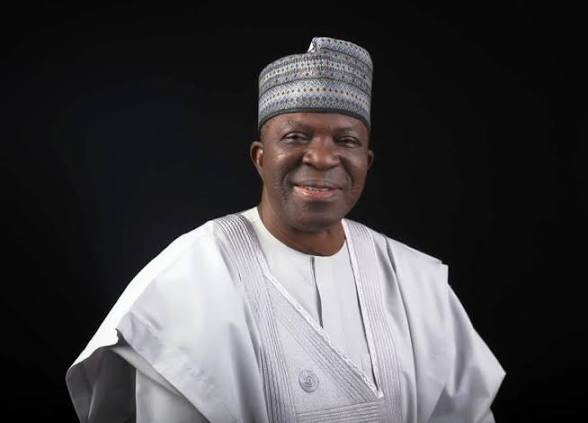
NBC Director-General, Adamu Adaji, made the appeal in an interview with our correspondence in Abuja on Sunday.
Adaji said Nigeria had already established many sections of its international boundaries, but additional resources were required to complete field demarcation and install more boundary pillars.
He explained that placing pillars at shorter intervals would make boundary lines more visible and reduce uncertainty over where Nigerian territory ends and that of a neighbouring country begins.
The commission’s international-boundary department is responsible for supervising pillar identification, densification and construction, as well as addressing land-boundary disputes and promoting relations between communities on either side of Nigeria’s borders. (National Boundary Commission)
Why the boundary pillars matter
Adaji said the exercise should not be viewed as an attempt to isolate communities from one another.
Instead, clearly marked boundaries can help governments and residents understand administrative jurisdictions while allowing legitimate cross-border trade, travel and social interaction to continue.
The NBC’s official mandate includes both boundary management and the promotion of trans-border cooperation with neighbouring countries. (National Boundary Commission)
Nigeria has international land and river boundaries with Benin, Niger, Cameroon and Chad, according to the NBC. Its maritime boundaries are handled separately and involve several Gulf of Guinea countries. (National Boundary Commission)
Cross-border cooperation remains part of the plan
Adaji said Nigeria was working with neighbouring countries to maintain corridors that support trade, movement and cooperation.
He cited routes connecting communities in Nigeria and Niger and cross-border links involving Cameroon as examples of arrangements that allow communities with shared histories and cultures to maintain economic and social ties.
The relationship between border communities often predates the modern political boundaries. The Kano–Katsina–Jibiya–Maradi corridor, for example, has long served as an important commercial link between northern Nigeria and southern Niger. Nigerian and Nigerien authorities have continued to treat the corridor as an area for transport, trade and broader bilateral cooperation.
Adaji said the NBC was also encouraging local bilateral platforms through which states and local governments could engage counterparts across national borders.
Such arrangements, he said, could support trade, security cooperation, information exchange and intelligence sharing.
Nigeria–Benin boundary work continues
The push comes as technical work on some of Nigeria’s international boundaries continues.
In May 2026, experts from Nigeria and Benin held a technical advisory meeting in Abuja on the delimitation and demarcation of their common international boundary. The NBC listed the meeting among its 2026 activities. (National Boundary Commission)
The commission has also previously worked with Niger on the re-demarcation of their shared boundary.
In 2020, the NBC and its Nigerien counterpart prepared for further pillar construction after sensitisation campaigns in communities including Ilela, Kadadi and Kongolam in Nigeria and corresponding communities in Niger. The commission said the exercise was intended to clarify the actual boundary without disrupting relations between neighbouring communities. (National Boundary Commission)
A later Nigeria–Niger Joint Standing Committee meeting in December 2025 recorded further pillar construction and identified additional work that remained outstanding because of funding and security constraints. The two countries adopted a new programme for the 2025/2026 cycle.
Cameroon boundary illustrates the scale of the task
Nigeria’s work with Cameroon shows why international boundary demarcation can require years of technical and diplomatic work.
The International Court of Justice ruled in October 2002 on the land and maritime boundary between Nigeria and Cameroon, including the sovereignty of the Bakassi Peninsula. The court determined the course of the boundary from the Lake Chad area to Bakassi and directed both countries to withdraw administration and security forces from territories assigned to the other state. (International Court of Justice)
Following the judgment, Nigeria, Cameroon and the United Nations undertook a lengthy demarcation process.
The NBC reported in an earlier update that more than 1,300 international boundary pillars had been constructed along the Nigeria–Cameroon boundary, with additional pillars still required. The commission also described the process as involving difficult terrain and security considerations. (National Boundary Commission)
In 2022, the NBC said it had spent about two decades working along the more than 2,100-kilometre Nigeria–Cameroon boundary, with international partners supporting the process. (National Boundary Commission)
A problem rooted in inherited boundaries
Nigeria’s present-day international boundaries are largely inherited from the colonial period and have had to be translated from historical agreements, maps and other boundary instruments into clearly identifiable lines on the ground.
The NBC says its research department conducts archival searches and retrieves colonial records and other documents used in boundary-definition work. (National Boundary Commission)
This helps explain why boundary demarcation is more complicated than simply placing markers along a map line. Surveying, historical records, terrain, local settlements, security conditions and negotiations with neighbouring countries can all affect the process.
The commission itself was first established under the National Boundary Commission Act of 1987. That law was subsequently repealed and replaced by the National Boundary Commission (Establishment) Act, 2006. (National Boundary Commission)
Border communities at the centre
For residents of border areas, the boundary is often part of everyday life rather than simply a line on a government map.
Families, traders and communities may have social, cultural and economic connections that cross national frontiers.
The NBC has therefore repeatedly stressed that demarcation should not be interpreted as creating hostility between neighbouring populations.
In a previous statement on Nigeria–Niger demarcation, Adaji said the purpose was to establish the area over which each government exercised sovereignty while preserving existing relationships between communities.
The same principle has informed the commission’s broader approach to border management, which combines demarcation with conflict prevention and cross-border cooperation.
Adaji appeals for peace ahead of elections
Adaji also appealed to Nigerians, particularly people living in border communities, to maintain peace during the forthcoming general elections.
He urged residents not to allow political disagreements to damage relationships between communities that share cultural and historical ties.
He said political differences should not turn international or interstate boundaries into sources of conflict.
For the NBC, the wider objective is to have boundaries that are clearly identifiable while maintaining the cooperation and movement that have long connected communities across them.
The commission’s stated mandate combines boundary definition with conflict resolution, good neighbourly relations and trans-border cooperation.