


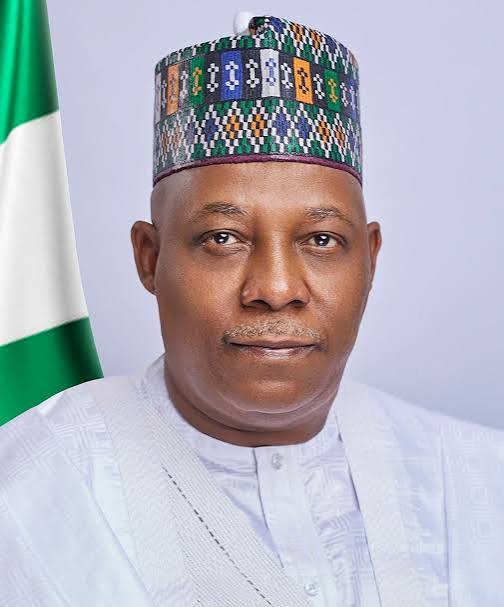
Vice-President Kashim Shettima has called for greater recognition of Nigerian writers and intellectuals, warning that the country risks losing an important part of its history when the contributions of its thinkers are neglected.
Shettima gave the warning in a goodwill message at the public presentation of nine books authored by Dr Lasisi Olagunju, Editor of Saturday Tribune, held in Ibadan, Oyo State, on Tuesday, November 24, 2026.
He noted that preserving a nation’s intellectual heritage should not begin only after prominent thinkers and writers have passed away. Society, he said, must also value their ideas, engage their work and recognise their contributions while they are still alive.
The Vice-President congratulated Olagunju on his contribution to Nigerian journalism, expressing confidence that the publications would stimulate critical thinking, encourage meaningful public discussions and provide useful lessons for future generations.
He described the journalist as part of a tradition of writers who use their profession to challenge society, question established practices and encourage people to reflect on the direction of their country.
The nine publications draw largely from Olagunju’s *Monday Lines* column in the Nigerian Tribune, where he has consistently examined Nigeria’s political developments, governance challenges, social realities and national aspirations.
Makinde advocates a political and social reset
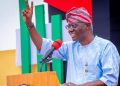
Also speaking at the event, Oyo State Governor Seyi Makinde called for a fundamental reassessment of Nigeria’s political and governance structure.
Makinde, who is also the presidential candidate of the Allied Peoples Movement (APM) for the 2027 elections, argued that the country needed to revisit the principles that informed its founding, particularly the adoption of federalism.
He said Nigeria’s founding leaders recognised the country’s diversity and established a federal arrangement intended to accommodate different ethnic, religious and cultural communities.
The governor maintained that inclusion, transparency and accountability should remain central to any effort to reform the country’s political and administrative system.
Addressing recent controversies surrounding his comments on the National Union of Road Transport Workers’ (NURTW) threat to take over motor parks in Oyo State, Makinde urged politicians and media organisations to concentrate on substantive public issues rather than distractions.
He advised political candidates to present their records in office, explain their achievements and clearly communicate what they intend to accomplish if entrusted with public responsibility.
The governor also condemned political violence ahead of the 2027 general elections, referring to the recent deadly attack in Delta State.
He stressed that political ambitions should never be pursued at the expense of human lives and urged young Nigerians to resist attempts by political actors to use them to disrupt campaigns or engage in violence.
Makinde maintained that electoral competition should remain peaceful, warning that political disagreements must not turn into conflicts that endanger citizens.
Nine books celebrate a journalist’s intellectual contribution
Unveiling the publications, Makinde congratulated Olagunju, noting that his weekly commentaries had established him as a consistent voice in discussions about leadership and governance in Nigeria.
He commended the journalist for using his writings to question public institutions, examine national challenges and contribute to conversations about the country’s future.
The governor also reflected on his personal journey, recalling how access to education and opportunities had helped shape his professional development. He said he hoped other Nigerians would enjoy similar opportunities to succeed through their abilities and hard work.
Awolowo-Dosumu praises Olagunju’s literary achievement
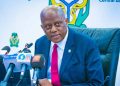
The Chairman of the Board of African Newspapers of Nigeria (ANN) Plc, publishers of the Tribune titles, Ambassador Dr Olatokunbo Awolowo-Dosumu, described the nine books as the product of sustained intellectual effort, professional discipline and commitment to public engagement.
She said Olagunju’s *Monday Lines* had developed beyond an ordinary newspaper column into a continuing record of Nigeria’s political and social experiences.
According to her, the column has captured different periods in the country’s national journey, documenting its achievements, setbacks, contradictions and aspirations through analytical writing and a distinctive literary approach.
She commended the author for preserving these contributions in book form, making them available to a wider audience beyond the newspaper’s regular readership.
Falola describes Olagunju as a public intellectual
The Chairman of the occasion, renowned historian Professor Toyin Falola, described Olagunju as a journalist whose weekly commentaries have become an important source for understanding Nigeria’s political and intellectual history.
Falola noted that the author’s writings went beyond immediate political developments to examine leadership, public institutions, historical experiences and the underlying problems affecting Nigerian society.
He highlighted Olagunju’s use of Yoruba proverbs, traditional wisdom and everyday experiences to explain complex national issues.
According to the historian, the combination of journalism, cultural knowledge and historical interpretation gives the author’s work relevance beyond the ordinary newspaper readership.
Dignitaries attend Ibadan presentation
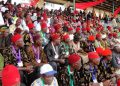
The event, held at the International Conference Centre of the University of Ibadan, attracted several prominent figures from government, academia, journalism and public life.
Those present included Oyo State Deputy Governor Bayo Lawal, Secretary to the State Government Professor Musibau Babatunde, former Osun State Governor Olagunsoye Oyinlola, former Minister of Education Professor Tunde Adeniran and former Nigerian Ambassador to the Philippines Dr Yemi Farounbi.
Other government officials and stakeholders also attended the presentation.
The gathering highlighted the continuing importance of books, journalism and intellectual engagement in preserving national experiences and encouraging informed public debate.
The presentation also renewed attention on the responsibility of society to support writers whose work documents contemporary events and provides historical material for future generations.