


A new publication examining the growth of Lagos into one of Africa’s leading urban centres has been unveiled, highlighting the role of successive administrations, infrastructure investment and governance under Governor Babajide Sanwo-Olu.
Titled Lagos: The Making of Africa’s Megacity – Urban Leadership, Infrastructure and Governance Under Babajide Sanwo-Olu, the book is the third volume of the Eminent Nigerian Series.
The publication was formally presented in Lagos on Tuesday, November 24, 2026, bringing together government officials, academics and other stakeholders to reflect on the state’s development and its ambitions for the future.
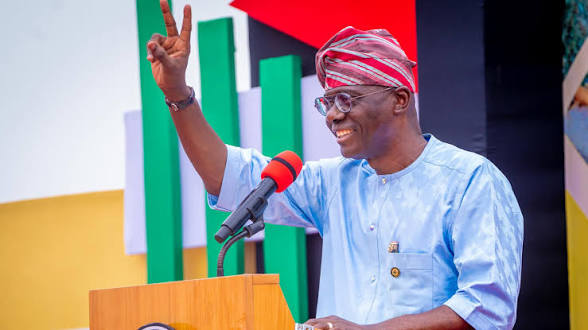
Speaking at the event, Governor Sanwo-Olu stressed that Lagos’ transformation was not the achievement of one government alone. He attributed the city’s growth to generations of leadership, private enterprise and the determination of residents who have continued to build opportunities despite the challenges of a rapidly expanding metropolis.
He noted that the increasing population and economic importance of Lagos had created enormous pressure on public services, particularly transportation, housing, healthcare, security and employment.
According to the governor, addressing these demands requires long-term planning, substantial investment, effective institutions and sustained cooperation between government, businesses and residents.
Sanwo-Olu explained that his administration’s development priorities extended beyond roads and physical infrastructure to include economic empowerment, human capital development, food security, improved connectivity, healthcare and a supportive environment for businesses.
He also acknowledged the contribution of the Federal Government under President Bola Ahmed Tinubu, noting that cooperation between federal and state authorities had helped advance development initiatives in Lagos.
The governor called on residents, businesses and other stakeholders to remain committed to the state’s development, describing the task of building a prosperous Lagos as a collective responsibility.
He welcomed the publication as an opportunity to preserve important experiences, policy decisions and lessons from the state’s development journey for future generations.
Hamzat calls for broader understanding of Lagos’ development
Deputy Governor Dr Kadri Obafemi Hamzat also welcomed the publication, emphasising the importance of continuity in governance.
He argued that Lagos’ development was guided by deliberate planning and institutional processes rather than isolated decisions by individual officeholders.
Hamzat suggested that copies of the book should be made available to opposition political parties, saying greater awareness of the state’s development history would help them understand the policies and decisions shaping its progress.
He maintained that political transitions should not disrupt carefully developed plans and long-term development priorities.
Academic review highlights the challenges of megacity governance
Reviewing the publication, Professor Maryam Omolara Quadri of the University of Lagos said the book provided an opportunity to examine Lagos’ development beyond the number of completed projects and government achievements.
She emphasised that the real measure of progress should include the ability of institutions to function effectively, the reliability of public services, environmental sustainability and improvements in residents’ quality of life.
Quadri identified transportation reforms, infrastructure financing, public-private partnerships, climate concerns and technological innovation as important areas explored in the publication.
She observed that Lagos must continue strengthening its institutional capacity and global competitiveness while ensuring that economic and physical development translate into better living conditions for its people.
Folayan explains the vision behind the publication
Earlier, the Coordinator of the Eminent Nigerian Series, Prince Bimbo Roberts Folayan, described Lagos as a city that offers opportunities to people from different backgrounds to pursue their ambitions, establish businesses and improve their circumstances.
He highlighted the state’s importance to Nigeria’s economy, particularly in trade, finance, technology and industrial development.
Folayan explained that the publication was conceived to document the evolution of Lagos and examine the policies, projects and leadership decisions that have contributed to its growth.
He acknowledged that the city’s development was shaped by successive administrations, pointing to earlier investments in education, transportation, infrastructure and public administration.
The project team also undertook visits to several development facilities, including schools, hospitals, housing estates and transportation infrastructure, as part of its documentation process.
Folayan stressed that the success of urban development should not be judged exclusively by roads, bridges and buildings but also by the opportunities created for young people and vulnerable communities.
Documentary and youth development initiative planned
Folayan disclosed that the book project would be extended through a documentary intended to introduce Lagos’ development story to international audiences.
The proposed documentary is expected to showcase the state’s infrastructure, investment opportunities, economy, culture, innovation and people, with plans to explore distribution through major international media platforms.
He also announced plans for a Lagos Legacy Initiative for Development, expected to commence in 2027.
The proposed initiative is intended to support skills development, mentorship and community-based opportunities for young people. Its organisers are also exploring partnerships with international development organisations and philanthropic institutions to mobilise grants and other forms of support.
Folayan said the initiative’s governance arrangements and operational framework were being developed to promote transparency, accountability and long-term sustainability.
A series with a long history
The Eminent Nigerian Series was established in 1993 to document the contributions and achievements of distinguished Nigerians for historical preservation and future generations.
According to Folayan, its earlier volumes featured educationist Dr Tai Solarin and Dr Dalhatu Sarki Tafida, while the latest publication represents an expansion of the series into documenting the development of an entire state.
The Lagos volume therefore seeks to connect individual leadership experiences with the wider history of institutional development, economic growth and urban transformation.
The Commissioner for Information and Strategy, Mr Gbenga Omotosho, delivered the vote of thanks at the presentation.
As Lagos continues to grapple with population growth, infrastructure demands and the pressures of urbanisation, the publication adds to ongoing conversations about leadership, continuity, accountability and the future of Africa’s megacities.