


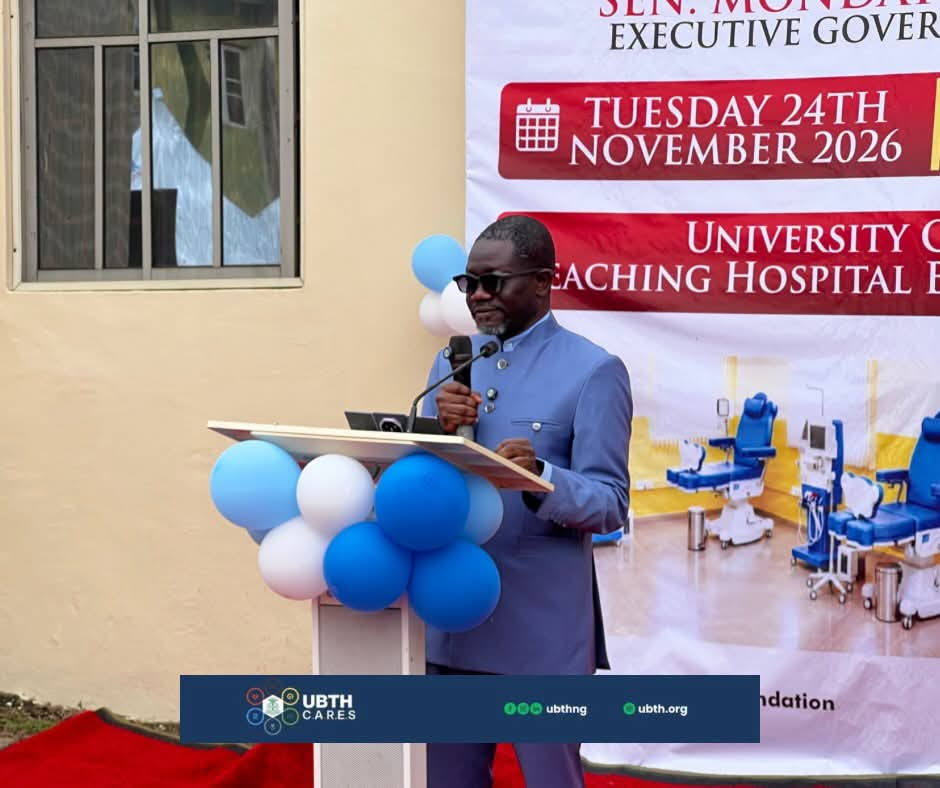
The Redeemed Christian Church of God (RCCG), through its His Love Foundation (HLF), has commissioned a dialysis centre at the University of Benin Teaching Hospital (UBTH), Benin City, in a move aimed at improving access to specialised kidney treatment in Edo State.
The facility, equipped with three dialysis machines, was inaugurated on Tuesday, November 24, by the Edo State Commissioner for Health, Dr Cyril Adams Oshiomhole, who represented Governor Monday Okpebholo.
The RCCG General Overseer, Pastor Enoch Adeboye, was represented at the ceremony by the church’s National Overseer, Pastor Sunday Akande, who delivered his message on behalf of the church leadership.
Speaking through his representative, Adeboye said the project was motivated by the financial difficulties confronting patients who depend on regular dialysis to manage advanced kidney disease.
He explained that the intervention was intended to provide practical support for vulnerable Nigerians who struggle to meet the recurring costs of treatment.
The General Overseer also called on UBTH management to ensure proper maintenance of the equipment and make the services accessible and affordable to patients who need them.
He reaffirmed the church’s commitment to supporting healthcare delivery through interventions that include dialysis facilities and intensive care units in different parts of the country.
Governor welcomes faith-based investment in healthcare
Governor Okpebholo described kidney failure as a serious medical condition that places enormous pressure on patients and their families.
He noted that the financial demands of repeated dialysis sessions could force households to exhaust their savings, dispose of valuable property or interrupt treatment because of insufficient funds.
The governor considered the donation a significant contribution to efforts to improve specialised healthcare services in the state.
He stressed that government could not shoulder the responsibility of meeting every healthcare need without support from other sectors.
Okpebholo consequently encouraged religious organisations, private companies, philanthropic institutions and development partners to complement government investment in the health sector.
He also emphasised the importance of maintaining the donated equipment to ensure that patients continue to benefit from the intervention over time.
UBTH management highlights the importance of the facility
The Chief Medical Director of UBTH, Professor Idia Ize-Iyamu, welcomed the project, describing it as an important addition to the hospital’s efforts to improve access to quality and affordable renal care.
She said the intervention represented more than the provision of medical equipment, highlighting the importance of compassion and cooperation in addressing the healthcare needs of vulnerable populations.
According to her, the three machines would strengthen the hospital’s capacity to provide haemodialysis and improve support for patients living with kidney-related conditions.
Ize-Iyamu identified late diagnosis, inadequate public awareness, limited access to specialised services and the high cost of treatment as major obstacles affecting kidney care in Nigeria.
She also acknowledged the Federal Government’s intervention under President Bola Tinubu, particularly the efforts of the Coordinating Minister of Health and Social Welfare, Professor Muhammad Ali Pate, to reduce the financial burden of renal treatment through subsidies for dialysis materials and services.
His Love Foundation expands its healthcare interventions
The Chairman of His Love Foundation and RCCG Assistant Continental Overseer, Pastor Kayode Pitan, explained that the foundation was established to translate Christian values into practical support for individuals and communities.
He said its programmes extend beyond healthcare to include education, feeding initiatives, social welfare and other areas of human development.
Within the health sector, Pitan identified dialysis facilities, intensive care units, cancer screening centres, primary healthcare services and maternity facilities among the foundation’s interventions.
He said the UBTH project formed part of a wider programme through which the foundation has supported specialised medical services in different parts of Nigeria.
Pitan also disclosed that the foundation had recorded extensive social interventions over the past nine years, reporting that its programmes had reached 246,637,899 people, with expenditure of N149,232,871,410 on various initiatives.
He further reported that 3,626,100 projects had been completed, with interventions extending to at least 650 local government areas nationwide.
These figures were presented by the foundation as part of its reported social impact record.
Growing need for affordable kidney treatment
Kidney disease remains a significant healthcare challenge in Nigeria, particularly for patients who require long-term dialysis.
The treatment helps remove waste products and excess fluid from the blood when the kidneys can no longer perform these functions adequately.
For patients with advanced kidney failure, treatment may be required several times weekly, creating substantial financial and logistical difficulties.
The addition of specialised equipment at UBTH is expected to improve treatment capacity in Edo State and provide additional support for patients who would otherwise face challenges accessing regular renal care.
The intervention also highlights the importance of collaboration between public hospitals, religious institutions, private organisations and other development partners in strengthening Nigeria’s healthcare infrastructure.