


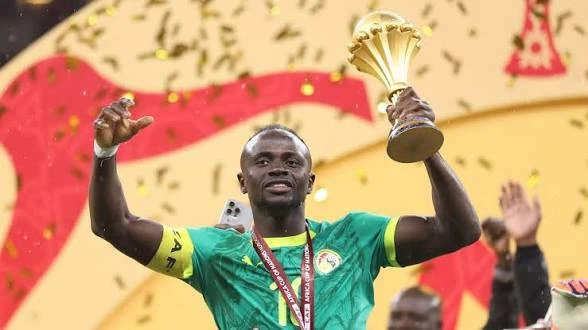
Senegal have officially regained their Africa Cup of Nations (AFCON) crown after the Court of Arbitration for Sport (CAS) overturned the Confederation of African Football’s (CAF) decision to award the 2025 continental championship to Morocco.
The ruling, delivered on Tuesday, November 24, 2026, brings an end to months of controversy surrounding the final between Senegal and Morocco, restoring the 1–0 victory originally secured by the Teranga Lions in Rabat.
CAS unanimously upheld the appeal filed by the Senegalese Football Federation (FSF), setting aside the CAF Appeal Board’s decision that had declared Senegal to have forfeited the final and awarded Morocco a 3–0 victory.
The Swiss-based tribunal confirmed that the original result of the January 18, 2026 encounter would stand.
CAS explains its decision
At the centre of the legal battle was the authority of match officials to determine whether a football match should continue following an interruption.
In its assessment, the CAS panel found that referee Jean-Jacques Ndala of the Democratic Republic of Congo acted within his authority when he allowed the match to resume after the Senegalese players returned to the pitch.
The tribunal relied on football’s established principle that decisions made by referees concerning events on the field of play and the outcome of matches are generally final.
It also concluded that Articles 82 and 84 of the AFCON regulations, which Morocco had relied upon in challenging the result, did not apply in circumstances where the referee had allowed the game to continue and the final was completed.
CAS Secretary General Matthieu Reeb explained that the referee had committed no error of law in allowing proceedings to resume.
How the controversy started
The dispute originated during the dramatic final played at the Prince Moulay Abdellah Stadium in Rabat on January 18, 2026.
With the match still goalless towards the end of regulation time, Senegal believed they had taken the lead through a set-piece opportunity. However, the referee disallowed the goal following an infringement in the build-up.
Moments later, referee Ndala awarded Morocco a penalty after reviewing a challenge involving Senegal defender El Hadji Malick Diouf and Moroccan forward Brahim Diaz through the Video Assistant Referee (VAR) system.
The decision sparked furious protests from the Senegalese camp. Head coach Pape Thiaw instructed his players to leave the pitch, temporarily bringing the final to a standstill.
Senegal captain Sadio Mané, however, remained on the field and encouraged his teammates to return so that the match could be completed.
After an interruption lasting approximately 14 to 17 minutes, the Senegalese players returned. Morocco’s Brahim Diaz subsequently failed to convert the penalty, with goalkeeper Edouard Mendy making the crucial save.
The contest proceeded into extra time, where Pape Gueye scored the decisive goal to give Senegal a historic 1–0 victory and their second AFCON championship.
How CAF transferred the title to Morocco
Despite the result on the pitch, the controversy continued through CAF’s disciplinary structures.
On January 28, 2026, CAF’s Disciplinary Board imposed sanctions on officials, players and both football federations over incidents during the final. It also rejected Morocco’s initial protest concerning Senegal’s alleged violation of Articles 82 and 84 of the competition regulations.
Morocco subsequently challenged that decision.
On March 17, CAF’s Appeal Board overturned the earlier ruling, declaring Senegal to have forfeited the final and officially recording a 3–0 victory in favour of the Royal Moroccan Football Federation (FRMF).
The decision effectively transferred the continental title from Senegal to Morocco, prompting strong objections from the Senegalese football authorities.
Senegal takes the battle to CAS
Unwilling to accept the decision, the Senegalese Football Federation formally approached CAS on March 25, 2026.
The appeal sought to overturn CAF’s ruling and restore Senegal’s original victory.
Representatives of Senegal, Morocco and CAF subsequently presented their arguments during a hearing held behind closed doors at the CAS headquarters in Lausanne, Switzerland, on October 8, 2026.
Following its examination of the case, the tribunal announced its unanimous decision on November 24, restoring Senegal’s championship status.
The ruling represents a major development in African football governance and reinforces the importance of the authority exercised by match officials during football competitions.
However, the restoration of the match result should be distinguished from the separate disciplinary sanctions previously imposed by CAF on individuals and football authorities involved in the final.
With the CAS decision now confirming the original 1–0 result, Senegal retain the 2025 Africa Cup of Nations crown they initially celebrated in Morocco.
The outcome brings an extraordinary chapter in African football to a close, although the controversy surrounding the final is likely to remain a significant reference point in future discussions about football regulations, refereeing authority and sports arbitration.