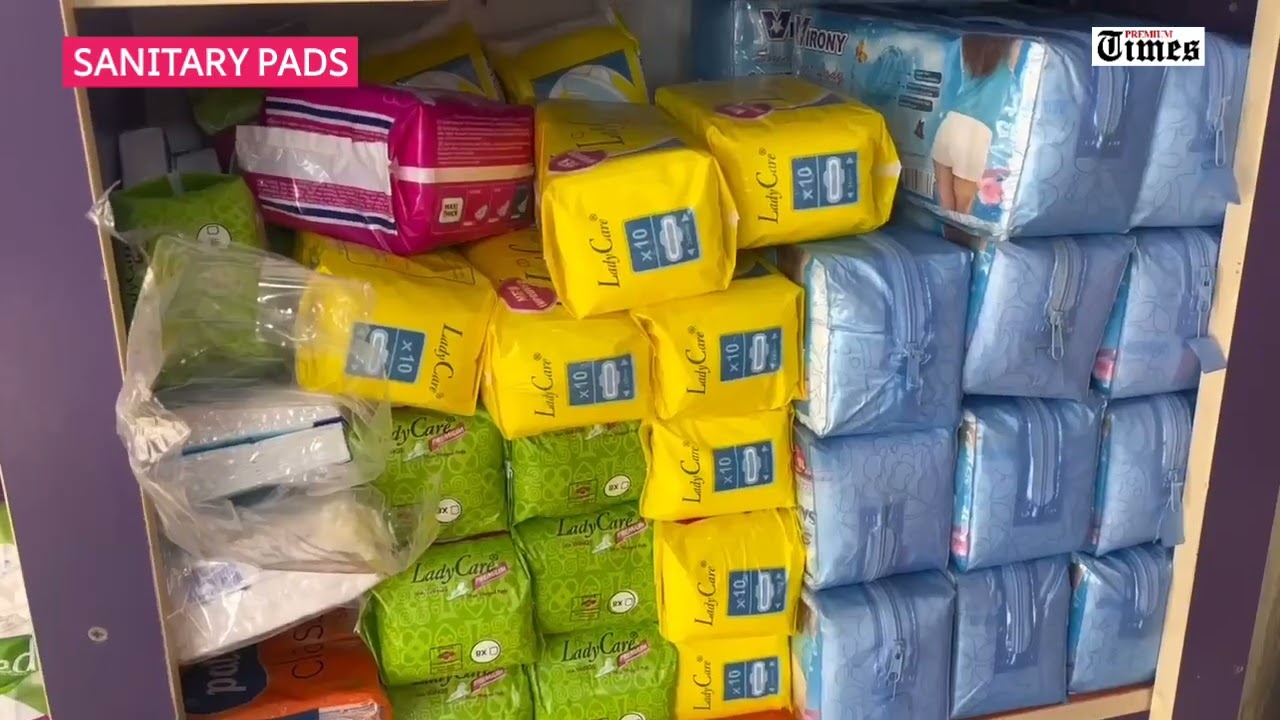
Parents in Ado Community, Nasarawa State, have expressed concern over the increasing cost of sanitary pads, warning that rising prices are making menstrual hygiene management difficult for many girls and women.
The parents, who spoke during interviews with our correspondence said the rising cost of menstrual products is placing additional pressure on families, especially those with limited incomes.
They called on the government to introduce measures that would make sanitary pads more affordable and accessible, particularly for adolescent girls in schools and vulnerable communities.
Rising prices affecting menstrual hygiene
Mrs Njideka Ezurike, a mother of two, said the high cost of sanitary pads was creating serious challenges for young girls from low-income households.
She expressed concern that some girls may resort to using unsafe alternatives when their families cannot afford proper menstrual products.
Ezurike recalled the case of a young domestic worker who relied on pieces of cloth during her menstrual period because purchasing sanitary pads was beyond what her family could afford.
She said such situations could affect girls’ health, confidence and dignity, especially when they experience embarrassment due to inadequate menstrual protection.
The mother urged authorities to strengthen interventions that provide menstrual products to girls, especially through schools.
According to her, regular distribution of sanitary pads in both public and private schools would help reduce the burden on families and allow girls to manage their periods safely.
Families struggle with increasing costs
Another parent, Mrs Vivian Osalenkhor, said families now have to carefully plan their expenses because menstrual products have become significantly more expensive.
She explained that household budgets must now include sanitary products alongside food, healthcare and other essential needs.
Osalenkhor recalled that during her childhood, sanitary pads were not easily available or affordable, forcing many girls to rely on reusable pieces of cloth.
She said improved access to affordable menstrual products would make a significant difference for today’s generation of girls.
She disclosed that a sanitary pad brand she purchases for her children has increased from about N1,200 to nearly N3,000, adding that the price increase has become a major concern.
Women share personal experiences
Ms Esther Alih, a security personnel, said the cost of sanitary pads has also increased considerably.
She said she currently buys Always sanitary pads for about N2,500 per pack, compared with around N1,500 previously.
However, she noted that she has not had to depend on alternatives such as rags or towels for menstrual protection.
Menstrual poverty affecting girls’ education
Mrs Gladys Ohiwere, a teacher, said the rising cost of menstrual products could negatively affect girls’ education and participation in school activities.
She explained that some students may miss classes or withdraw from social activities because they cannot afford proper menstrual hygiene materials.
According to her, many families already struggle with the cost of food, medicine and other necessities, making sanitary products an additional financial burden.
“When families are planning for food and drugs, they also have to think about buying sanitary pads every month,” she said.
Ohiwere appealed to governments at all levels to provide free or subsidised sanitary pads for schoolgirls, especially those from economically disadvantaged homes.
Government menstrual health initiatives
The Federal Government of Nigeria has previously introduced measures aimed at improving menstrual hygiene among girls, including plans for nationwide school Pad Banks under the National Policy and Implementation Strategy on Menstrual Health and Hygiene Management.
The initiative is designed to improve access to menstrual products, reduce period poverty and prevent school absenteeism among adolescent girls.
While several non-governmental organisations continue to provide menstrual products through donations, advocates say wider government support remains necessary to ensure sustainable access.
Background Information
Menstrual hygiene remains a major public health and education issue in many parts of Nigeria.
Period poverty — the inability to afford or access adequate menstrual products — can affect girls’ school attendance, confidence and participation in daily activities.
Health advocates have repeatedly called for affordable menstrual products, better sanitation facilities and stronger awareness programmes.