


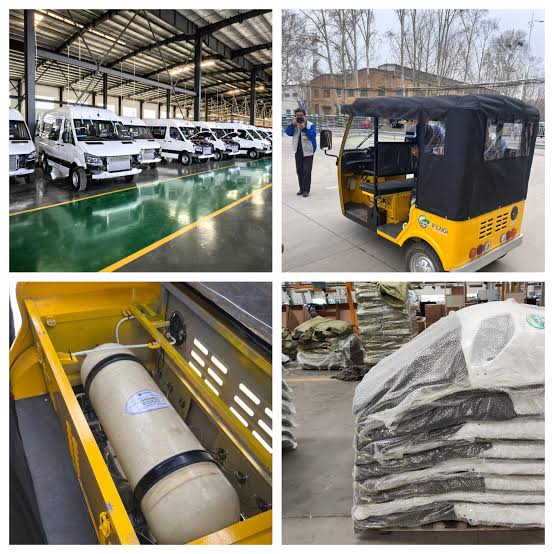
Commercial drivers operating between Niger State and the Federal Capital Territory (FCT) say compressed natural gas (CNG) remains a more economical alternative to petrol, despite long queues and delays at refuelling stations.
The motorists said the financial benefits of using CNG outweigh the inconvenience of spending several hours waiting to refuel, particularly as transport operators continue to grapple with high operating costs.
Speaking with the News Agency of Nigeria (NAN) in Madalla on Thursday, some drivers explained that switching from petrol to CNG had helped them reduce daily fuel expenses and improve profitability.
One of the drivers, Musa Bello, said he had no intention of returning to petrol because of the substantial savings he enjoyed from using gas-powered vehicles.
Bello estimated that CNG had reduced his fuel expenses per kilometre by between 50 and 60 per cent compared with petrol.
Although he acknowledged that refuelling delays remained a major challenge, he maintained that the lower running costs made CNG his preferred option.
Drivers cite lower operating costs and cleaner fuel
Another commercial driver, Michael Attah, said CNG offered additional benefits beyond cheaper fuel, including cleaner combustion and potentially lower maintenance costs.
Attah said the inconvenience of waiting in long queues at gas stations had not discouraged him from using the alternative fuel.
He explained that the financial advantages of CNG remained significant enough to justify the time spent refuelling.
The drivers’ experiences reflect growing interest in alternative vehicle fuels following the removal of Nigeria’s petrol subsidy in May 2023.
The policy change contributed to higher petrol prices and increased operating expenses for commercial transport operators, prompting many motorists to explore cheaper energy options.
CNG has since gained attention as a potential alternative for private vehicles, taxis, buses and commercial fleets.
Why transport fares have not fallen
Despite the savings associated with CNG, some passengers have questioned why transport fares remain high on routes served by gas-powered vehicles.
A commercial driver, Suleiman Abubakar, explained that the cost of converting petrol-powered vehicles to CNG was preventing some operators from immediately reducing fares.
According to him, many drivers are still trying to recover the money spent on installing conversion kits and modifying their vehicles.
He expressed optimism that commuters could eventually benefit from lower transport costs as more operators recover their initial investment.
However, the drivers did not provide a specific timeline for fare reductions.
Technician stresses safety and regular maintenance
Addressing concerns about the safety of CNG-powered vehicles, a technician, Sunday Christopher, said the fuel could be used safely when vehicles were properly converted and maintained.
Christopher explained that CNG requires specific conditions to ignite, including a suitable concentration of gas in the air and an ignition source.
He said methane, the main component of natural gas, generally forms a flammable mixture in air at concentrations of approximately five to 15 per cent.
The technician stressed the importance of following approved installation procedures, maintaining vehicle components and complying with safety regulations.
He urged motorists to ensure that conversion work was handled by qualified technicians and that gas cylinders, valves and related equipment were regularly inspected.
Government promotes CNG adoption
Nigeria’s transition towards CNG-powered transportation gained momentum following the removal of petrol subsidies in 2023.
The Federal Government introduced the Presidential Initiative on Compressed Natural Gas and Electric Vehicles (Pi-CNG & EV) to encourage the adoption of alternative transport fuels and reduce dependence on petrol.
The programme seeks to support vehicle conversions, expand refuelling infrastructure and encourage the use of Nigeria’s natural gas resources in the transportation sector.
CNG is also used in industrial operations and other energy applications, although its adoption in road transportation has attracted particular attention because of the potential for lower fuel costs.
For commercial drivers operating along the Niger State–Abuja corridor, the immediate attraction remains the possibility of spending less on fuel while maintaining daily transport operations.
However, the motorists’ accounts suggest that wider adoption will depend on improvements in refuelling infrastructure, affordable conversion services and continued attention to vehicle safety.
Why drivers can save money but passengers may not see lower fares
The cost of operating a commercial vehicle includes more than fuel. Vehicle conversion, maintenance, tyres, spare parts, insurance, vehicle financing and time lost in refuelling queues can affect fares.
The government’s own programme estimates that CNG can be 40–60 per cent cheaper per kilometre than petrol, depending on the vehicle and operating conditions. Pi-CNG & EV: Presidential Initiative
But a 60 per cent reduction in fuel costs does not automatically translate into a 60 per cent reduction in passenger fares.