Nigeria has launched a new five-year national strategy designed to disrupt organised criminal networks, block illicit financial flows and improve coordination among security and law-enforcement agencies.
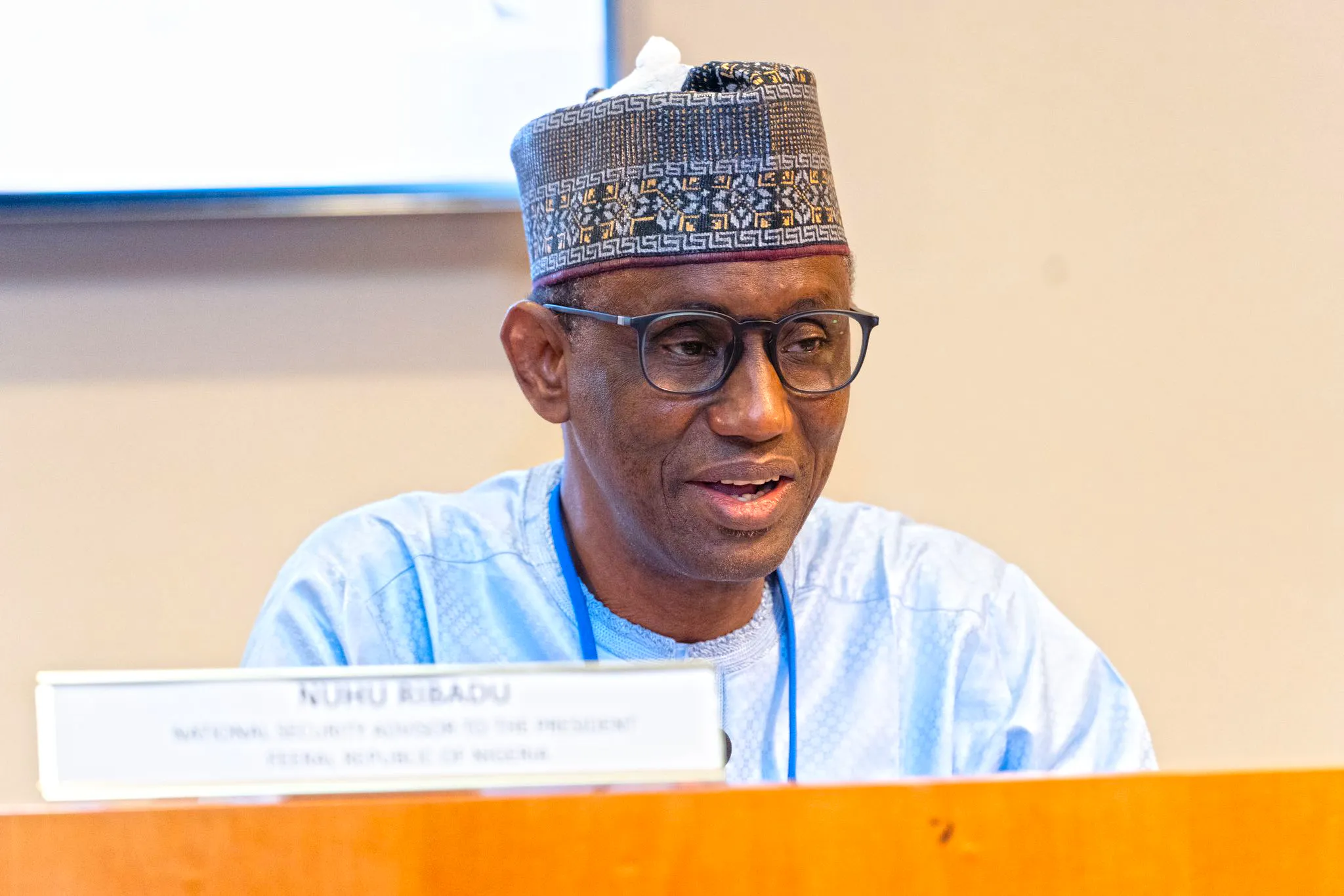
The National Strategy for Combating Organised Crime, covering 2027 to 2031, was unveiled in Abuja on Monday by the National Security Adviser, Nuhu Ribadu.
Ribadu was represented at the launch by the National Coordinator of the National Counter-Terrorism Centre, Maj.-Gen. Adamu Laka.
Strategy Targets Multiple Forms of Organised Crime
Ribadu said the new framework would provide a coordinated national response to some of the country’s most complex security and criminal threats.
These include terrorism, drug trafficking, human trafficking, cybercrime, maritime crime, corruption and illicit financial activities.
He said criminal networks had become increasingly interconnected and sophisticated, making it difficult for individual institutions to tackle them in isolation.
According to him, Nigeria therefore needs stronger coordination, intelligence sharing and cooperation across government and society.
Government Adopts Whole-of-Society Approach
The NSA said the strategy would operate through a whole-of-government and whole-of-society approach.
This will involve closer cooperation among ministries, departments and agencies, as well as stronger partnerships with international organisations and foreign law-enforcement bodies.
Ribadu said the framework would help Nigeria anticipate emerging threats, disrupt criminal networks and improve the ability of authorities to identify and prosecute people who profit from organised crime.
He urged agencies responsible for implementing the strategy to maintain the level of cooperation that went into developing the document.
The Office of the National Security Adviser, he added, would support implementation through intelligence fusion, operational coordination and stronger inter-agency collaboration.
UNODC Warns Implementation Will Be the Real Test
The United Nations Office on Drugs and Crime (UNODC) Country Representative in Nigeria, Cheikh Touré, said organised crime had developed into a sophisticated system capable of exploiting weaknesses in institutions and crossing national borders.
He cautioned that producing a national strategy was only the beginning.
Touré said the effectiveness of the new framework would ultimately depend on whether government agencies had the resources and coordination required to put its recommendations into practice.
“Strategies rarely fail in the writing. They fail in coordination or resources,” he said.
He described organised crime as a direct threat to development, investment and public confidence in government institutions.
UNODC Calls for Greater Domestic Investment
Touré urged Nigeria to increase domestic funding for law-enforcement and justice institutions.
He said international support was important but should complement Nigeria’s own commitment rather than replace it.
According to him, the success of the strategy should ultimately be measured by its impact on communities across the country by 2031.
U.S. Pledges Support for Nigeria
The U.S. Director of the Bureau of International Narcotics and Law Enforcement Affairs, Tolliver Derrick, described the strategy as an important development in Nigeria-U.S. law-enforcement cooperation.
Derrick said organised crime and terrorist financing were increasingly linked, making international cooperation essential.
He said the United States would support Nigeria in strengthening its capacity to disrupt criminal networks, trace illicit financial transactions and improve cooperation with international law-enforcement organisations.
He also highlighted the growing connection between illicit financial transfers and cybercrime.
Information Sharing Identified as Key
Sa’ad Abubakar, National Coordinator of the National Cyber Security Coordination Centre under the Office of the National Security Adviser, said implementation and information sharing would be crucial to achieving the strategy’s objectives.
He welcomed the decision to assign specific implementation responsibilities to relevant government agencies.
According to him, clearly defining institutional responsibilities could help address weaknesses that affected some previous national strategies.
Abubakar said the centre would contribute particularly to efforts to strengthen Nigeria’s response to cybercrime.
Nigeria Sets 2031 Target for Organised Crime Response
The launch marks the beginning of a new phase in Nigeria’s effort to address organised crime through a coordinated national framework.
The strategy is expected to bring together security agencies, justice institutions, financial intelligence bodies, technology agencies and international partners in tackling criminal networks and the financial structures that sustain them.
The government says its success will depend not only on the quality of the strategy but also on consistent implementation, adequate resources, intelligence sharing and cooperation across institutions..