The Federal Government has expanded electricity transmission capacity in Lagos by 208 megawatts (MW) following the completion of major upgrades at the Apapa and Ijora transmission substations.
The Minister of Power, Joseph Tegbe, inaugurated the upgraded facilities on Monday, saying the projects would strengthen electricity supply to some of Lagos’ most important industrial and commercial areas.
The improvements are expected to support port operations, manufacturing, logistics, businesses and households across parts of the state.
Apapa Substation Gets 96MW Boost
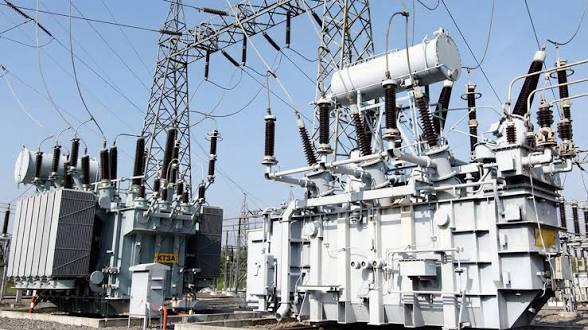
At Apapa, Tegbe inaugurated a 2×60MVA, 132/33kV Gas Insulated Substation (GIS).
The upgraded facility increases bulk power availability in the Apapa axis by about 96MW, according to the minister.
The project includes two 60MVA power transformers, modern 132kV and 33kV GIS switchgear and a new control building.
It is also equipped with modern protection and control systems, Substation Automation Systems and Supervisory Control and Data Acquisition (SCADA) infrastructure.
Tegbe described Apapa as one of Nigeria’s most economically significant electricity load centres because of its concentration of ports, maritime businesses, logistics companies, warehouses, manufacturers and other industries.
JICA Supports Apapa Rehabilitation
The minister said the original Apapa Road GIS substation was commissioned in 1985 and had served the area for decades.
However, ageing infrastructure eventually required the facility to be decommissioned and temporarily replaced with an outdoor 60MVA transformer.
The rehabilitation was supported by the Japan International Cooperation Agency (JICA) through its Official Development Assistance programme.
Tegbe said the investment was consistent with the Federal Government’s broader economic agenda, including the ambition to build a $1 trillion Nigerian economy.
He stressed that reliable electricity would be essential to achieving sustained economic growth and industrial expansion.
Ijora Capacity Rises to 230MVA
At Ijora, the government installed two new 100MVA, 132/33kV transformers.
The upgrade increased the substation’s total installed capacity from 90MVA to 230MVA, providing an additional 112MW of bulk transmission capacity.
The increased capacity is expected to improve electricity supply to areas including Ijora, Costain, Oyingbo, Customs and surrounding communities within the Eko Electricity Distribution Company (EKEDC) franchise area.
Tegbe said the previous three 30MVA transformers at Ijora could provide about 72MW, but rising population, industrial activity and commercial demand had placed increasing pressure on the facility.
TCN Says Projects Will Ease Transmission Constraints
The Managing Director of the Transmission Company of Nigeria (TCN), Sule Abdulaziz, said the projects represented a major investment in electricity infrastructure in one of Lagos’ busiest economic corridors.
According to Abdulaziz, the Apapa upgrade, including the installation and energisation of new transformers and modern GIS technology, has increased the substation’s capacity from 60MVA to 180MVA.
He said the additional capacity would increase the amount of bulk electricity available for onward distribution by EKEDC.
Areas expected to benefit include Apapa Causeway, Ijora, Amukoko, Ajegunle, Apapa Wharf and Tin Can Island.
At Ijora, Abdulaziz said the new transformers would strengthen TCN’s ability to transmit bulk electricity from generation points to distribution centres.
Government Promises More Transmission Investment
Tegbe said the Federal Government would continue investing in the national transmission network to remove bottlenecks and strengthen critical substations.
He said expanding transmission capacity was necessary to ensure that electricity generated across the country could be effectively delivered to areas with growing demand.
“The projects being inaugurated today are a practical demonstration of that commitment,” the minister said.
JICA Reaffirms Nigeria Partnership
JICA Chief Representative Ishigame Keiji described the Apapa project as an example of cooperation between Japan and Nigeria in strengthening electricity infrastructure.
He said the project reflected a shared commitment to developing a more reliable and efficient Nigerian power transmission system.
The government expects the additional transmission capacity in Lagos to support industrial production, commercial activity and electricity access across the affected areas.