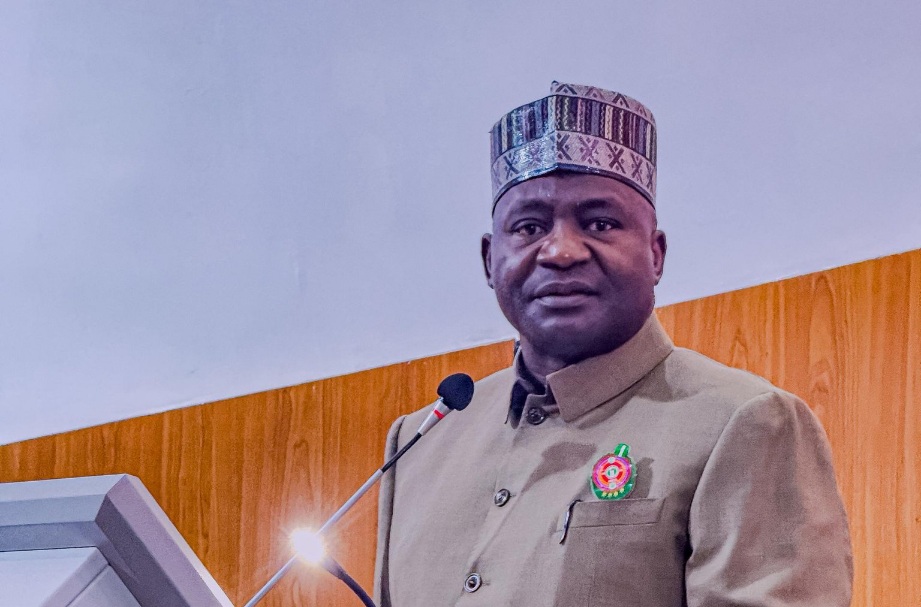
The Minister of Defence, retired Gen. Christopher Musa, has called on Nigeria to strengthen its local defence production capacity and reduce reliance on imported military hardware in order to effectively tackle emerging security threats.
Musa made the call at the Nigerian People’s Strategic Conference and Defence Exhibition 2026 held in Abuja, themed “Building a Modern Security Ecosystem: Integrating Private Sector Capacity into Nigeria’s National Security Architecture.”
He warned that growing global conflicts have exposed the risks of depending heavily on foreign suppliers for critical defence equipment, noting that access to military hardware often becomes difficult during international crises.
“Nigeria cannot continue to rely entirely on imported security solutions,” the minister said, stressing that recent global events have demonstrated the urgency of developing domestic capacity for defence production.
According to him, Nigeria has the technical ability to develop indigenous defence technologies, including military vehicles, drones, surveillance systems, and other security innovations capable of meeting operational needs.
Musa commended local manufacturers and innovators contributing to defence-related technologies and urged the government to deliberately support and patronise locally made military equipment to strengthen national self-reliance.
He also called for increased investment in universities, research institutions, and young innovators, particularly in areas such as intelligence gathering, surveillance, and threat detection systems.
The minister noted that modern warfare and security operations are increasingly driven by technologies such as artificial intelligence, drones, satellite imaging, biometric systems, and predictive analytics, adding that Nigeria must adopt these tools within a regulated framework that serves national interests.
Musa emphasized that security is a collective responsibility involving government, security agencies, the private sector, and communities. He warned that modern threats such as terrorism, insurgency, banditry, kidnapping, cybercrime, and attacks on critical infrastructure are increasingly sophisticated and interconnected.
He also stressed the importance of community participation, noting that criminals often rely on local collaborators for intelligence and logistics. Citizens, he said, must support security agencies by providing timely and credible information.
The minister further advocated stronger public-private partnerships in security operations, including intelligence support, infrastructure protection, cybersecurity, surveillance, and emergency response services, while ensuring such collaborations remain properly regulated.
Musa reaffirmed the commitment of the Armed Forces and other security agencies to defending Nigeria’s territorial integrity and combating insecurity in all its forms, while emphasizing that military action alone is not sufficient.
Earlier, the Convener of the conference, Mr. Charles Awuzie, said the event was designed to bring together government institutions, defence experts, industry leaders, innovators, and citizens to develop practical solutions for a modern security ecosystem.
He said the initiative, which evolved from private security discussions, would become an annual platform for national dialogue on security, innovation, and development, aimed at strengthening Nigeria’s defence architecture through collaboration and innovation.