


A political forecast for the 2027 general elections has projected a closely contested presidential race among President Bola Ahmed Tinubu, former Anambra State Governor Peter Obi and former Vice-President Atiku Abubakar, with Tinubu maintaining a narrow lead over his two major challengers.
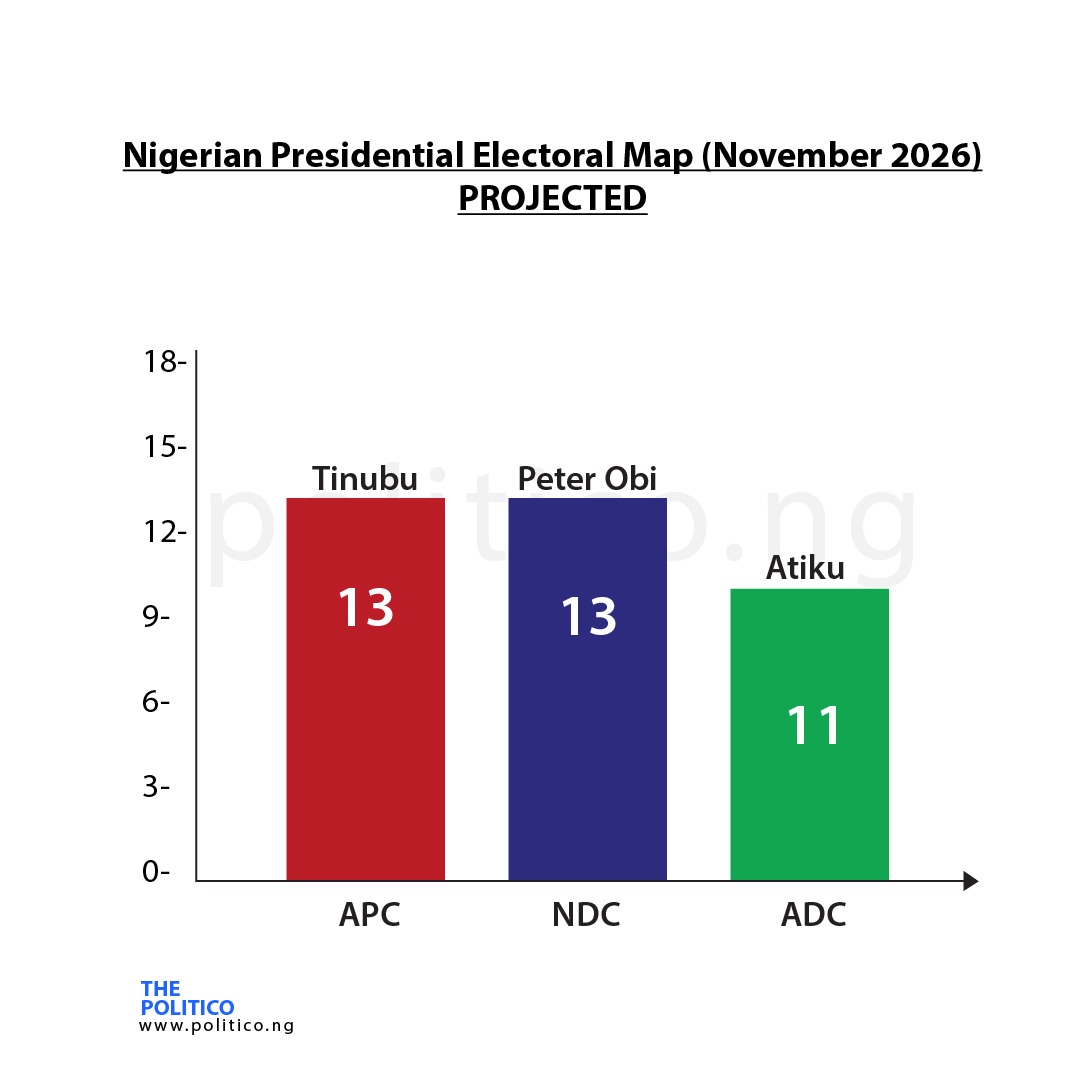
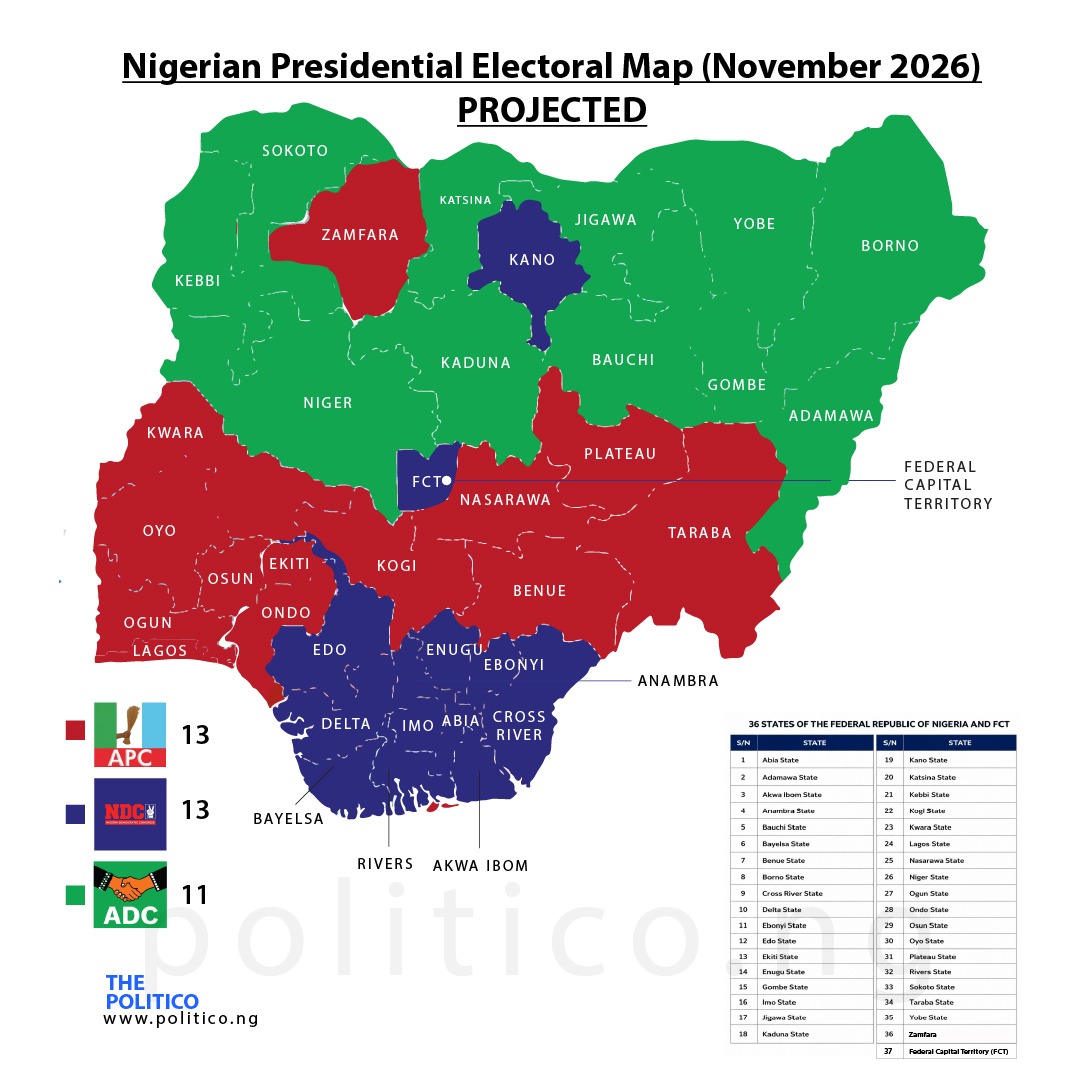
The projection also predicts that the All Progressives Congress (APC) and the New Democratic Congress (NDC) will each win 13 states, while the African Democratic Congress (ADC) is projected to secure 11 states, provided the elections are free and fair.
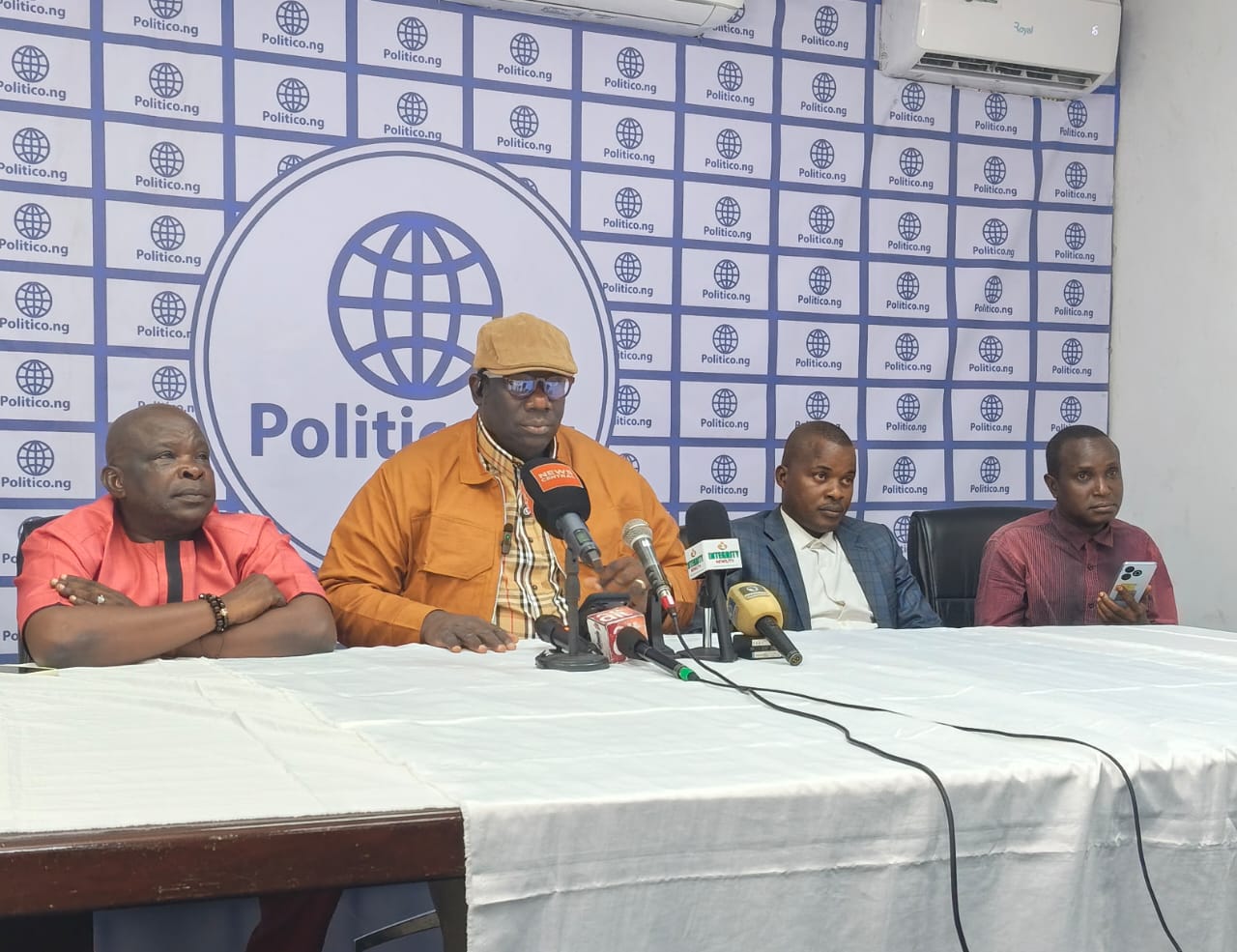
The projection was made by the Political Intelligence Group (PIG) of Politico.ng, which assessed the current political landscape and projected how the three major political parties and political figures could perform if the presidential election were conducted under the circumstances prevailing at the moment.
The forecast was contained in the third edition of the organisation’s projected electoral map for November 2026, which assessed emerging political developments, campaign activities and voter preferences ahead of the 2027 general elections.
According to the projection, Tinubu is expected to finish ahead of Obi, who is placed second, while Atiku is projected to occupy the third position, although the margin separating the three leading contenders is expected to be narrow.
The electoral map forecasts that the APC will retain all the South-West and North-Central states, while the NDC is projected to dominate the South-East and South-South, in addition to Kano State and the Federal Capital Territory.
The ADC, on the other hand, is expected to win all states in the North-East and North-West, except Kano and Zamfara states.
The report identified the commencement of campaigns by the three leading political parties in October as a major development shaping the political landscape ahead of the elections.
It also highlighted the controversy surrounding the preliminary voters’ register released by the Independent National Electoral Commission (INEC), following allegations that the register contained AI-generated names.
The organisation observed that the controversy emerged amid the need for INEC to comply with the statutory requirement for releasing the voters’ register at least 90 days before the election.
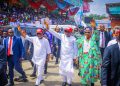
It further cited the APC’s inaugural campaign rally in Kaduna, led by President Tinubu, as one of the significant political activities recorded during the period.
The report also identified the debate over fuel subsidy policy, triggered by former Vice-President Atiku Abubakar’s proposal for a return to subsidy, and the Federal Government’s subsequent announcement of a reduction in petrol pump prices through the Nigerian National Petroleum Company Limited (NNPC) for 30 days.
On voter behaviour, the projection predicted a significant shift in the country’s electoral dynamics, arguing that politicians who approach the 2027 elections with the traditional ‘business as usual’ mentality risk suffering electoral defeat.
It particularly emphasised the growing influence of young voters, noting that the electorate between the ages of 18 and 49 would play a decisive role in determining the outcome of the elections.
The organisation also predicted that the 2027 general elections could record the highest voter turnout in Nigeria’s electoral history, projecting a 40 per cent turnout, compared with the 29 per cent recorded in the last general election.
However, the forecast acknowledged several challenges that could influence the political fortunes of the three leading parties.
It noted that opposition parties were encountering stiff resistance in their campaign activities, while the APC was grappling with internal disagreements and political bickering.
According to the report, these developments could affect the electoral prospects of all three parties in different ways as the election approaches.
It, however, stressed that its projections were conditional on the conduct of a free and fair election, urging political parties, INEC, security agencies and other stakeholders to work towards ensuring peaceful and credible polls.
The organisation maintained that the 2027 general elections would represent a defining moment for Nigeria’s democracy, adding that a peaceful, free and fair electoral process would strengthen democratic institutions and contribute to national development.