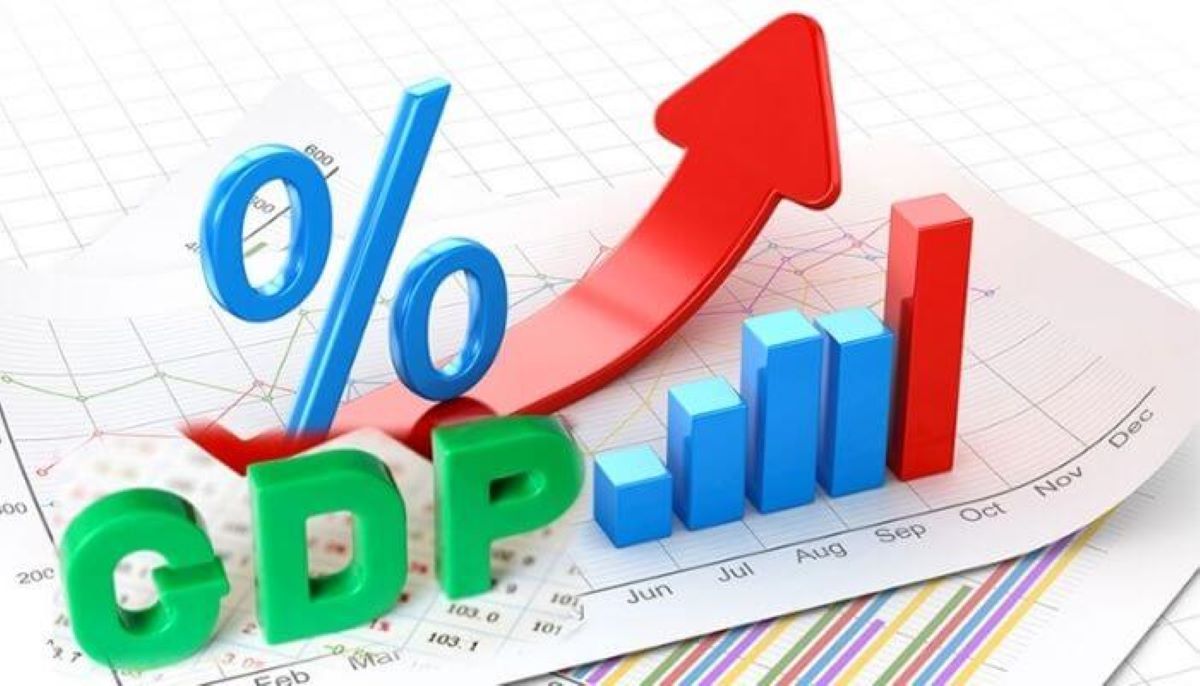
Nigeria’s latest economic growth figures have generated mixed reactions from analysts, with experts warning that the country’s improving Gross Domestic Product (GDP) performance has not yet translated into better living conditions for many citizens.
The National Bureau of Statistics (NBS) reported that Nigeria’s real GDP expanded by 4.43 per cent year-on-year in the second quarter of 2026, slightly higher than the 4.23 per cent recorded in Q2 2025.
While the figures indicate continued economic expansion, economists said Nigerian’s GDP growth alone does not necessarily reflect improvements in household welfare, income levels or purchasing power.
They stressed that stronger job creation, increased productivity, reduced production costs and investment in human capital would be required for economic growth to have a wider impact on Nigerians.
GDP growth does not always mean better welfare — experts
Development economist Prof. Ken Ife said GDP remains an important indicator of economic performance but does not fully capture the realities faced by citizens.
According to him, GDP measures overall economic activity but does not directly show poverty levels, income inequality, household purchasing power or differences among sectors.
“The GDP growth does not reflect the state of the economy in respect to citizen welfare. It does not reflect poverty issues or disparities in the many sectors and subsectors of the economy,” Ife said.
He expressed concern about the performance of the industrial sector, particularly manufacturing, arguing that the sector has not grown strongly enough to create the level of employment needed to support millions of Nigerians.
Manufacturing growth remains concern
The economist noted that while Nigeria’s overall industry sector recorded growth, manufacturing performance remained weak compared with what is required to drive large-scale job creation.
He said the real sector should be the engine of economic transformation because it provides employment opportunities and supports domestic production.
“If the real sector is not driving growth, then the benefits of economic expansion may not reach ordinary citizens,” he said.
Ife also highlighted the difference between Nigeria’s nominal and real GDP figures.
According to the NBS data, nominal GDP increased to N119.29 trillion in Q2 2026, compared with N100.73 trillion in Q2 2025, representing an 18.43 per cent increase.
However, Ife explained that the gap between nominal and real GDP reflected the impact of rising prices and inflation on Nigerians’ purchasing power.
He said economic growth figures must be interpreted alongside the cost of goods and services because higher prices continue to affect household incomes.
Agriculture and services drive expansion
The NBS report showed that Nigeria’s agriculture sector grew by 4.39 per cent in Q2 2026, compared with 2.82 per cent in the same period of 2025.
The services sector remained the largest contributor to economic output, accounting for 56.62 per cent of total GDP, slightly higher than the 56.53 per cent recorded in Q2 2025.
The services sector also grew by 4.60 per cent, compared with 3.94 per cent in Q2 2025.
However, the industrial sector slowed, recording 3.96 per cent growth, compared with 7.46 per cent during the same period in 2025.
Experts said the challenge remains ensuring that growth spreads across productive sectors capable of creating employment and improving incomes.
Population growth may reduce impact of GDP gains
Ife said Nigeria’s economic expansion must also be considered alongside population growth and urbanisation.
He explained that with population growth estimated at about three per cent and urbanisation rising, GDP growth must translate into productive employment and higher wages before citizens can feel meaningful improvements.
“The 4.43 per cent GDP growth needs to translate into productive employment and higher incomes for Nigerians to experience meaningful improvement in living standards,” he said.
Government must focus on welfare impact
Another economic analyst, Mr Okechukwu Unegbu, former President of the Chartered Institute of Bankers of Nigeria (CIBN), said economic growth figures should not be viewed separately from poverty and household realities.
Unegbu questioned whether the latest GDP expansion had significantly improved the lives of ordinary Nigerians.
“When you look at the poverty rate, which is not declining, and you tell me GDP grew by 4.43 per cent, how does this growth impact the average Nigerian?” he asked.
He urged the government to prioritise human capital development, especially education, skills acquisition and productivity-enhancing programmes.
Unegbu also called for greater transparency in the use of revenues generated from economic reforms, including funds associated with fuel subsidy removal.
He said Nigerians would better appreciate economic reforms if they could see measurable improvements in living conditions.
Experts outline path to inclusive growth
The analysts said Nigeria’s economic recovery would depend on addressing major challenges such as: High energy costs, transportation expenses, insecurity affecting agriculture, weak manufacturing capacity, limited job opportunities, low household purchasing power
They said sustainable economic growth must go beyond GDP numbers and focus on improving incomes, reducing poverty and creating opportunities for citizens.
Background Information
GDP measures the total value of goods and services produced within an economy.
However, economists often distinguish between:
Economic growth: increase in production and output.
Economic development: improvement in living standards, employment, income and welfare.
A country can record GDP growth while citizens continue facing challenges such as inflation, unemployment and reduced purchasing power