The Nigeria Centre for Disease Control and Prevention (NCDC) has clarified that the Federal Government’s ₦10 billion emergency health security allocation was approved to strengthen the country’s preparedness for multiple infectious disease threats, rather than being reserved exclusively for Ebola.
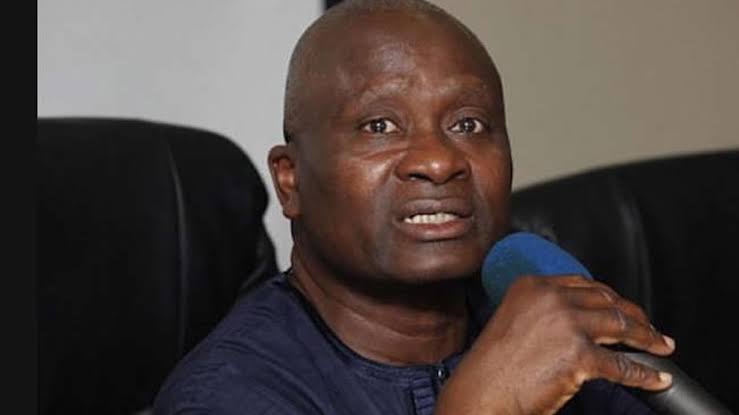
NCDC Director-General Dr Jide Idris provided the clarification in a statement issued in Abuja on Monday, November 2, 2026, following public discussions about the funding and Nigeria’s response to an imported Ebola infection.
Idris explained that the intervention was intended to improve disease prevention, surveillance, laboratory detection and emergency response capabilities nationwide.
He identified Ebola, Lassa fever, cholera, meningitis, diphtheria, measles and Mpox among the public health threats covered by the broader preparedness programme.
The funding also supports efforts to address antimicrobial resistance and other health emergencies.
NCDC Explains Who Received the ₦10bn Allocation
Idris said the ₦10 billion was released directly to the NCDC and not to the Presidential Task Force on Ebola Virus Disease.
According to him, the presidential task force, chaired by the Chief of Staff to the President, was established primarily to coordinate the national Ebola response.
He explained that the financial intervention had a wider purpose, supporting Nigeria’s ability to prevent, detect and respond to outbreaks of several diseases.
The NCDC chief said the funding should therefore not be interpreted as expenditure exclusively for a single Ebola case.
He also stressed that the allocation remained insufficient when compared with Nigeria’s overall public health security requirements.
Nigeria Needs ₦522bn for Five-Year Health Security Plan
Idris disclosed that Nigeria’s National Action Plan for Health Security (NAPHS) 2.0, covering 2025 to 2029, would require approximately ₦522 billion over five years.
The estimated cost translates to an average of ₦104.4 billion annually.
He said the plan involved several government institutions and sectors, meaning its entire cost was not expected to be financed through the NCDC alone.
The strategy adopts a One Health approach, which recognises the connections between human health, animal health and environmental conditions.
It also involves federal and state institutions, development partners, civil society organisations and other stakeholders.
Idris said inadequate financing had limited the implementation of Nigeria’s previous national health security plan.
He called for more reliable funding to improve preparedness and prevent outbreaks from developing into larger emergencies.
NCDC Reports No Active Ebola Case in Nigeria
Addressing the country’s Ebola situation, Idris said Nigeria had no active case at the time of his statement following the management of an imported infection.
According to him, laboratory testing confirmed a case involving the Bundibugyo Ebola virus on October 20, 2026, within 24 hours of the agency receiving an alert in Abuja.
He said the rapid confirmation demonstrated the importance of maintaining functional laboratory and disease surveillance systems.
The NCDC chief added that all identified contacts were undergoing daily monitoring.
He cautioned that surveillance would continue until the last identified contact completed the required 21-day observation period without developing symptoms and no additional case emerged.
Idris urged Nigerians to remain alert while avoiding unnecessary panic.
NCDC Says Elections and Public Gatherings Can Continue
The agency also addressed concerns about whether the Ebola situation required restrictions on public activities.
Idris said the available epidemiological evidence did not justify postponing elections, suspending political campaigns, prohibiting mass gatherings or introducing travel restrictions.
He stated that NCDC had not recommended any of those measures.
Instead, the agency had prepared technical guidance for organisers of public gatherings to strengthen infection prevention and control.
Idris said public events could continue in accordance with the relevant safety recommendations.
He added that NCDC would review its guidance if new evidence or developments changed the country’s risk assessment.
NCDC Outlines Health Security Funding
The director-general also provided details of recent federal funding for disease prevention and emergency preparedness.
According to him, NCDC received an allocation of ₦4 billion in 2024, which increased to ₦7 billion in 2025.
He said the agency subsequently received a ₦5 billion intervention fund, while the 2026 Appropriation provided ₦22 billion.
Idris added that President Bola Tinubu approved a separate ₦10 billion emergency intervention in June 2026 to support preparedness for epidemic-prone diseases.
He maintained that the intervention was designed to complement existing government and development partner resources.
The NCDC chief called for sustained financing from federal and state governments to strengthen Nigeria’s public health emergency response capacity.
NCDC Warns Against Ebola Misinformation
Idris also urged members of the public to rely on verified information from official health authorities.
He warned that inaccurate reports and rumours could weaken public confidence and complicate emergency response efforts.
The director-general assured Nigerians that NCDC would continue issuing updates on disease surveillance and preparedness measures.
He also pledged transparency and accountability in the use of public funds allocated to the agency.
According to him, sustained investment in health security would help protect lives, reduce the economic effects of outbreaks and strengthen Nigeria’s ability to respond to future public health threats.