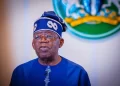
The Independent National Electoral Commission (INEC) has reaffirmed its commitment to conducting free, fair, transparent and inclusive general elections in Nigeria in 2027, while seeking stronger international cooperation to protect the electoral process against cyberattacks, misinformation and emerging digital threats.
INEC Chairman, Professor Joash Amupitan, gave the assurance on Wednesday during a meeting with the British High Commissioner to Nigeria, Pete Vowles, at the commission’s headquarters in Abuja.
Amupitan said rebuilding public confidence in elections, improving operational efficiency and protecting the integrity of votes remained major priorities for the electoral body.
He also stressed that INEC would maintain its independence and impartiality throughout the electoral process.
INEC seeks UK partnership ahead of 2027 general elections
Speaking during the diplomatic visit, Amupitan acknowledged the United Kingdom’s longstanding involvement in supporting democratic institutions and electoral development in Nigeria.
He described the meeting as an opportunity to strengthen cooperation between both countries as preparations for the 2027 general elections continue.
The INEC chairman identified election cybersecurity, technical training for electoral officials and measures to address technology-driven misinformation as areas requiring greater collaboration.
He expressed particular concern about the potential misuse of artificial intelligence to manipulate election-related information and influence public perceptions.
Amupitan also highlighted the threat of foreign information manipulation and interference, which could undermine confidence in electoral institutions.
According to him, protecting Nigeria’s democratic process is important not only for Nigerian voters but also for political stability and economic development across West Africa.
INEC highlights BVAS and IReV improvements
The electoral commission said lessons from recent governorship, legislative and local council elections were being incorporated into preparations for the nationwide polls.
Amupitan pointed to elections in Anambra, Ekiti and Osun states, the Federal Capital Territory Area Council elections and legislative by-elections as opportunities for assessing INEC’s operational readiness.
He said the exercises helped the commission identify improvements in the deployment of election materials, voter accreditation and electronic results management.
According to the chairman, the Bimodal Voter Accreditation System (BVAS) demonstrated improved reliability during the elections.
He also reported progress in uploading polling unit results to the INEC Result Viewing (IReV) portal.
These developments, he explained, would inform the commission’s preparations for the 2027 elections.
INEC acquires 57,000 new BVAS machines
As part of its technological preparations, INEC disclosed that it had obtained 57,000 additional BVAS devices.
The machines are intended to support voter accreditation and strengthen the technical infrastructure required for the general elections.
Amupitan said the commission was also conducting physical and operational assessments across Nigeria’s geopolitical zones.
He reported that an assessment in the South-South had been completed, while the North-Central exercise was scheduled to begin on Thursday, November 5.
The inspections are part of the commission’s preparations to evaluate its operational requirements ahead of the polls.
PVC collection drive expands to Nigeria’s 774 local government areas
INEC also announced an intensified campaign to encourage registered voters to collect their Permanent Voter Cards (PVCs).
According to Amupitan, the exercise has been decentralised across Nigeria’s 774 local government areas, extending to ward registration centres.
The initiative is intended to make voter cards more accessible and reduce difficulties faced by eligible Nigerians seeking to collect them.
The chairman said the commission was also prioritising measures to improve voting access for persons with disabilities, pregnant women and elderly voters.
He maintained that electoral inclusion would remain a key consideration in planning and conducting the elections.
INEC releases figures on candidate nominations
Providing an update on the electoral timetable, Amupitan said the commission had completed nine of the 14 major activities contained in its revised schedule for the 2027 general elections.
He also outlined progress in processing candidate nominations through the INEC Candidates Nomination Portal (ICNP).
According to the figures presented, the electronic platform processed submissions involving 21 registered political parties.
The nominations included:
* 36 presidential and vice-presidential candidates from 18 political parties.
* 4,860 National Assembly candidates.
* 936 governorship candidates.
* 9,692 state House of Assembly candidates.
Amupitan said the nomination process was being managed in accordance with Section 29 of the Electoral Act 2026.
The figures were presented as part of the commission’s account of its preparations and should be understood as INEC’s reported nomination data.
British High Commissioner speaks on Nigeria’s democratic future
British High Commissioner Pete Vowles said his visit was intended to familiarise himself with INEC’s operations and understand the preparations underway for the forthcoming elections.
Vowles, who disclosed that he had been in Nigeria for approximately eight weeks, emphasised the significance of Nigeria’s democratic institutions to the country and the wider international community.
He observed that Nigeria’s large population and diversity make its electoral process particularly important within Africa and beyond.
The British envoy described the 2027 elections as an opportunity for Nigeria to demonstrate the functioning of democratic institutions in a large, diverse society.
His remarks also reflected the United Kingdom’s interest in understanding the commission’s electoral preparations and continuing engagement with Nigeria’s democratic institutions.
Why cybersecurity and artificial intelligence matter in the 2027 elections
The growing use of digital technology in elections has introduced new challenges for electoral management bodies worldwide.
While electronic systems can support voter accreditation, information management and public access to election results, they also require safeguards against cyberattacks, unauthorised access and manipulation.
Artificial intelligence presents another challenge because digitally generated audio, images and videos can be used to spread misleading information.
Such material can circulate rapidly through social media, making it difficult for voters to distinguish authentic communications from fabricated content.
INEC’s request for technical cooperation with the United Kingdom reflects its stated intention to address these risks before the 2027 elections.
However, the effectiveness of the proposed measures will depend on their implementation, technical safeguards and public accountability.
What the INEC assurance means for Nigerian voters
The commission’s latest commitments place renewed attention on election technology, voter access, institutional independence and the transparency of results management.
The acquisition of additional BVAS devices, expansion of PVC collection and planned cybersecurity cooperation are among the measures INEC says it is pursuing.
For voters, the central issues will include whether accreditation systems function reliably, polling units receive materials on time, eligible citizens can vote without unnecessary barriers and results are managed transparently.
INEC has pledged to meet international electoral standards, but the credibility of the 2027 general elections will ultimately be assessed through the conduct of the process itself.