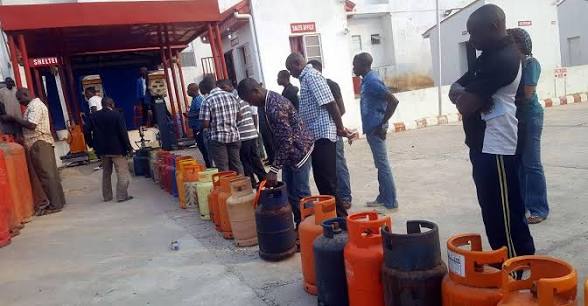
The Liquefied Petroleum Gas Retailers Association of Nigeria (LPGAR) has attributed the rising cost of cooking gas across Nigeria to global supply shocks, particularly geopolitical tensions involving the United States and Iran.
The association says domestic LPG pricing is heavily influenced by international market dynamics beyond local control.
The Chairman of LPGAR under the Nigeria Union of Petroleum and Natural Gas Workers (NUPENG), Ayobami Olarinoye, made the remarks in Lagos during an interview with our correspondence
He explained that Nigeria’s LPG market is directly tied to global energy movements, making it vulnerable to external disruptions.
According to him, instability in international supply chains has contributed significantly to rising cooking gas prices.
Olarinoye stressed that the oil and gas sector operates within a global pricing structure that Nigeria cannot isolate itself from.
He noted that ongoing geopolitical tensions have disrupted production and shipping routes, affecting supply availability.
“The oil and gas market is global. Nigeria cannot be insulated from developments affecting LPG worldwide,” he said.
The LPG retailers’ association called on the Federal Government to intervene by strengthening domestic gas infrastructure and increasing investment in LPG production facilities.
Olarinoye emphasized the need for improved storage capacity to meet Nigeria’s rising consumption levels.
He said the demand for LPG has increased significantly as more households transition to cleaner energy sources.
According to him, Nigeria’s consumption pattern for cooking gas has changed, placing additional pressure on existing supply systems.
He warned that without adequate infrastructure expansion, price instability may continue.
“We need more storage facilities and stronger distribution infrastructure to support demand,” he said.
Olarinoye noted that LPG prices have begun to ease slightly due to improved supply from NLNG allocations and imported shipments.
He added that recent adjustments by some private sector players have also influenced market pricing.
However, he described the decline as marginal and insufficient to significantly ease consumer burden.
The LPGAR chairman also raised concerns about pricing inconsistencies within the downstream sector.
He alleged that some LPG offtakers operating retail outlets sell directly to consumers at prices lower than those available to independent retailers.
This, he said, is creating unfair competition and squeezing profit margins for smaller retailers.
Olarinoye urged relevant authorities to investigate pricing disparities in the LPG market to ensure fairness and stability.
He warned that the widening gap between wholesale and retail prices is affecting the sustainability of small businesses in the sector.
“We are being wrongly blamed for price increases driven by broader global challenges,” he added.