As the world marks World Habitat Day 2026, UN-Habitat says as many as 3.4 billion people worldwide lack access to safe, secure and adequate housing.
The Executive Director of UN-Habitat, Anna-Claudia Rosbach, disclosed the figure during the high-level opening of World Habitat Day 2026 in Muscat, Oman.
The event was monitored by the News Agency of Nigeria (NAN) in Lagos through a webinar.
Rosbach said the global housing crisis extends beyond the number of houses available, arguing that a home can only be considered adequate when it provides people with the conditions needed to live safely and with dignity.
What makes a home adequate?
Under the UN human rights framework, Rosbach said adequate housing is defined by seven criteria.
They include security of tenure, availability of services, habitability, affordability and location, as well as accessibility and cultural adequacy.
“Adequate housing means much more than a physical structure with four walls and a roof. It gives people the opportunity to live with dignity,” she said.
She explained that a family could have a roof over its head but still struggle to afford rent, leaving insufficient money for food, education or healthcare.
Similarly, a relatively affordable home may be located so far from employment, schools and public transport that residents face additional economic and social pressures.
Climate disasters worsening housing insecurity
Rosbach also linked the global housing crisis to climate-related disasters and other emergencies.
She said homes could be destroyed or become inaccessible because of conflict, flooding, storms and other crises.
According to the figures cited in her address, 45 million internal displacements were triggered by weather-related disasters in 2024 alone.
“This is why building more houses, as important as that is, will not by itself solve the housing crisis,” she said.
She called on governments to pursue housing policies that combine affordability with access to transport, employment and essential public services.
More than one billion live in informal settlements
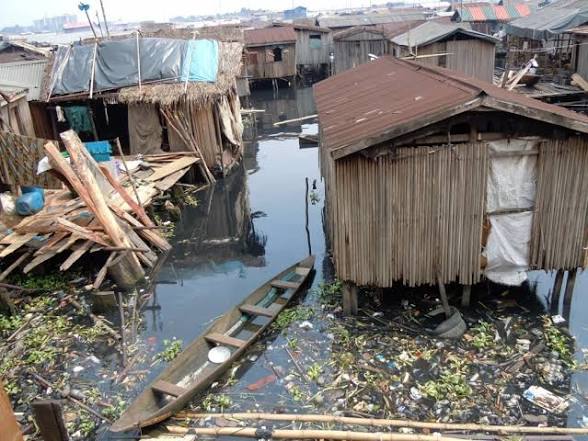
Rosbach said the scale of the crisis was particularly visible in informal settlements and slums.
More than one billion people, she said, still live in informal settlements and slums, while more than 300 million people experience homelessness.
She cautioned that improving informal settlements should not simply involve demolishing existing communities or displacing residents.
Instead, she advocated working with residents to improve housing conditions, basic services, tenure arrangements, public spaces and economic opportunities.
Housing crisis affects rich and developing countries
Rosbach said housing had become a global concern affecting countries across both the Global North and Global South.
She pointed to the global review of Sustainable Development Goal 11, which focuses on inclusive, safe, resilient and sustainable cities and communities, as well as the mid-term review of the New Urban Agenda.
She said UN-Habitat’s 2026–2029 strategic plan places housing, land and basic services at the centre of the organisation’s work.
Rosbach urged governments and other stakeholders to use World Habitat Day not merely to measure the scale of the housing shortage but to examine which interventions are working and where policy approaches need to change.
“The 3.4 billion is an enormous number, but it is also not an abstract number. It represents people, families and communities,” she said.
Five receive UN-Habitat Scroll of Honour
The 2026 UN-Habitat Scroll of Honour Award was also presented as part of the World Habitat Day observance.
According to our correspondent, five recipients were selected from more than 100 nominations.
The recipients were: Housing NOW — Myanmar, Abdelmalek Ghannem — Tunisia, Aldeia do Espraiado – Tekoa Ara Hovy — Brazil, Punjab Housing and Town Planning Agency — Pakistan, Mayor Sadiq Khan — United Kingdom
The award, established in 1989, recognises individuals and institutions that have made significant contributions to urban development, including efforts to improve urban living conditions and promote adequate, affordable and accessible housing.
Why the 3.4 billion figure matters
The statement from UN-Habitat highlights an important distinction between housing supply and adequate housing.
A country may construct thousands of new homes without necessarily resolving its housing crisis if those homes are unaffordable, lack basic services, are insecurely occupied or are located far from jobs and essential facilities.
For rapidly urbanising countries such as Nigeria, the issue is therefore not simply how many houses are built, but whether ordinary households can afford them and whether the surrounding urban infrastructure can support residents.