As Nigeria prepares for what is expected to be one of the most consequential general elections in its democratic history, the Political Intelligence Group (PIG), led by its Chairman, Lai Omotola, has stressed the need for presidential debates as a critical instrument for promoting accountability, transparency and issue-based electoral campaigns.
The group said presidential debates would provide Nigerians, particularly undecided voters, with an opportunity to assess the competence, leadership qualities, policy directions and capacity of presidential candidates to address the country’s numerous challenges before making their electoral choices.
It argued that rather than allowing elections to be determined largely by political sentiments, party affiliations, campaign rhetoric and attractive promises, Nigerians should be given the opportunity to interrogate candidates directly, compare their programmes and determine who possesses the requisite vision and capacity to govern the country.
PIG maintained that a presidential debate would also test the ability of candidates to make quick decisions, respond intelligently to difficult questions, withstand pressure and criticism, and demonstrate their understanding of the country’s political, economic and security challenges.
The group further identified the promotion of transparency and accountability, the exposure of leadership styles, the presentation of major policy issues for public discussion and the provision of a platform for candidates with limited access to the wider electorate as some of the benefits of presidential debates.
Against this backdrop, the Political Intelligence Group has announced January 10, 2027, for the maiden edition of the Nigeria Presidential Debate, which is scheduled to hold at the Transcorp Hilton Hotel, Abuja.
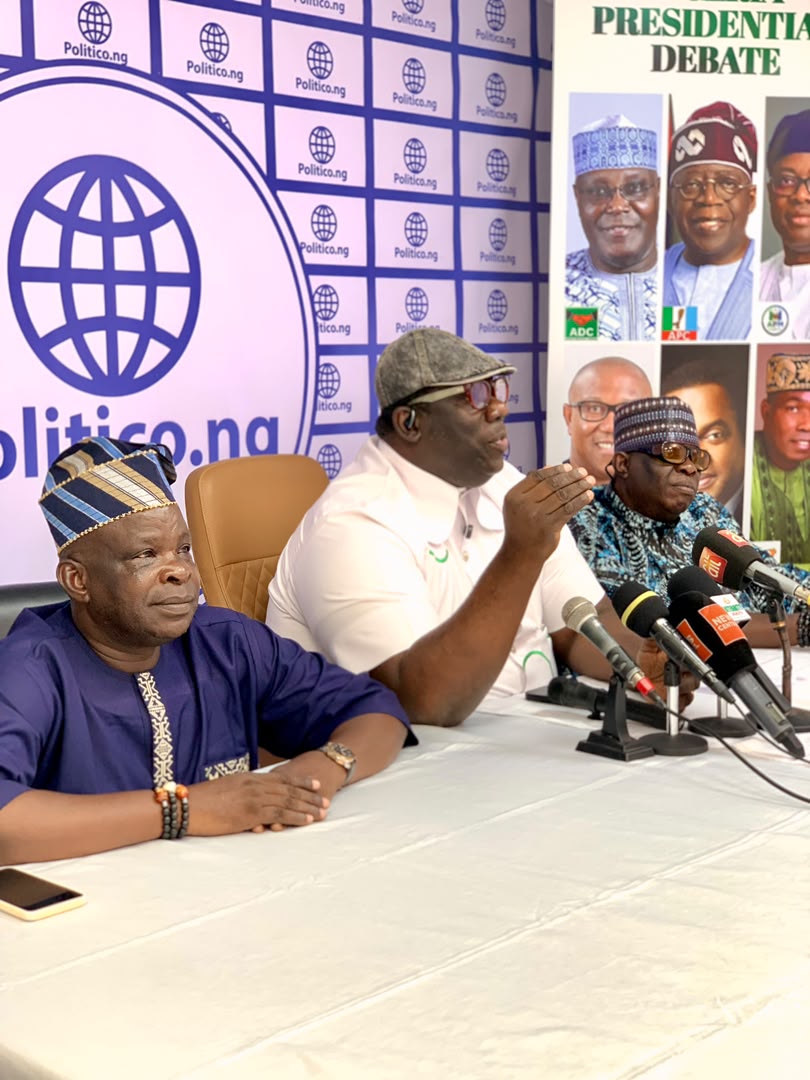
Chairman of the group, Lai Omotola, made the announcement during a press conference where he unveiled the initiative, describing it as a deliberate effort to reposition Nigeria’s electoral process towards informed choices, responsible political participation and the emergence of competent leadership.
Omotola expressed concern over what he described as the inconsistency of presidential debates in Nigeria’s electoral history, recalling that the first presidential debate took place in 1993 between the presidential candidate of the Social Democratic Party (SDP), Chief Moshood Kashimawo Olawale Abiola, and his National Republican Convention (NRC) counterpart, Alhaji Bashir Tofa.
He noted that despite the importance of such engagements to democratic development, only eight presidential debates had taken place since the historic 1993 encounter.
According to him, the absence of regular and properly organised presidential debates has deprived the electorate of an important opportunity to examine candidates beyond political campaigns and party structures.
He said the forthcoming debate was designed to address this gap by bringing presidential contenders onto a common platform where their manifestoes, policy proposals and leadership capacities would be subjected to public scrutiny.
On the format, Omotola disclosed that the debate would last for three hours and be divided into five segments, with different arrangements designed to make the engagement interactive and engaging.
He explained that the arrangements would include standing, semi-sitting and sitting positions, as well as opportunities for candidates to walk into the audience for virtual interaction.
Under the proposed format, each presidential candidate would have five minutes to respond to questions, while two minutes would be allocated for rebuttals, thereby allowing candidates to defend their positions, challenge opposing arguments and clarify their policy proposals.
The PIG chairman expressed confidence that the planning, technical arrangements and production standards for the event had been designed to meet international best practices, adding that the January 10 debate would attract considerable national and international attention.
In a move aimed at ensuring transparency and building confidence among participating candidates, Omotola also disclosed that five committees would be established to oversee different aspects of the debate.
He said each presidential candidate would be entitled to nominate five representatives to participate in the committees, an arrangement intended to promote inclusiveness, fairness and confidence in the organisation and conduct of the exercise.
The PIG chairman also urged Nigerians to approach the 2027 general elections with a renewed sense of responsibility, warning that the country could no longer afford to surrender its democratic process to disorderliness, violence and political confusion.
He observed that 66 years after independence, Nigeria should have developed sufficient political maturity to enable citizens distinguish between workable policies and unrealistic promises, as well as identify candidates with genuine capacity to provide purposeful leadership.
Omotola cautioned voters against being carried away by political inducements and attractive campaign rhetoric, insisting that the country needed precision, accuracy and sound judgment rather than experimentation with leadership.
He particularly warned against entrusting national responsibilities to individuals whose political ambitions were driven by personal needs rather than a clearly defined national development agenda.
The group maintained that the forthcoming debate was intended to help Nigerians look beyond political personalities and party loyalties by placing the candidates’ ideas, competence, preparedness and capacity for national leadership at the centre of the electoral conversation.
With political activities gathering momentum ahead of the 2027 general elections, the proposed January 10 presidential debate is expected to provide an important platform for candidates to explain how they intend to tackle Nigeria’s economic difficulties, insecurity, unemployment, infrastructure deficits and other pressing national concerns.
However, the success and credibility of the initiative will depend largely on the participation of leading presidential candidates, the neutrality of the organisers, the transparency of the debate process and the willingness of the electorate to judge candidates on the strength of their policies and demonstrated leadership capacity.
For PIG, the central objective, according to Omotola, is to ensure that Nigerians make informed electoral decisions based on competence, workable policies and the ability to deliver national development, rather than being swayed by political sentiments and promises that may not translate into tangible results.