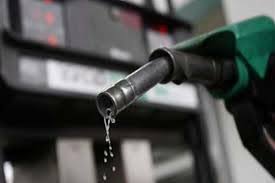
An economist has warned that the recent increase in the petrol gantry price at the Dangote Petroleum Refinery could lead to higher transportation expenses, increased business operating costs and additional pressure on household budgets.
Prof. Kenneth Ife, President of the Institute of Professional Economists and Policy Management (IPEPM), gave the warning during an interview with the News Agency of Nigeria (NAN) in Lagos.
According to Ife, rising fuel prices usually affect several sectors because transportation plays a major role in the movement of goods, services and people.
He said the latest adjustment could contribute to higher food prices and increase inflationary pressures if businesses pass additional costs to consumers.
Dangote Refinery Adjusts Petrol Price
The development followed an increase in the petrol gantry price of the Dangote Refinery from N1,265 to N1,350 per litre on Sept. 12.
The latest adjustment represents the fourth increase recorded by the refinery since Aug. 21, bringing the total rise to N185 per litre, according to NAN.
Prof. Ife said further increases could occur if global crude oil prices remain elevated due to supply disruptions and geopolitical tensions.
Global Oil Market Risks
The economist explained that international crude prices remain vulnerable to developments affecting major oil-producing regions and important shipping routes.
He noted that the price of Bonny Light crude had recently climbed significantly before experiencing a slight decline.
According to him, renewed instability in major energy-producing regions could place additional pressure on crude oil and refined petroleum prices globally.
Impact on Nigerians and Businesses
Ife said higher petrol prices could directly affect household purchasing power because transportation costs form a significant part of daily expenses for many Nigerians.
“Petrol price increases transmit directly to a reduction in household purchasing power,” he said.
He added that increased transport costs could affect the prices of food items because farmers, manufacturers and traders rely heavily on fuel for production and distribution.
The economist also warned that businesses using imported materials and energy-intensive production systems could face higher operating expenses.
According to him, this could affect the competitiveness of Nigerian businesses in regional and international markets.
Expert Opposes Return to Fuel Subsidy
While calling for measures to reduce fuel pressure, Ife advised against returning to petrol subsidies.
Instead, he urged the Federal Government to strengthen domestic refining capacity and ensure adequate crude supply to local refineries.
He said implementation of the Petroleum Industry Act (PIA), including mechanisms for domestic crude supply obligations, would help improve the availability of feedstock for Nigerian refineries.
“The government can ensure that Nigerian National Petroleum Company Ltd. supplies the required crude volumes needed by domestic refining facilities,” he said.
CNG Alternative Could Reduce Petrol Dependence
The economist also called for faster expansion of Compressed Natural Gas (CNG) infrastructure as an alternative energy source for transportation.
He suggested partnerships with filling station operators to increase CNG availability and support vehicle conversion programmes.
According to him, wider adoption of CNG could reduce dependence on petrol and help lower transportation costs over time.
“The government can accelerate CNG expansion by taking it to the mass market,” he said.
Government CNG Programme Expands
The Presidential Initiative on CNG and Electric Vehicles has reported progress in expanding alternative fuel infrastructure, including certified conversion centres and CNG refuelling stations.
The initiative was introduced to support cheaper transportation alternatives following the removal of petrol subsidies.
Meanwhile, checks by our correspondents in parts of Lagos on Sept. 20 showed petrol prices ranging between N1,400 and N1,500 per litre at some filling stations.