The Cuban Government has appealed to Nigeria to support international efforts aimed at ending the United States economic, commercial and financial restrictions imposed on Cuba.
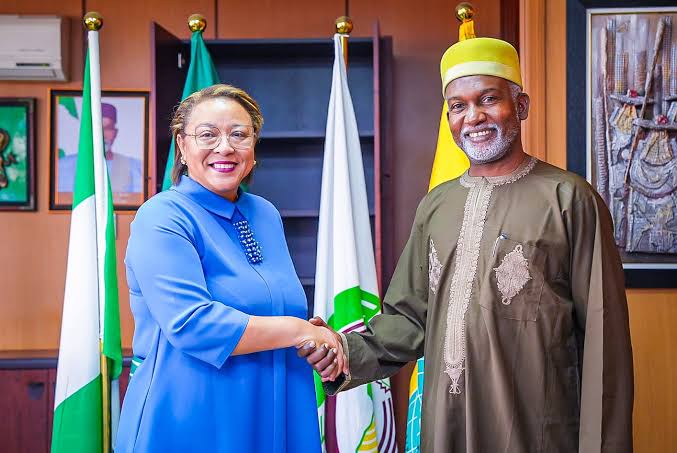
Cuban Ambassador to Nigeria, Miriam Palmero, made the appeal in Abuja during a ceremony commemorating the 100th anniversary of the birth of Fidel Castro Ruz, Cuba’s former leader.
Palmero said Nigeria’s continued support would strengthen diplomatic efforts toward removing the longstanding restrictions affecting Cuba’s economy.
Cuba Highlights Fidel Castro’s Legacy
The ambassador described Castro as a major historical figure whose ideas continue to influence discussions on international relations, independence and social development.
Castro led Cuba from 1959 until 2011, serving first as Prime Minister and later as President.
According to Palmero, the centenary celebration, which began in August 2025, was intended not only to honour Castro’s contributions but also to reflect on the relevance of his ideas in today’s global environment.
She said the commemoration comes at a period marked by international tensions and challenges.
Appeal for Nigeria’s Diplomatic Support
Palmero urged Nigeria to continue advocating for what she described as the complete, unconditional and immediate removal of the U.S. blockade against Cuba.
She also appealed for support toward Cuba’s removal from the U.S. list of countries designated as state sponsors of terrorism.
The envoy further called for the lifting of restrictions affecting Cuban institutions and organisations.
She alleged that recent measures introduced by the U.S. administration had increased economic difficulties facing Cuba.
Cuba Raises Concerns Over Humanitarian Impact
The Cuban ambassador said the restrictions had affected several sectors of the economy and contributed to difficulties experienced by ordinary citizens.
She cited challenges involving healthcare services, banking operations and access to technology.
Palmero claimed that foreign banking restrictions had affected Cuba’s ability to conduct international transactions, including payments related to renewable energy projects.
“Forty foreign banks have refused to do business with Cuba, while 140 bank transfers have been blocked, including payments for renewable energy technology,” she said.
She described these developments as examples of the impact of the U.S. policy on Cuba.
Cuba Recalls Relationship With Africa
The ambassador also highlighted Cuba’s historical relationship with African countries, particularly its role in supporting liberation struggles.
She recalled the involvement of Cuban soldiers in the fight against apartheid in South Africa, describing it as part of Cuba’s longstanding solidarity with Africa.
Palmero expressed appreciation to Nigeria for its friendship and support, saying relations between both countries were built on shared values of cooperation and solidarity.
The event at the Cuban Embassy in Abuja was attended by trade union representatives, embassy supporters and other guests who gathered to mark the centenary of Castro’s birth.