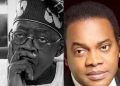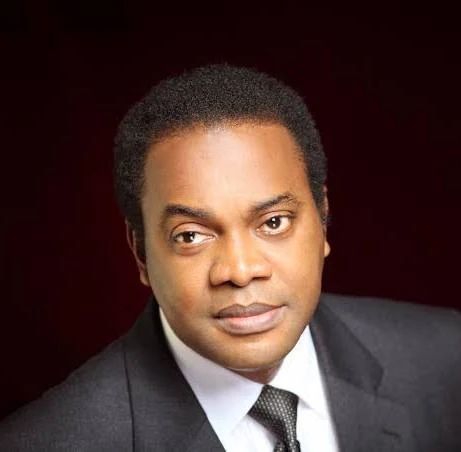
The Federal High Court in Abuja has fixed November 2, 2026, to deliver judgment in a lawsuit challenging Donald Duke’s emergence as the Peoples Redemption Party presidential candidate for the 2027 general election.
Justice Mohammed Umar reserved the matter for judgment on Tuesday after lawyers representing the parties adopted their written submissions.
Abdullahi Muhammad appeared for the plaintiff, while Noah Abdul represented Duke. Azubuike Ogochukwu appeared for the Independent National Electoral Commission.
The case was instituted by Yakubu Kingsley, who participated in the PRP presidential nomination process and is seeking to overturn Duke’s emergence as the party’s candidate.
Kingsley named the Peoples Redemption Party, Duke and INEC as the first, second and third defendants respectively.
The suit, marked FHC/ABJ/CS/1234/2026, challenges the primary election conducted by the PRP on May 25, whose result was announced the following day.
Plaintiff Questions Duke’s Party Membership
Kingsley alleged that Duke was not a duly registered PRP member when the party submitted its membership register to INEC on May 4.
He asked the court to determine whether Duke could validly participate in the presidential primary under those circumstances.
The plaintiff also alleged that the former Cross River State governor failed to appear physically for screening at the PRP national secretariat as required by the party’s guidelines.
Kingsley is therefore seeking a declaration that Duke should not have been cleared to participate in the primary election.
He also alleged over-voting in the results recorded in Bauchi, Gombe and Kwara states and asked the court to set aside the affected results.
The aspirant wants the court to declare him the PRP presidential candidate, arguing that he was a registered member and complied with the party’s nomination requirements.
He also asked for an order directing INEC to stop recognising Duke as the party’s presidential flagbearer and instead accept his own nomination.
In an affidavit supporting the case, Kingsley identified himself as a PRP member from Auchi III Ward in Etsako West Local Government Area of Edo State.
He said he paid ₦20 million for the party’s expression-of-interest and presidential nomination forms.
Duke and PRP Challenge Court’s Jurisdiction
Duke and the PRP filed a preliminary objection asking the Federal High Court to dismiss the case for lack of jurisdiction.
Their lawyer, Noah Abdul, argued that the lawsuit was a pre-election matter and should have been instituted within 14 days of the event being challenged.
According to the defendants, the cause of action arose on May 26, when the primary result was declared, but the case was not filed until June 11.
They argued that filing the matter 17 days after the result was announced placed it outside the period permitted under Section 285(9) of the 1999 Constitution.
Reports describe the originating summons as dated June 10, while the defendants maintain that the action was formally filed on June 11. The court is expected to determine the legal effect of the filing date when it delivers judgment.
Abdul also argued that questions concerning membership of a political party were internal party affairs over which the court lacked jurisdiction.
He maintained that the issue was not one that could ordinarily be determined by the judiciary.
INEC Maintains Neutral Position
INEC told the court that its officials only monitored the PRP presidential primary in accordance with the Electoral Act.
The electoral commission said its representatives did not accredit delegates, supervise voting, collate ballots or declare the winner.
According to INEC, those responsibilities belonged exclusively to the electoral committee appointed by the PRP.
The commission said it could not independently add or remove results from any ward, local government area or state during a political party’s primary.
INEC maintained that it was required to act on the name validly submitted by a political party unless a competent court issued a contrary order.
The commission also said it had no personal interest in whether Duke or Kingsley emerged as the PRP candidate and remained neutral in the dispute.
Justice Umar is expected to determine both the defendants’ jurisdictional objection and the substantive challenge to Duke’s nomination when judgment is delivered on November 2.
Until then, the allegations concerning party membership, screening and over-voting remain claims before the court and have not been judicially established.