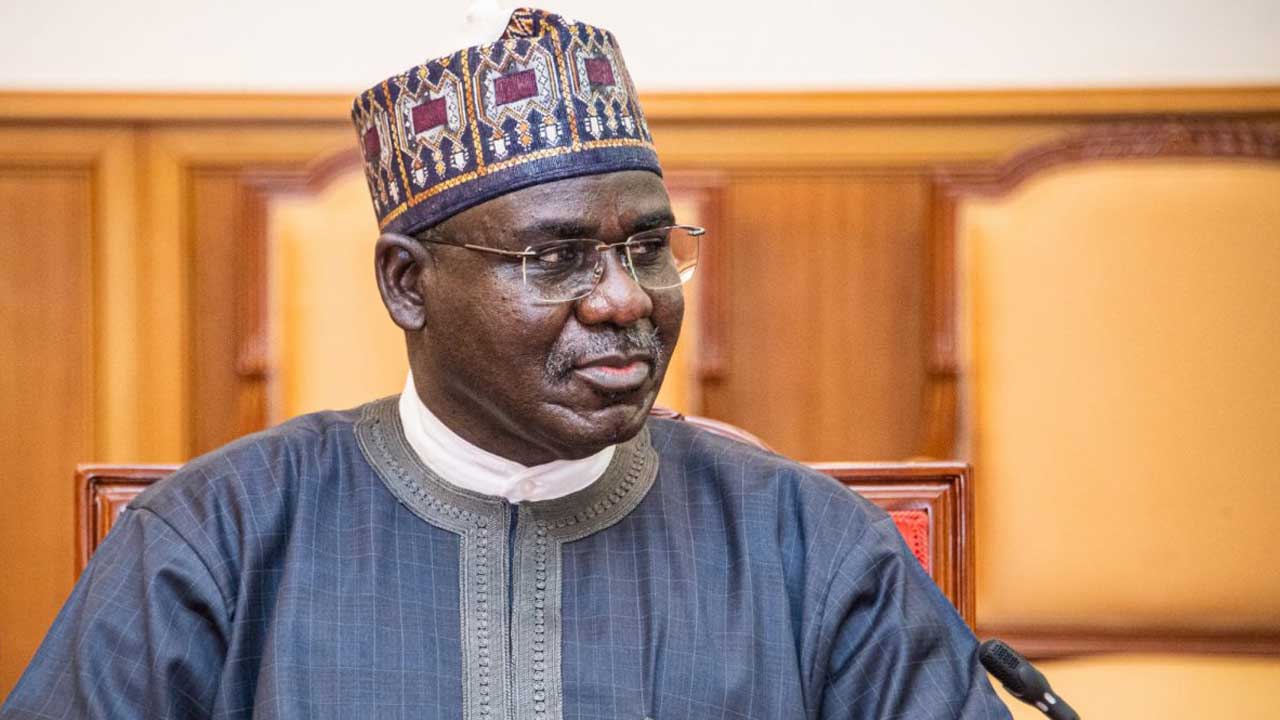
Former Chief of Army Staff, retired Lt.-Gen. Tukur Buratai, has stressed the importance of effective intelligence gathering and analysis in addressing Nigeria’s complex security challenges.
Buratai made the remarks in Gora, Nasarawa State, during the presentation of Defence, Intelligence and Statecraft, a book written in his honour.
He said security agencies must have a clear understanding of the nature, location and activities of emerging threats before they can develop effective responses.
According to the retired general, strengthening intelligence capabilities should go beyond collecting information to ensuring that intelligence is properly analysed and converted into actionable strategies.
Intelligence crucial to security operations
Buratai said the connection between defence, intelligence and statecraft had become increasingly important as Nigeria confronts diverse and evolving security threats.
He noted that effective security management required more than military capabilities, stressing the importance of accurate intelligence, strategic planning, diplomacy and sound decision-making.
The former Army chief called for the book to be used as a resource for teaching and research in Nigeria’s military and security institutions.
He specifically recommended that copies be made available to institutions including the Nigerian Defence Academy, Armed Forces Command and Staff College and National Defence College, as well as the police and other branches of the armed forces.
Buratai reflects on Boko Haram fight
Reflecting on his period as Chief of Army Staff, Buratai said his experience during the fight against Boko Haram insurgency reinforced his conviction that intelligence should remain at the heart of military operations.
He explained that commanders depend on reliable intelligence to determine where troops should be deployed, distribute resources and respond quickly to emerging threats.
Buratai also highlighted the need for stronger collaboration and information sharing among security institutions and academic researchers.
He said closer links between institutions and scholars would encourage the exchange of knowledge and promote a broader understanding of Nigeria’s defence and security challenges.
Book documents Buratai’s military experience
Buratai commended the authors and contributors for documenting aspects of his career and experiences in Nigeria’s defence and security sector.
He said the publication could serve as a valuable resource for researchers, military professionals and students studying Nigeria’s security history.
Dr Sunday Adejo, one of the book’s co-authors, described Buratai as a mentor whose influence extended beyond the military into academia.
Adejo said his interaction with the retired general had influenced his interest in military studies and contributed to the decision to document Buratai’s experiences for future generations.
He credited Buratai’s tenure with several innovations in counter-insurgency operations, including the establishment of Forward Operating Bases and other measures intended to increase military presence in communities affected by security threats.
Adejo said some of the measures introduced during Buratai’s tenure contributed to containing the insurgency and recovering territories previously controlled by Boko Haram.
Authors praise former Army chief
Another co-author, Dr Mohammed Abubakar, praised Buratai for his contributions to Nigeria’s national security and described the book as an opportunity to examine the country’s security experiences.
Abubakar said lessons from those experiences could help strengthen Nigeria’s response to contemporary threats.
Former Nigerian Ambassador to Cuba, Amb. Ben Okoyen, also commended the publication, describing it as an important effort to preserve the experiences of a senior military officer who played a significant role in Nigeria’s security history.
He expressed hope that the book would encourage further research and help future generations understand the decisions and strategies that shaped Nigeria’s defence and security architecture.
The event attracted academics, researchers, military professionals and other stakeholders who gathered to honour Buratai and reflect on his contributions to national security.