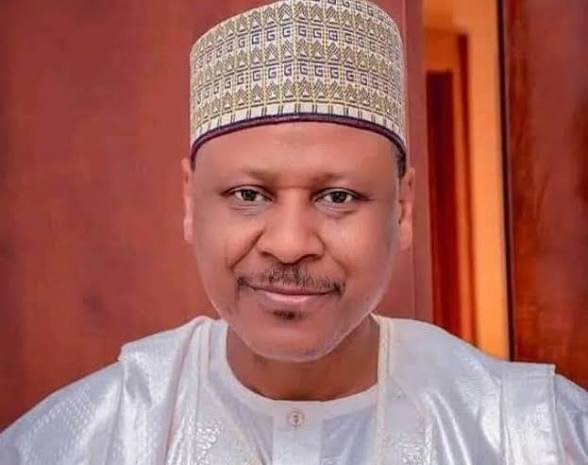
The Federal Government has reaffirmed its commitment to working with the United Kingdom and other international partners to combat misinformation, fake news and the misuse of artificial intelligence (AI) ahead of Nigeria’s 2027 general elections.
Minister of Information and National Orientation, Mohammed Idris, disclosed this on Tuesday, November 3, during a meeting with the British High Commissioner to Nigeria, Peter Vowles, in Abuja.
Idris said the growing spread of misleading information, particularly through digital platforms, presented serious challenges to public confidence in elections and the integrity of democratic processes.
He explained that international cooperation would be important in developing effective responses to emerging information threats.
FG raises concerns over fake news ahead of 2027 elections
Speaking during the diplomatic engagement, Idris identified misinformation and deliberately fabricated news as major concerns requiring sustained attention.
He said the rapid development of artificial intelligence had introduced additional challenges to the way information is produced, distributed and consumed.
According to the minister, misleading content circulating during election periods could create confusion among voters and undermine confidence in electoral institutions.
He maintained that Nigeria was already engaging international partners to strengthen its capacity to address such risks.
Idris said the government’s objective was to support an electoral environment in which citizens could access reliable information and make informed decisions.
Nigeria seeks stronger UK partnership on election misinformation
The information minister described the meeting as part of ongoing diplomatic cooperation between Nigeria and the United Kingdom.
He said both countries had opportunities to exchange knowledge and develop practical approaches to information management.
According to Idris, cooperation with the UK and other partners could help Nigeria respond more effectively to misinformation and emerging digital threats.
The minister also highlighted the importance of communication strategies capable of improving public understanding of government activities and electoral processes.
He noted that Vowles, who had been in Nigeria for approximately eight weeks, was using the visit to gain a clearer understanding of the country’s information environment.
The discussions covered government communication, public access to information and challenges associated with the digital media landscape.
Artificial intelligence raises new challenges for election information
Artificial intelligence has made it easier to produce convincing images, audio recordings and videos that may not reflect actual events.
Such material, commonly associated with deepfakes and synthetic media, can be used to impersonate public figures or spread misleading political messages.
During elections, false information about candidates, voting arrangements or official results can circulate rapidly online.
Idris said these developments made cooperation among governments and other stakeholders increasingly important.
He emphasised the need for measures that would protect the credibility of electoral information as Nigeria prepares for the 2027 polls.
The minister did not announce a specific new regulatory framework, joint enforcement programme or funding commitment during the meeting.
UK says Nigeria’s elections remain a sovereign responsibility
In his remarks, British High Commissioner Peter Vowles acknowledged the importance of Nigeria’s electoral process while emphasising that elections were matters for Nigerians and their institutions.
He explained that his visit was primarily intended to understand how the Federal Government communicates with citizens and manages public information.
Vowles said the United Kingdom also faced challenges involving misinformation, particularly as artificial intelligence changes the digital information environment.
He noted that the shared nature of these problems created opportunities for cooperation between both countries.
The envoy expressed interest in exchanging experiences and exploring approaches that could improve public communication and responses to misleading information.
FG, UK discuss improving communication with citizens
Beyond election-related misinformation, the meeting examined how governments communicate policies, programmes and national developments to the public.
Vowles said understanding Nigeria’s communication structures would help strengthen bilateral engagement.
Idris also emphasised that effective information management was important for public trust and democratic accountability.
Both officials acknowledged that misinformation was not limited to one country and that international dialogue could help institutions understand emerging challenges.
However, the discussions were exploratory, and neither side announced a formal agreement establishing a new joint anti-misinformation programme.
Why misinformation matters for Nigeria’s 2027 elections
Election-related misinformation can take several forms, including fabricated statements, manipulated videos, false voting instructions and misleading claims about results.
These risks are particularly relevant in an environment where political information spreads quickly through social media, messaging applications and online news platforms.
Addressing them requires access to accurate official information, independent fact-checking, media literacy and transparent communication from electoral authorities.
It is also important to distinguish deliberately false information from legitimate political criticism, satire, opinion and reporting on matters of public interest.
Any government response to misinformation must therefore be considered alongside constitutional protections for freedom of expression and press freedom.
What happens next?
The Federal Government says it intends to continue working with the United Kingdom and other partners to strengthen responses to information-related threats.
The discussions with Vowles form part of broader diplomatic engagement as Nigeria prepares for the 2027 general elections.
For now, the meeting represents a commitment to cooperation rather than the announcement of a detailed new policy.
Further developments would be needed to establish whether the talks produce specific programmes, technical partnerships or other measures to address election-related misinformation.