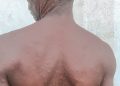



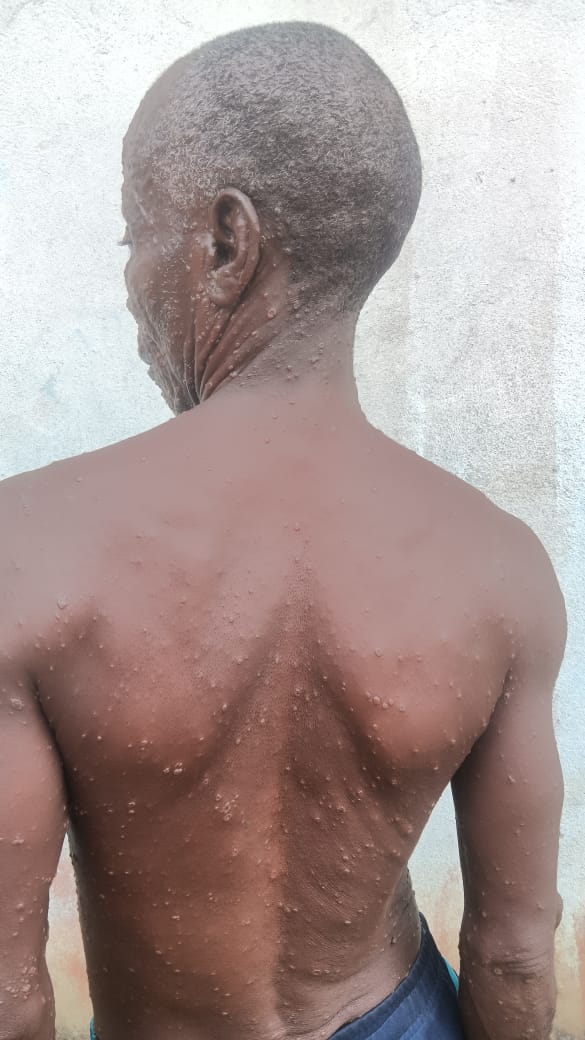
Residents of Ondewari community in Southern Ijaw Local Government Area of Bayelsa State are calling for urgent medical intervention following reports of an unidentified skin disease affecting children and adults.
The Ondewari Health Education and Environmental Project (OHEEP), a community-based organisation, raised the alarm over the situation, warning that the illness could spread further if health authorities fail to investigate and provide timely medical assistance.
In a field report released on Sunday, the organisation said several residents had developed skin eruptions and other symptoms associated with a suspected infectious disease.
However, the exact cause of the illness remains unknown, with medical confirmation still required to establish whether the cases are linked to chickenpox, mpox or another skin condition.
Residents report skin eruptions and other symptoms
Woyeinbrakemi Adaka, OHEEP’s Programme Officer, said the organisation became concerned after receiving reports of multiple residents experiencing unusual skin conditions.
One of those affected, Tontiemotei Yeiyei, a man in his 60s, reportedly developed widespread skin eruptions accompanied by physical discomfort, sensitivity to heat and occasional feelings of cold.
Yeiyei said he had visited a neighbouring health facility in Korokorosei, where a doctor reportedly suspected mpox and referred him to Niger Delta University Teaching Hospital in Okolobiri for further medical attention.
Another resident, Fredrick Simon, said the symptoms differed among affected individuals, adding that some people appeared to be recovering.
Seitonkumo Erefawei, the Public Relations Officer of the Ondewari youth organisation, also confirmed concerns about the situation, noting that some affected residents had stopped participating in normal community activities.
Community recalls deadly measles outbreak
The latest health concerns have revived painful memories of a measles outbreak that affected Ondewari in 2010 and reportedly claimed the lives of several children.
OHEEP recalled that the situation was eventually contained following interventions by the Bayelsa State Government and international medical organisation Doctors Without Borders.
The organisation warned that the community’s current healthcare challenges could make it difficult to respond effectively to another infectious disease emergency.
Abandoned health facility raises further concerns
A major concern highlighted by OHEEP is the absence of a functioning healthcare facility in Ondewari.
According to the organisation, the community has a health centre constructed and equipped by the Nigerian Agip Oil Company (NAOC) more than a decade ago, but the facility has not been operating as expected due to the absence of adequate medical personnel.
The organisation believes that activating the centre would significantly improve access to healthcare and enable residents to receive timely treatment during medical emergencies.
It consequently appealed to the Bayelsa State Government, Southern Ijaw Local Government Council and relevant health authorities to dispatch medical teams to the community, investigate the reported cases and establish the actual cause of the illness.
OHEEP also called on the Bayelsa State Hospitals Management Board to deploy qualified personnel and restore services at the Agip-supported health facility.
Snakebite death highlights healthcare challenges
The organisation further drew attention to the recent death of a 43-year-old resident, Simeon Thompson, following a snakebite.
It cited the incident as another example of the dangers residents face when emergency medical services are inaccessible or unavailable within the community.
OHEEP warned that delays in investigating the suspected skin disease and providing appropriate treatment could expose more residents to avoidable health complications.
The organisation urged government agencies and healthcare partners to treat the situation as an urgent public health concern.
Meanwhile, the nature of the reported illness remains unconfirmed. Health authorities are expected to establish the cause through appropriate medical examinations and laboratory investigations before any definitive diagnosis can be made.
Important editorial distinction: The report describes a suspected outbreak, not a confirmed mpox or chickenpox outbreak. The article deliberately preserves that distinction to avoid creating unnecessary public panic.