


The World Health Organisation (WHO) says Coronavirus (COVID-19) is 10 times deadlier than swine flu which caused a global pandemic in 2009.
WHO Director-General, Dr Tedros Ghebreyesus, stated this at a virtual news conference in Geneva on Monday.
He said that the virus could spread more easily in crowded environments like nursing homes.
“We know that early case-finding, testing, isolating caring for every case and tracing every contact is essential for stopping transmission.
“We know that in some countries, cases are doubling every three to four days,” he said.
According to him, while COVID-19 accelerates very fast, it decelerates much more slowly; in other words, the way down is much slower than the way up.
“That means control measures must be lifted slowly, and with control. It cannot happen all at once.
“Control measures can only be lifted if the right public health measures are in place, including significant capacity for contact tracing.
“But while some countries are considering how to ease restrictions, others are considering whether to introduce them – especially many low- and middle-income countries in Africa, Asia and Latin America.
“In countries with large poor populations, the stay-at-home orders and other restrictions used in some high-income countries may not be practical.
“Many poor people, migrants and refugees are already living in overcrowded conditions with few resources and little access to health care,’’ he said.
Ghebreyesus added:”How do you survive a lockdown when you depend on your daily labour to eat.”
He said news reports from around the world described how many people were in danger of being left without access to food.
The director general said that schools had closed for an estimated 1.4 billion children; this had halted their education, opened some to increased risk of abuse, and deprived many children of their primary source of food.
“As I have said many times, physical distancing restrictions are only part of the equation, and there are many other basic public health measures that need to be put in place.
“We also call on all countries to ensure that where stay-at-home measures are used, they must not be at the expense of human rights.
“Each government must assess their situation, while protecting all their citizens, and especially the most vulnerable,’’ he said.
He said that to support countries in making these decisions, WHO would tomorrow be publishing its updated strategic advice.
“The new strategy summarises what we’ve learned and charts the way forward. It includes six criteria for countries as they consider lifting restrictions:
“First, that transmission is controlled; second, that health system capacities are in place to detect, test, isolate and treat every case and trace every contact.
“Third, that outbreak risks are minimised in special settings like health facilities and nursing homes;
“Fourth, that preventive measures are in place in workplaces, schools and other places where it’s essential for people to go; fifth, that importation risks can be managed.
“And sixth, that communities are fully educated, engaged and empowered to adjust to the “new norm,” he said.
He said every country should be implementing a comprehensive set of measures to slow down transmission and save lives, with the aim of reaching a steady state of low-level or no transmission.
“Countries must strike a balance between measures that address the mortality caused by COVID-19, and by other diseases due to overwhelmed health systems, as well as the social economic impacts.
“As the pandemic has spread, its public health and socioeconomic impacts have been profound, and have disproportionately affected the vulnerable. Many populations have already experienced a lack of access to routine, essential health services.
“Our global connectedness means the risk of re-introduction and resurgence of the disease will continue.
“Ultimately, the development and delivery of a safe and effective vaccine will be needed to fully interrupt transmission,” he said.
In addition, he said some countries and communities had now endured several weeks of social and economic restrictions.
The director general said some countries were considering when they could lift these restrictions; others are considering whether and when to introduce them.
“In both cases, these decisions must be based first and foremost on protecting human health, and guided by what we know about the virus and how it behaves.
“Since the beginning, this has been an area of intense focus for WHO.
“As we have said many times before, this is a new virus, and the first pandemic caused by a coronavirus,’’ he said.
Ghebreyesus added: “We’re all learning all the time and adjusting our strategy, based on the latest available evidence.
“We can only say what we know, and we can only act on what we know.
“Evidence from several countries is giving us a clearer picture about this virus, how it behaves, how to stop it and how to treat it.’’
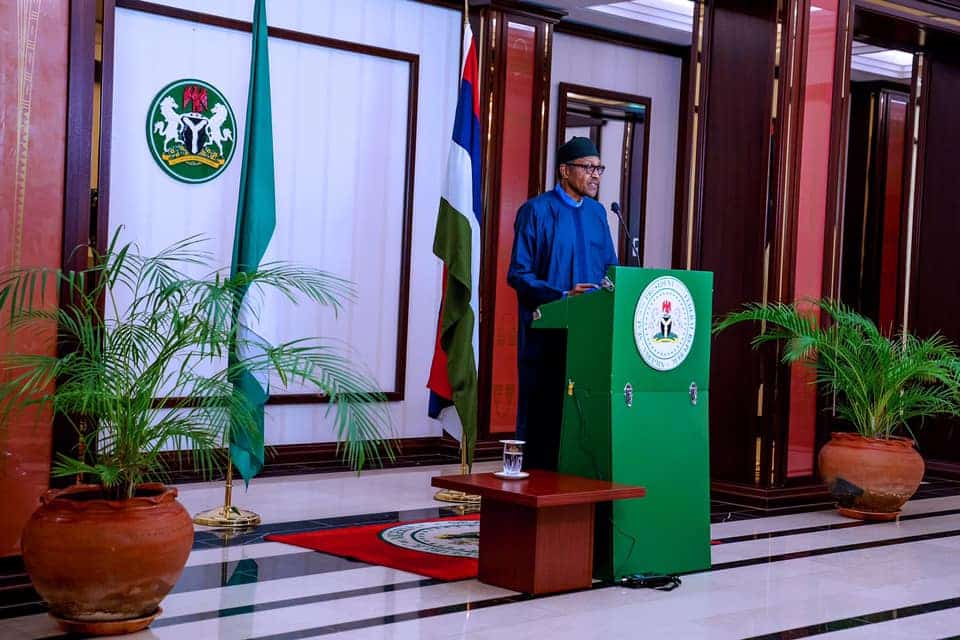
In Nigeria, President Muhammadu Buhari has alerted the nation over reported large proportion of new infections of Coronavirus in communities across the country, through person-to-person contacts.
The president made this known when he addressed the nation on the extension of restriction of movement in Lagos, Ogun and FCT by additional 14 days to curb the spread of the deadly virus in the country.
He said: “As a nation, we are on the right track to win the fight against COVID-19. However, I remain concerned about the increase in number of confirmed cases and deaths being reported across the world and in Nigeria specifically.
“On 30th March 2020, when we started our lockdown in conforming with medical and scientific advice, the total number of confirmed cases across the world was over 780,000.
“Yesterday (April 12), the number of confirmed COVID-19 cases globally was over one million, eight hundred and fifty thousand. This figure is more than double in two weeks!
“In the last fourteen days alone, over 70,000 people have died due to this disease.
“In the same period, we have seen the health system of even the most developed nations being overwhelmed by this virus.
“Here in Nigeria, we had 131 confirmed cases of COVID-19 in 12 States on 30th March 2020. We had two fatalities then.
“This morning, Nigeria had 323 confirmed cases in twenty States. Unfortunately we now have ten fatalities. Lagos State remains the center and accounts for 54% of the confirmed cases in Nigeria. When combined with the FCT, the two locations represent over 71% of the confirmed cases in Nigeria.”
However, Buhari, who noted with satisfaction that the closure of the nation airports and land borders had helped in checking impact of external factors on spread of the virus, said attention must be shifted to contact between person to person in the country.
“By closing our airports and land borders and putting strict conditions for seaport activities, we have reduced the impact of external factors on our country.
“However, the increase in the number of States with positive cases is alarming.
“The National Centre for Disease Control has informed me that, a large proportion of new infections are now occurring in our communities, through person-to-person contacts.
“So, we must pay attention to the danger of close contact between person to person.
The president, therefore, reminded all Nigerians to continue to take responsibility for the recommended measures to prevent transmission, including maintaining physical distancing, good personal hygiene and staying at home.
He said: “In addition, I have signed the Quarantine Order in this regard and additional regulations to provide clarity in respect of the control measures for the COVID-19 pandemic which will be released soon.
“The public health response to COVID-19 is built on our ability to detect, test and admit cases as well as trace all their contacts. While I note some appreciable progress, we can achieve a lot more.’’
The president acknowledged what he described as “the incredible work’’ being done by the healthcare workers and volunteers across the country especially in frontline areas of Lagos and Ogun States as well as the FCT.
“You are our heroes and as a nation, we will forever remain grateful for your sacrifice during this very difficult time,’’ he added.
According to him, more measures to motivate the health care workers are being introduced and will be announced in the coming weeks.
In France, President Emmanuel Macron has extended the anti-coronavirus lockdown until May 11, in a televised speech to the nation on Monday.
The strict rules on social contact – including instructions to only spend one hour outside per day and not further than 1 km from your home were also extended.
The rules had been in place since March 17.
This is coming as the number of people being treated in intensive care went down for the fifth day in a row on Monday
After May 11, Macron said the fight against the virus would enter “a new stage.” After this date, there could be a gradual reopening of nurseries and educational institutions.
By then he said France should be able to test everyone who presents symptoms of Covid-19, the respiratory disease caused by the novel coronavirus.
Macron thanked those who have kept to the rules, and expressed sympathy for those who are having to exist in small apartments.
He acknowledged that France had not been adequately prepared for the rapid onslaught of the disease.
French authorities have talked about a “high plateau” when it comes to the coronavirus outbreak.
France has seen about 15,000 deaths so far. The number of people being treated in intensive care went down for the fifth day in a row on Monday.
In Enugu State, the state government has directed commercial tricycle operators in the state, popularly known as `Keke riders’, to limit their operating time between 6 a.m. and 7 p.m. daily.
The Secretary to the Enugu State Government (SSG), Prof. Simon Ortuanya, made this known in a statement in Enugu on Monday.
He said that the directive takes effect from Monday evening, April 13.
“The decision was in furtherance of the state government’s efforts to sustain its robust response to contain the spread of coronavirus (COVID-19) in the state as well as provide maximum security for residents.
“The earlier Executive Order issued by His Excellency, the Governor, that every ‘Keke operator’ should carry a maximum of two passengers at a time remains in force.
“Any Keke operator found in contravention of the above directive shall be apprehended by the security agencies and dealt with according to the law,’’ Ortuanya said,
The Association of Tricycle Riders Transport Union (ATRTU), Enugu State, had reminded its members about the directive by the Enugu State Government that commercial tricycle operators in the state should be carrying two passengers only.
The directive that tricycle riders should not operate beyond the state’s land boundaries is still in force.


WHO: COVID-19 10 times deadlier than swine flu; Buhari raises alarm over community infections; France lockdown extended until May 11; Enugu Govt imposes time limit on commercial tricycle operations

Leave a Reply









Latest Stories






© 2026 Published by SWAAYA LIMITED, Plot 20, Block G, Scheme 1, Residential 3, OPIC Beachland Estate, Lagos/Ibadan Expressway, Lagos. Gabriel Akinadewo, MD/CEO 08023010222, 08094000056, 08052097814.