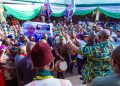
The United Nations Educational, Scientific and Cultural Organisation (UNESCO), in collaboration with the Federal Government of Nigeria, has inaugurated the world’s first International Media and Information Literacy Institute (IMILI) at the National Open University of Nigeria (NOUN). This historic milestone positions Nigeria at the forefront of efforts to strengthen critical thinking and media literacy in Africa and beyond.
Ms. Mariya Gabriel, UNESCO Assistant Director-General for Communication and Information (ADG/CI), confirmed the establishment of the institute during an interview at the inauguration event. She highlighted that the IMILI initiative is a transformative response to the growing challenges of the modern information age, especially in terms of combating misinformation and empowering societies to make informed decisions.
“In a world where the volume of information continues to grow exponentially, the ability to distinguish between reliable and misleading content has become essential,” Gabriel said. “IMILI will serve as a global hub for research, capacity development, policy support, and innovation in Media and Information Literacy (MIL). It will help governments, educators, media professionals, and young people develop the tools and skills needed to critically engage with information, counter misinformation, and actively participate in democratic processes.”
Gabriel further emphasized that the institute’s role is critical for enabling individuals and societies to engage with information responsibly and with critical awareness, thus fostering informed decision-making and democratic participation.
The event was attended by several prominent figures, including Sen. George Akume, Secretary to the Government of the Federation, and Minister of Information and National Orientation, Mohammed Malagi. Also present were Dr. Suwaiba Ahmad, Minister of State for Education, and Prof. Uduma Uduma, Vice-Chancellor of the National Open University of Nigeria.
The establishment of the IMILI is a significant step towards ensuring that both Nigeria and Africa as a whole play a leading role in addressing the challenges posed by the information age, particularly in strengthening the ability of people to critically engage with media content in their daily lives.