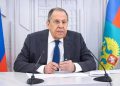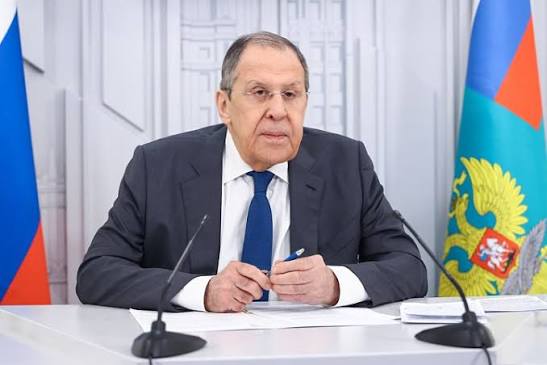
Russian Foreign Minister Sergey Lavrov has rejected allegations that Moscow sponsored Nigerian protesters who displayed Russian flags during the nationwide #EndBadGovernance demonstrations in August 2024.
Lavrov maintained that the actions of individuals carrying Russian flags should not be interpreted as evidence of official Russian involvement or support for attempts to interfere in Nigeria’s internal affairs.
The minister made the remarks in Moscow while responding to a question from the News Agency of Nigeria (NAN) on the sidelines of a Russia-Africa diplomatic gathering.
Lavrov Denies Russian Government Involvement
Addressing concerns about the appearance of Russian flags during the demonstrations, Lavrov said the protesters acted independently and were not representing the Russian government.
He argued that individuals sometimes display foreign national flags to express political sympathy or solidarity without receiving instructions from the countries concerned.
The Russian foreign minister compared the situation with demonstrations where participants carry Palestinian flags to show support for Palestinians.
According to him, the presence of a country’s flag at a protest does not automatically establish that its government organised, financed or endorsed the demonstration.
Lavrov insisted that Russia had no role in encouraging Nigerian protesters to undermine their country’s sovereignty.
How Russian Flags Became a Controversy During 2024 Protests
The #EndBadGovernance demonstrations took place across Nigeria between August 1 and August 10, 2024, as citizens protested rising living costs, economic hardship and government policies.
During the protests, groups of demonstrators in Kano, Kaduna, Zamfara and Abuja were seen carrying Russian flags.
Some protesters also reportedly called for military intervention, raising concerns among Nigerian authorities about threats to constitutional government.
The development attracted attention because of Russia’s expanding diplomatic and security relationships with several military-led governments in the Sahel region.
The Federal Government condemned the display of foreign flags alongside calls for military rule, describing such actions as a threat to Nigeria’s sovereignty.
Security agencies subsequently arrested several people, including protesters and individuals accused of producing the flags.
The Russian Embassy in Abuja denied involvement in the demonstrations at the time.
Russia Reaffirms Diplomatic Relations With Nigeria
Lavrov said Moscow remained committed to maintaining its longstanding relationship with Nigeria, which dates back to the Soviet era.
He pointed to educational cooperation as one of the areas where relations between the two countries had continued to develop.
According to the minister, Russian government scholarships offered to Nigerian students had increased, reaching 220 places in 2026.
He also referred to previous diplomatic engagements between officials of both countries as evidence of continued cooperation.
Lavrov maintained that the flag controversy should not be treated as an indication of Russian government involvement in Nigeria’s domestic political affairs.
Lavrov Defends Russia’s Security Cooperation in the Sahel
The Russian foreign minister also addressed Moscow’s defence relationships with countries in the Sahel, where insecurity and military-led political transitions have reshaped regional alliances.
He said Russia’s security cooperation with countries in the region was intended to help address armed violence and other threats to stability.
Lavrov further alleged that some Western governments were using Ukrainian mercenaries to interfere with Russian-backed security efforts.
He compared the alleged activities with developments in Libya.
These accusations represent the Russian government’s position and were not independently substantiated in the reported remarks.
Russia’s growing security presence in parts of the Sahel has attracted international attention amid disagreements over foreign military involvement, regional stability and the role of external powers.
Russia Says US Diesel Deal Will Not Affect Allies
Lavrov also commented on a reported diesel supply arrangement involving Russia and the United States.
He characterised the arrangement as a commercial decision driven by energy-market considerations.
The foreign minister maintained that the reported deal would not undermine Moscow’s relationships with its international partners.
He presented the agreement as a business matter rather than a change in Russia’s diplomatic commitments.
Russian Flag Controversy Remains Part of Nigeria’s Protest Debate
The controversy surrounding Russian flags during the 2024 #EndBadGovernance protests highlighted concerns about foreign influence, political expression and national security.
While Nigerian authorities treated calls for military intervention as a serious security concern, Russia has consistently denied directing or sponsoring the protesters involved.
Lavrov’s latest remarks reiterate Moscow’s position that displaying a Russian flag does not, by itself, establish government involvement.
His comments also underline Russia’s stated intention to maintain diplomatic, educational and security-related engagement with African countries, including Nigeria.