There comes a time in the life of every community when its elites must speak – not because they possess a monopoly of wisdom, nor because they seek to determine the political choices of others, but because silence in the face of an emerging social dilemma can itself become a failure of responsibility.
The growing political conversation in Gombe State, particularly as it relates to the leadership aspirations associated with Professor Isa Ali Ibrahim Pantami, presents such a moment.
My concern here is neither with the personality of Professor Pantami nor with the constitutional right of any Nigerian citizen to participate in politics. It is about something larger: the place of religious authority in partisan political competition and the danger of converting spiritual capital into political capital.
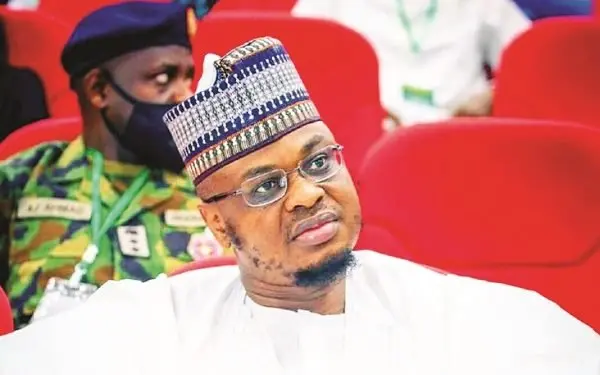
Professor Pantami is an accomplished scholar, former public office holder and, importantly for this discussion, a highly recognisable Islamic scholar and preacher. It is that latter identity which makes the question worthy of sober reflection.
What particularly inspired me to write this reflection is an experience that has become increasingly difficult to ignore. Outside Gombe State, in conversations with mutual friends and acquaintances – and especially among some followers of Professor Pantami’s well-known Ramadan tafsir at Al-Nur Mosque in Abuja, Capital of Nigeria, the moment they encounter someone from Gombe, the questions now come almost instinctively: “What about Pantami’s candidature?” “What is going to happen in Gombe come 2027?” I have encountered these questions often enough to appreciate that what might ordinarily have been regarded as a local political aspiration has assumed a wider significance precisely because of the personality involved. Interestingly, people are not merely asking about another prospective candidate; they are asking about Professor Pantami – the scholar, the preacher and the religious figure they have listened to and followed over the years. It was this recurring experience that compelled me to reflect more deeply on where the boundaries between spiritual influence and partisan aspiration ought to lie, and whether society should remain indifferent when a religious personality of considerable following becomes the subject of an intensely political conversation.
Islam does not require scholars to be indifferent to governance. On the contrary, justice, consultation (shura), trust (amanah), accountability and concern for public welfare are deeply embedded in Islamic political ethics. Contemporary scholarship continues to emphasise these principles, while Islamic political thought has long recognised consultation in public affairs as an important element of legitimate governance.
Indeed, there is a legitimate school of thought that goes further and argues that the ulama should actively participate in politics and even seek political office. Recent Nigerian scholarship has defended precisely that position. I respect that argument. But there is an equally important distinction between religion guiding politics and religious authority becoming partisan politics.
A scholar may teach a governor justice without becoming a candidate for governor. An Imam may condemn corruption without carrying the flag of a political party. A preacher may mobilise society against poverty, drug abuse, ignorance and injustice without asking his congregation to become his electoral constituency.
Indeed, the religious leader who remains above partisan struggle may possess something even a governor does not possess: the moral authority to correct every governor.
Once the revered scholar enters partisan competition, however, the dynamics inevitably change.
Opponents must scrutinise him. Political rivals must challenge him. Campaigners may ridicule his record. His statements will be dissected. His followers may interpret political criticism as an attack upon their faith or their teacher. Conversely, his opponents may begin transferring their resentment of the politician to the religious institution he represents. That is where society must be careful.
My appeal regarding Professor Pantami should therefore not be misunderstood as hostility to him. Quite the contrary. It arises partly from recognising the enormous religious influence he already commands. The question Gombe people should ask is not simply: Can Professor Pantami become Governor? As a
citizen, that is fundamentally a matter for law, politics and the electorate. The deeper question is: What does our society gain or lose when a prominent religious authority descends from the relatively universal platform of spiritual leadership into the divisive arena of partisan competition? (This similar question was also asked and attested to, by the cleric himself, at the time when the scripture was handy and the desire for worldly things did not germinate to fruition).
A governorship lasts four years at a time. Moral influence can endure generations. Politics necessarily divides people into camps. Religion, at its highest calling, should reconcile them.
Politics asks: Who defeated whom?
Faith asks: What is right?
Politics produces government and opposition. The religious leader ought ideally to retain the moral freedom to speak truth to both.
Nigeria’s experience demonstrates how delicate the relationship between religion and politics already is. Academic work has documented the complexity of religious identity within Nigerian politics and the potential of religious competition to affect Christian-Muslim relations and national cohesion. Nigeria’s constitutional architecture itself prohibits the adoption of a state religion while protecting freedom of religion, reflecting the need to accommodate a profoundly plural society.
Only yesterday, more than fifty Muslim and Christian leaders in Nigeria came together in Abuja around an interfaith peace initiative aimed at religious harmony and curbing extremism and hate speech. That illustrates the higher role religious leadership can play: standing above political divisions to preserve society itself.
This tension is not peculiar to Islam or Nigeria. Different societies have adopted different approaches. In some democracies, clergy participate actively in political life; in others, religious traditions deliberately create distance between spiritual authority and partisan politics. Comparative research, for example, notes the striking contrast between Thailand, where Buddhist monks face strong restrictions on electoral political activity, and Sri Lanka, where monks have a tradition of direct parliamentary participation.
Christianity has wrestled with the same question. The Catholic tradition, for instance, strongly encourages responsible political participation by the faithful while maintaining an important distinction between the vocation of lay citizens in political life and the special ecclesiastical responsibilities of religious leadership.
And recent events elsewhere demonstrate what can happen when institutional religion becomes deeply entangled with partisan confrontation. Armenia’s continuing confrontation between political authorities and senior church figures illustrates how quickly disputes involving clergy and government can place religious institutions themselves at the centre of political conflict.
We should learn without blindly copying anyone. The fact that something occurs in an advanced democracy does not automatically make it desirable for Gombe. Democracy gives people rights; wisdom teaches us that possessing a right does not mean exercising it in every circumstance is necessarily the highest service one can render society.
Permit me to use an analogy from another great challenge confronting mankind. The world has spent enormous intellectual, scientific and financial resources studying climate change and environmental degradation. Nations establish institutions, scientists conduct research, communities advocate conservation, and governments enter international agreements to protect the environment. I recall, from my privilege of attending the United Nations climate conferences (COP26) in Glasgow and COP27 in Sharm el-Sheikh, Egypt – how leaders of repute from different nations, faiths and intellectual traditions repeatedly spoke of a responsibility extending beyond the present generation. The recurring message was that mankind holds the earth in trust and must act collectively to protect not only those living today, but generations yet unborn from the consequences of climate change. That experience left a lasting impression on me: whatever our faith or station in life, responsible stewardship requires us sometimes to look beyond our immediate interests and ask what kind of world – and, equally, what kind of society – we shall bequeath to those who come after us.
For a believer, none of this means that Allah did not know from the beginning how the earth would evolve or when its existence would terminate. Divine knowledge does not abolish human responsibility.
We plant trees despite believing in destiny.
We treat illness despite believing that life and death belong to Allah.
We protect children despite believing that Allah is their ultimate Protector.
We pursue peace despite knowing that conflict forms part of human history.
Therefore, faith in divine decree can never become an excuse for abandoning human stewardship. The same principle should guide us in protecting the moral environment of society. Just as humanity accepts a collective responsibility to preserve the physical environment, religious leaders have an even greater responsibility to preserve our moral environment – truth, compassion, dignity, justice, restraint, tolerance, family, neighbourliness and respect for human life.
These values are not exclusively Muslim or Christian. People who profess neither Christianity nor Islam recognise honesty, human dignity, justice, compassion and peaceful coexistence as foundations of civilisation.
That universality should tell us something profound: religion is at its greatest when it elevates humanity rather than when it merely enlarges a political constituency. This is therefore my respectful appeal to our Imams, ulama, pastors, priests and other custodians of faith.
Participate in the moral development of politics. Educate citizens. Challenge bad government. Condemn corruption. Demand justice. Defend the poor. Counsel those in authority. Encourage competent people to seek office. Teach followers that selling votes is morally destructive. Pray for leaders and, when necessary, courageously correct them. But we must think very carefully before transforming the pulpit itself into a political platform.
A religious leader who endorses Candidate A risks making the followers of Candidate B uncomfortable in his congregation. A scholar who becomes Candidate A creates an even more complicated situation: criticism of the candidate may be mistaken for disrespect toward the scholar, while loyalty to the scholar may be converted into an electoral obligation. That is unhealthy both for religion and democracy.
This concern has also appeared in Nigerian public debate: even commentators who recognise the constitutional right of clerics to participate politically have argued that the special respect commanded by religious leaders creates a compelling case for neutrality and statesmanship. Our scholars should be fathers to competing politicians, not competitors against their spiritual children.
Let the politician fear that tomorrow the Sheikh may publicly tell him he has acted unjustly. Let the governor know that the Imam cannot be bought with appointment. Let the opposition know that the scholar will condemn its falsehood just as firmly as government’s wrongdoing. That independence is power.
I therefore address Professor Isa Ali Ibrahim Pantami with respect. Lest Professor Pantami wonders, perhaps with some amusement, why this elitist counsel appears to have chosen his name from among the many who aspire to political leadership in Gombe, the explanation is itself a compliment carrying a burden. He is no longer perceived merely as Isa Ali Pantami, the private citizen or former Minister; through decades of preaching, teaching and public engagement, he has become, rightly or wrongly, one of the most visible contemporary faces of Sunni Islamic scholarship in Nigeria, particularly to a
generation of Muslims who have listened to and learned from him. History has a curious way of attaching scholars to the intellectual traditions they publicly represent: centuries later, we still speak of Arab and Muslim scholars such as Ibn Khaldun not principally because of whatever ordinary ambitions surrounded their private lives, but because scholarship became their enduring identity. Professor Pantami may therefore forgive some of us for expecting more restraint from him than we might demand from an ordinary politician. One cannot enjoy the extraordinary moral capital of the scholar and, at the same time, reasonably expect society to treat one’s entry into partisan politics as though it were merely the career progression of another politician. The greater the religious stature society confers upon a person, the greater, rather inconveniently, becomes society’s legitimate concern about how that stature is deployed. There are victories greater than winning an election. There are positions higher than occupying Government House. There are constituencies larger than a state. A man who has acquired considerable knowledge, international exposure, national public-service experience and a large following has several avenues through which he can influence generations without necessarily becoming governor.
He can produce leaders.
He can mentor governments.
He can build institutions.
He can reconcile political adversaries.
He can speak for Gombe before every government irrespective of which party controls it.
And, most importantly, he can remain a religious voice to whom the winner and loser of an election can both comfortably turn.
Gombe needs good governors. But Gombe also needs respected elders and scholars who are bigger than its governorship contests.
This appeal does not question anyone’s qualification, patriotism or constitutional liberty. Nor should anybody weaponize religion against Professor Pantami or any other aspirant. It is instead an invitation to contemplate the price society may unknowingly pay when its most influential spiritual authorities become actors in the fierce competition for political power.
We must also remember that posterity will sit in judgment over the choices we make today, long after we have departed this world. History will be less concerned with the passions, ambitions and political calculations of our moment than with whether our actions ultimately served the common good of the weal and strengthened or diminished the society entrusted to us. As elites and custodians of faith, culture and communal values, ours is therefore a responsibility that transcends personalities, elections and generations. We are expected to leave behind a moral compass by which society can distinguish power from service, ambition from sacrifice, and what is merely permissible from what is ultimately beneficial. Our duty is not only to preserve religious doctrine and cultural heritage, but also to protect and sanctify the moral foundations of society itself – to nurture justice, restraint, tolerance, dignity and peaceful coexistence. The true measure of our stewardship will consequently not be the political victories achieved in our lifetime, but whether generations yet unborn inherit from us a society whose moral institutions remain strong enough to guide them when we are no longer here to speak.
Those of us who speak as elites or elders must think beyond the next election. The real question is not who governs Gombe from 2027. The greater question is what kind of Gombe we shall hand over to our children twenty or thirty years from now.
Will they inherit mosques divided according to political camps?
Will scholars be classified according to parties?
Will sermons be interpreted through electoral affiliations?
Will criticism of a politician who happens to be a scholar be regarded as hostility towards religion?
Or shall they inherit a society where the mosque remains a sanctuary for the supporter of every lawful political tendency; where the scholar can rebuke the government without being called opposition; and where he can correct the opposition without being called an agent of government? That is the Gombe I would rather preserve. Political power is temporary. Religious institutions outlive administrations. Governments come and go; faith accompanies communities across generations. Therefore, to Professor Pantami and every distinguished religious leader contemplating partisan political leadership, I offer not condemnation but an elitist’s appeal: Consider not merely whether you can win political power, but whether the moral authority you already possess is more valuable to society than the political authority you seek.
And to our people, let us never turn this question into hostility. Let us debate it with knowledge, dignity and brotherhood. For ultimately, the responsibility of the believer is not merely to prepare humanity for the Hereafter. It is also to make our temporary residence on earth more just, peaceful, dignified and humane. Just as we preserve the earth because it has been entrusted to mankind, we must preserve the sanctity of faith because it too is a trust. Politics needs the guidance of religion. But religion does not always need the possession of political power to provide that guidance. Sometimes its greatest power lies precisely in remaining sufficiently above the contest to speak truth to whoever wins it.
*Umar Usman Kukandaka, Mni
K/Kumbia Quarters, Gombe
Gombe State.