

Provost of the Federal College of Education (Special), Oyo, Professor Adeyemi Usman, has said unity and progress of the country will continue to be threatened until core values that should promote law and order, respect for elders, sanctity of human lives, brotherliness, honesty, tolerance are appreciated and adhered to.
Usman also asserted that compulsive quest for material acquisitions, stagnation of national development, as well as wrong corporate and economic decisions will persist in the country, until tertiary institutions nurture not only the intellect, but build the characters
of the young minds and empower them with the moral force to resist
tendency towards moral infractions.
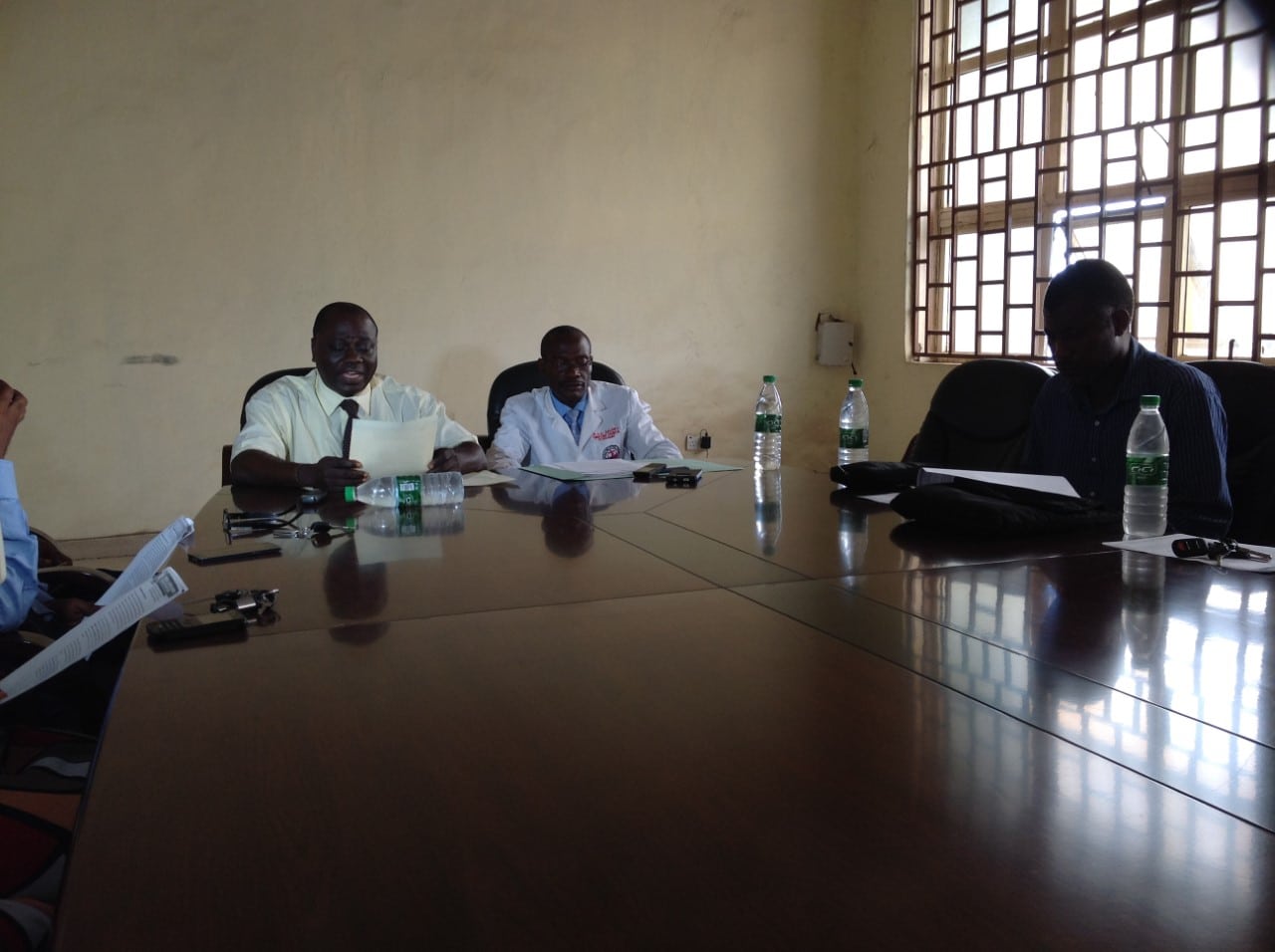
The Provost in his recent maiden interaction with journalists since
he assumed office in Oyo town, said in this era of globalization,
there is value crisis leading to increase in the atmosphere of
conflict and turmoil, as well as rate of crime and delinquency while
socio- psychological health of the people has also declined.
‘’There is therefore the need to analyse the loss of important and
essential values that may be aditional and old but are highly
cherished values. These include the concern for brotherhood and
neighbourhood, which are now lost to the process of achieving the
material world. Character is more important than the vigour of body
and keenness of the intellect. It is the soil on which all else must
grow or else nothing can come into fruition. People must be faithful
to their word, respect mutual obligations and be kind to one another
and place the welfare of others above personal gains.’’
Considering the place of education in societal development, Usman
noted that it could be used to transform the society through value
orientation for the teachers who are the architects of the national
development, leaders and the masses.
This, in his opinion, can be achieved through well-articulated policies
on values and education, and the incorporation of values education in the school curriculum of education.
Usman submitted that the country is in dire need of students who become employers of labour but are adequately imbibed in basic moral principles and not just entrepreneurial skills, adding that this will go a long a way in ensuring hard-work, integrity, honesty and accountability to run a successful enterprise and develop good sense
of judgement.
“It will also lead to decrease in the current leadership deficit,
prevent constitution of moral baggage, but enhance basic knowledge of
employer/ employee relations, sound attitudes for corporate
governance, good management of the economy and progressing national
development”.
He observed that tertiary institutions must begin to ask questions
about the kind of nation they plan to hand over to these future
leaders, and be ready to take tough decisions that will make the
country attain the goal of becoming part of the leading economies by
Year 2020.
“Our mandate must be the promotion of moral values and sound ethics,
in addition to institutionalizing the culture of excellence in
teaching, learning and research. To address the current leadership
problem in our country, tertiary institutions must, as a matter of
utmost concern, begin a systematic realignment of programmes towards
producing leaders that have moral background, and whose perspective
about life is not restricted to compulsive acquisition of material
wealth”.
Said he: “The country urgently need people who are driven by
nationalistic fervour, selfless and patriotic as being exhibited by
the present administration. This is the appropriate time for tertiary
institutions to rise to the challenges of parlous state of the
economy, the global meltdown in oil earnings which are the mainstay of
our economy and attendant palpable fear among the populace, by
producing innovative research and a plethora of workable policy advice
that will evolve a new path for national development.”
He also called for motivation and adequate training for the
personnel, as well as provision of state of the art equipment.
On poverty, he advocated skill-based and entrepreneurial education
especially at post basic and post – secondary levels of education,
right political will and demonstration of sincerity of purpose to
fight corruption both in the public and private lives.
Professor Usman hinted that the college which was established in 1977
and has the best qualified staff and specialized training facilities
in Special Education not only in Nigeria, but in West,, North, East
and Central Africa is rethinking its strategies to make it more
functional and relevant to the dynamics of the present age.
The college which is the only one of its kind in Nigeria and
sub-Saharan Africa, Usman informed also has the largest conglomeration
of handicapped students that could be found in any higher institution
in Nigeria.


Promotion of moral values will reduce conflict in Nigeria, says College Provost


Leave a Reply







Latest Stories






© 2026 Published by SWAAYA LIMITED, Plot 20, Block G, Scheme 1, Residential 3, OPIC Beachland Estate, Lagos/Ibadan Expressway, Lagos. Gabriel Akinadewo, MD/CEO 08023010222, 08094000056, 08052097814.