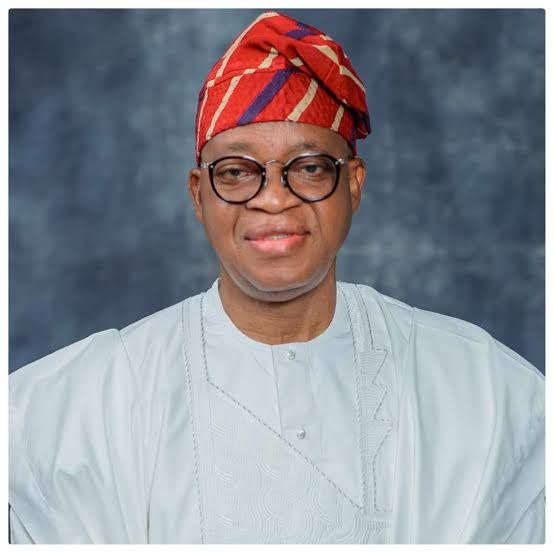
The Federal Government is set to begin a major rehabilitation programme at Nigeria’s two busiest seaports, Apapa and Tin-Can Island ports in Lagos, with Minister of Marine and Blue Economy, Dr Adegboyega Oyetola, scheduled to perform the official flag-off ceremony on November 25.
The project is expected to address decades of infrastructure deterioration, improve cargo-handling operations and strengthen Nigeria’s competitiveness in international maritime trade.
Dr Bolaji Akinola, Special Adviser to the Minister of Marine and Blue Economy, announced the development in a statement issued on Monday.
According to Akinola, the modernisation represents a significant intervention in Nigeria’s maritime sector, particularly as Apapa and Tin-Can Island ports collectively handle a substantial share of the country’s international cargo traffic.
He described the planned rehabilitation as the first comprehensive modernisation of the two facilities in approximately five decades.
The intervention is expected to tackle ageing port infrastructure, operational inefficiencies and the growing demands placed on Lagos’ maritime corridors.
Government targets faster cargo clearance and improved port efficiency
The proposed rehabilitation is designed to increase cargo-handling capacity, reduce the time vessels spend at berth and minimise delays experienced by importers and exporters.
Other expected improvements include better port access, upgraded logistics infrastructure and stronger safety and security arrangements.
Akinola said the modernisation would also create a more efficient operating environment for shipping companies, investors, terminal operators and other maritime stakeholders.
The improvements are particularly important for businesses that depend on timely cargo delivery, as prolonged vessel turnaround and cargo dwell times can increase shipping expenses, demurrage charges and the overall cost of doing business.
Four additional ports also earmarked for modernisation
Beyond Lagos, the Federal Government is extending its port rehabilitation strategy to other parts of the country.
Akinola disclosed that approval had also been granted for the modernisation of Warri, Onne, Calabar and Rivers ports.
The wider initiative is intended to expand Nigeria’s maritime capacity, encourage investment outside Lagos and reduce the concentration of cargo-handling activities around the country’s commercial capital.
By improving facilities in different coastal regions, the government hopes to create more efficient gateways for international trade while supporting economic activities in surrounding communities.
Maritime infrastructure central to economic diversification
The minister’s special adviser stressed that modern port facilities would play an important role in Nigeria’s economic diversification efforts.
He noted that efficient seaports were necessary to support non-oil exports, strengthen local industries and improve the country’s attractiveness to international investors.
The programme is also expected to promote stronger connections between seaports and other transportation systems, including road networks, railways, inland waterways and dry ports.
Such integration would support multimodal transportation, allowing goods to move more efficiently between production centres, distribution hubs and international markets.
Nigeria seeks stronger position in regional maritime trade
The modernisation of Apapa and Tin-Can Island ports forms part of the Federal Government’s broader plan to develop a more efficient and internationally competitive maritime sector.
For Nigeria, the success of the project could have far-reaching implications for importers, exporters, manufacturers, shipping companies and businesses operating across the country’s supply chains.
However, stakeholders will be watching closely to see how quickly construction progresses and whether the promised improvements translate into shorter cargo delays, lower logistics costs and better services for port users.
With the November 25 flag-off approaching, attention is now turning to the implementation of the project and the Federal Government’s wider ambition to reposition Nigeria as a leading maritime and commercial hub in West and Central Africa.