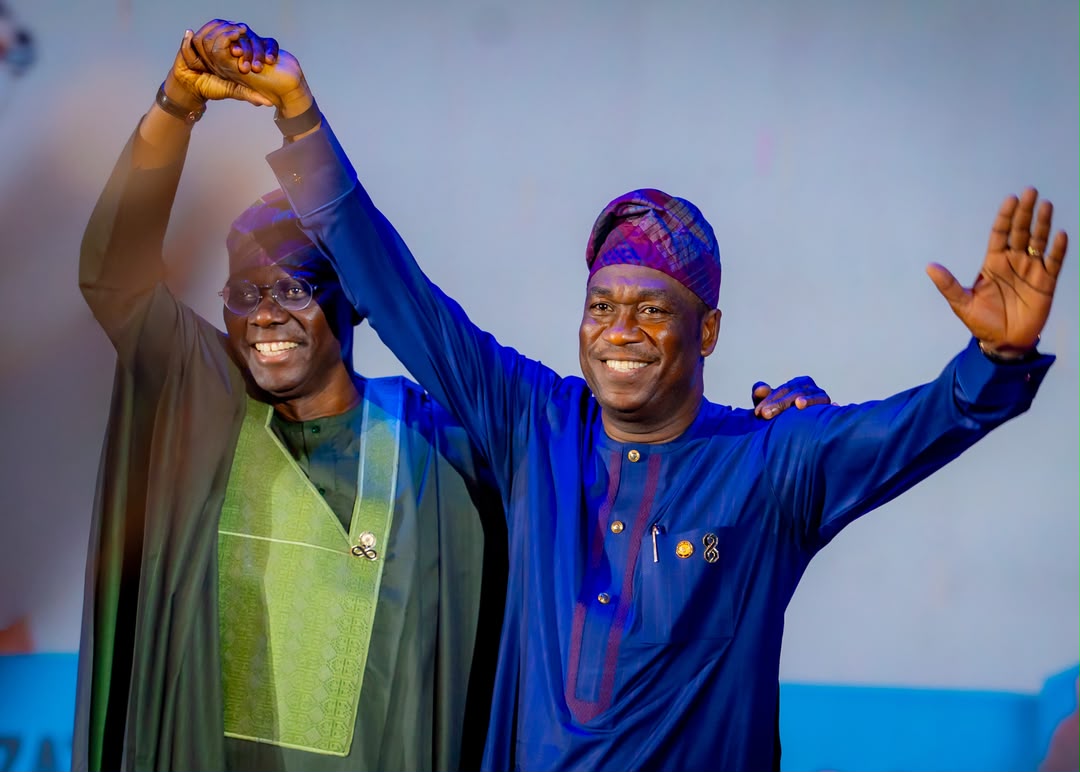
* Gov. Sanwo-Olu raising Hamzat’s hand at the ceremony
As Sanwo-Olu prepares to hand over the baton in May 2027, his deputy, Dr Kadri Obafemi Hamzat, offers Lagosians a 100-point development agenda anchored on infrastructure, human capital, economic opportunities and measurable accountability.
But beyond the political symbolism of succession lies a bigger question: can the next administration transform the promises of today into tangible improvements in the lives of millions of Lagos residents?
The unfolding political transition in Lagos State has taken a significant turn with the unveiling of a comprehensive development manifesto by the All Progressives Congress (APC) governorship candidate, Dr Kadri Obafemi Hamzat, who is seeking to succeed his principal, Governor Babajide Sanwo-Olu, in the 2027 governorship election.
Tagged The Lagos Promise (Ileri Eko), the manifesto is more than an assortment of campaign commitments. It is an attempt to define the next phase of Lagos development, consolidate the achievements of successive APC administrations and respond to the mounting expectations of residents of a state whose economic importance, population growth and urban challenges continue to place enormous demands on governance.
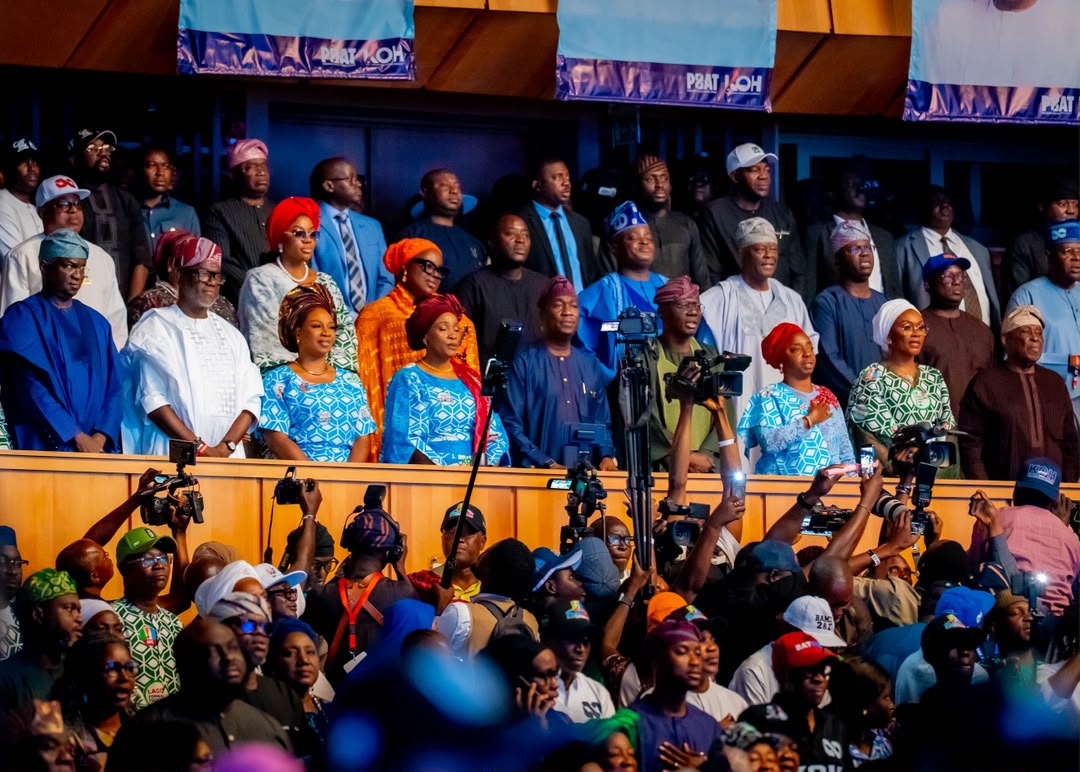
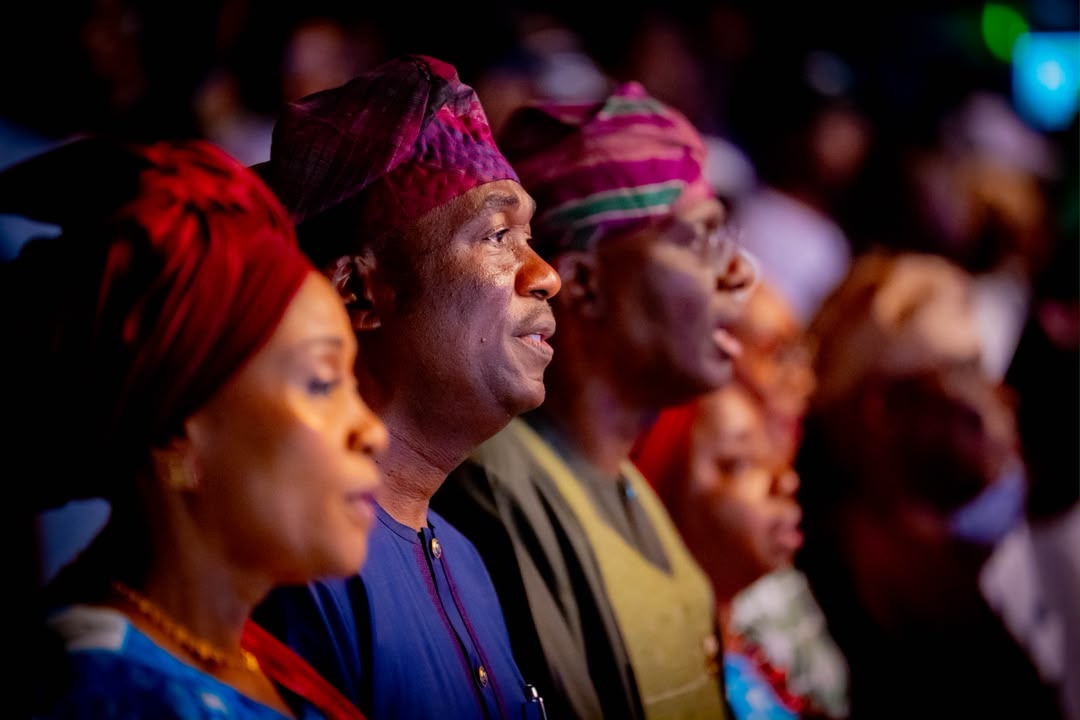
The unveiling, which took place on Friday, October 30, 2026, at the Wole Soyinka Centre for Culture and Creative Arts, formerly the National Theatre, Iganmu, also carried considerable political significance. It was not merely the presentation of a candidate’s policy document. It was an occasion at which Sanwo-Olu publicly endorsed his deputy as his preferred successor, presenting the forthcoming transition as an opportunity to sustain the developmental trajectory established by the APC in Lagos since 1999.
Indeed, the governor’s address gave the occasion a distinct political character, transforming what would ordinarily have been a manifesto presentation into a declaration of confidence in an orderly succession and continuity of governance.
Sanwo-Olu’s most memorable symbolism was the presentation of a baton, which he described as a representation of continuity and the responsibility of carrying forward the collective development aspirations of Lagos.
Recalling the circumstances surrounding the 2018 governorship contest, the governor spoke about the personal sacrifice Hamzat made when party leaders asked him to step aside in his ambition to become governor, paving the way for Sanwo-Olu to emerge as the party’s candidate.
For Sanwo-Olu, that episode remains an important demonstration of Hamzat’s loyalty, political maturity and commitment to the collective interest of the party.
He also recalled their relationship, which predates their present positions in government, describing the APC candidate as a dependable partner with whom he had worked closely for years.
According to him, Hamzat had acquired the requisite knowledge, temperament, experience and administrative capacity to sustain the progress of Lagos.
The governor described the occasion as one of the happiest days of his administration, particularly because it represented the prospect of a peaceful and orderly political transition.
His message was unmistakable: Lagos should not gamble with its development by abandoning the institutional experience and administrative knowledge already available within the present government.
He challenged Hamzat to justify the confidence reposed in him by the party leadership, elders and the governor himself by demonstrating to Lagosians that he possessed the capacity to sustain and improve on the achievements of successive administrations.
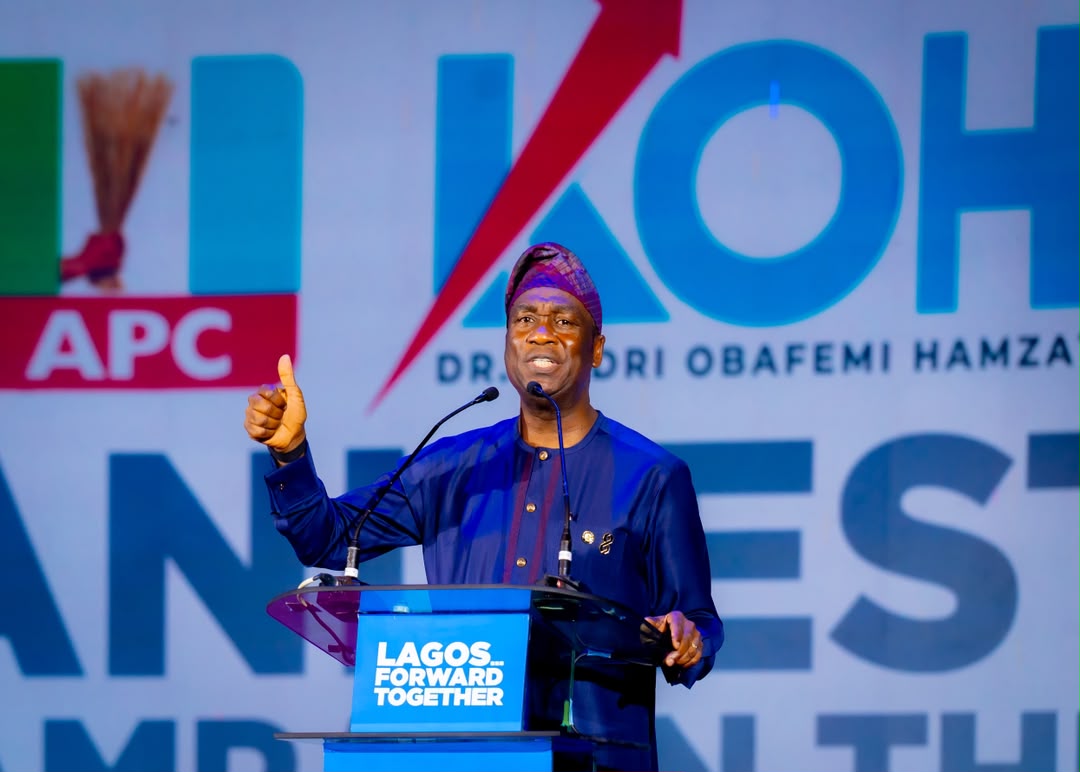
It was against this background that Hamzat presented what he described as a promise carrying the weight of a public obligation.
For the APC candidate, the word promise is not a convenient political expression. It is a debt owed to the people.
*APC Governorship Candidate, Dr. Obafemi Hamzat presenting his manifesto
In his words, “A promise is a debt. In Yoruba, we say: Gbese ni Ileri. A promise has weight.”
That philosophical position provides the foundation of the manifesto, which is organised around seven pillars, seven letters and 100 pledges.
The seven pillars are People First, Renewal, Opportunity, Machinery of Government, Inclusion, Security and Resilience, and Everyday Dignity.
However, what distinguishes the document from the usual campaign declarations is Hamzat’s attempt to separate commitments within the direct authority of the state government from broader aspirations requiring federal cooperation, judicial intervention or wider consultations.
Of the 100 pledges, 87 are classified as firm commitments, while 13 are described as aspirations.
The candidate promises that the firm commitments will be subjected to published performance scorecards, giving residents an opportunity to monitor implementation and demand explanations where targets are missed.
This emphasis on measurable governance is particularly significant in a state where successive administrations have established ambitious infrastructure and urban development programmes, but where residents continue to contend with traffic congestion, inadequate affordable housing, environmental challenges, unemployment and the rising cost of living.
The Human Face of Manifesto:
Perhaps the most striking feature of Hamzat’s manifesto is its attempt to place ordinary residents, rather than government institutions or infrastructure projects, at the centre of development planning.
The candidate repeatedly returns to the experiences of the mother struggling to obtain medical attention for a sick child, the young woman spending hours commuting to work, the market woman struggling to keep her business afloat and the child whose future depends on access to education and protection.
His personal account of rescuing a 10-year-old boy found sleeping under a bridge at Oshodi at about 2am provides an important insight into the philosophy behind his proposed administration.
According to him, the boy had run away from home in another state because his home had ceased to be safe.
The experience, he explained, reinforced his conviction that protecting a child requires more than the intervention of one government agency. It requires a coordinated system involving schools, health facilities, social welfare institutions, security agencies and communities.
It is this thinking that informs his declaration that every child living in Lagos should be regarded as a child of Lagos, irrespective of the state of origin, language or religious background of the child’s parents.
The proposition is particularly relevant to Lagos, a cosmopolitan state whose population consists of people from virtually every part of Nigeria and beyond.
Hamzat’s position is that the state must provide protection, education and opportunities for every child who lives within its boundaries.
To translate this philosophy into policy, he has proposed that the first bill he would transmit to the Lagos State House of Assembly, if elected, would establish a Child Protection and Nutrition Agency.
The proposed agency would coordinate interventions to ensure that children below the age of 18 are either in school or learning a trade and receive adequate nutrition to support their development.
It is an ambitious proposal that, if properly implemented, could provide a more coordinated response to child vulnerability, street begging, child labour, school exclusion and other social problems confronting urban communities.
But the effectiveness of such an institution would ultimately depend on its funding, staffing, relationship with existing agencies and ability to reach children in vulnerable households.
Health Issues: Taking Medical Services Closer to The People:
Healthcare is another major component of the manifesto, with Hamzat proposing an expansion of existing facilities and a broader reach for the state’s health insurance programme.
He promises to increase the number of Maternal and Child Centres from the present 10 to 15, particularly in communities that have waited longest for improved maternal and child healthcare.
The Ilera Eko health insurance programme, which he says currently covers nearly two million residents, is expected to expand to cover one in every three Lagosians, with priority given to the poorest households.
The candidate also outlined plans to complete and expand several hospital projects already under construction.
These include the 150-bed Massey Children’s Hospital, the 280-bed Ojo General Hospital and the 150-bed Somolu General Hospital.
Together, the facilities are expected to provide 580 additional hospital beds.
Beyond these projects, Hamzat promises to establish two new general hospitals at Ogombo and Ibeju-Lekki, increase the capacity of existing general hospitals and upgrade 100 primary healthcare centres to flagship status.
The commitment also includes recruiting additional doctors, nurses and midwives while improving the working conditions of healthcare professionals.
The emphasis on retaining medical personnel is important, considering the pressure on the state’s healthcare system and the growing competition for qualified health professionals.
However, the real test will not simply be the number of hospitals constructed or beds provided. It will be the availability of medical personnel, essential drugs, diagnostic equipment and affordable treatment when residents need them.
Education and Future of the Younger Generation:
Hamzat’s education agenda is equally ambitious.
Building on the existing EKOEXCEL programme, which he says operates in 1,028 public primary schools, he promises to deepen the quality of teaching and learning while ensuring that children acquire basic literacy and numeracy skills.
The manifesto also recognises the importance of learning beyond the traditional classroom through the Eko Learners programme, which has 320 lessons available online and on television.
For tertiary education, the candidate points to the establishment of Lagos State University of Science and Technology in Ikorodu and Lagos State University of Education in Ijanikin in 2022, which brought the number of state-owned universities to three, alongside Lagos State University.
He also proposes pursuing the establishment of a University of Medicine and Health Sciences to train more healthcare professionals and strengthen the state’s medical workforce.
For teachers, the manifesto promises continued training and retraining, alongside a review of their compensation packages.
The candidate says more than 33,000 teachers have been trained over the last seven years and promises to sustain the investment in professional development.
*Mrs Obafemi Hamzat, Dr. Hamzat and Gov. Sanwo-Olu
The challenge, however, is to ensure that improved teacher welfare translates into better learning outcomes, particularly in public schools serving low-income communities.
Hamzat’s declaration that every child in Lagos must be brought into school and kept there is an important social policy objective, but its realisation will require sustained attention to poverty, school infrastructure, teacher availability and the needs of children with disabilities.
Jobs, Enterprise and the Economic Power of Lagos:
Perhaps one of the most economically significant sections of the manifesto is its focus on small businesses, artisans, traders, manufacturers, technology entrepreneurs and young people.
Recognising that government cannot directly employ the majority of the state’s growing population, Hamzat argues that the private sector, particularly small and medium-scale enterprises, must become the principal engine of employment generation.
He cites the achievements of the Lagos State Employment Trust Fund, which he says has provided more than ₦15 billion to over 21,000 businesses.
The programme has also reached more than 116,000 businesses with training, advisory services and mentorship, while 30,000 young Lagosians have received training and nearly 15,000 have been placed in jobs.
According to the candidate, businesses supported by the fund have created more than 300,000 jobs, with one in every four businesses doubling its turnover within a year.
His proposed next phase seeks to remove administrative and financial barriers confronting businesses.
One of the proposed measures is the publication of a single schedule of lawful government charges, so traders and business owners can know exactly what they are required to pay.
This is particularly relevant to traders who often complain about multiple levies, overlapping regulatory demands and uncertainty surrounding the charges imposed by different government agencies and local authorities.
Hamzat also promises to dedicate a defined proportion of state procurement to qualifying Lagos-based small businesses.
Vocational and technical students would be attached to employers for periods of six to 12 months, with the state bearing 40 per cent of their stipends.
Another interesting proposal is the free certification of artisans at their workplaces, recognising practical skills acquired through years of experience rather than restricting professional recognition to formal academic qualifications.
This could improve the earning capacity and professional standing of mechanics, electricians, plumbers, welders, fashion designers and other skilled workers.
The manifesto also identifies emerging technologies as important sources of future employment.
Cybersecurity, artificial intelligence, blockchain technology, robotics and the Internet of Things are among the areas in which the candidate promises to equip young Lagosians with relevant skills.
For a state that aspires to remain a leading commercial and technology centre in Africa, the commitment is strategically important.
However, the challenge will be ensuring that training programmes are linked to actual employment opportunities, industrial demand and access to the infrastructure required for technology-driven businesses.
Transportation; Biggest Test of the Next Administration:
If there is one issue that defines the daily frustration of millions of Lagos residents, it is transportation.
The hours lost in traffic, the cost of commuting and the difficulty of moving between residential and commercial centres have become major components of the cost of living in the state.
Hamzat’s manifesto recognises this reality and proposes a more integrated transportation system involving roads, buses, rail and waterways.
He promises to increase the public bus fleet from 1,000 to 4,000, with a target of transporting one million passengers daily.
On rail transportation, the candidate proposes extending the Blue Line to Okokomaiko and connecting the Blue and Red Lines through an interchange at the National Theatre Station.
He also promises to advance the Green Line from Marina to the Lekki Free Trade Zone in collaboration with the Federal Government.
The proposed extension of the Blue Line to Okokomaiko is particularly significant for residents of the densely populated Ojo, Alaba and adjoining communities, many of whom depend heavily on road transportation to access central Lagos.
The candidate also projects that the Blue Line’s extension to Trade Fair Station will increase daily passenger capacity to as much as 250,000.
On the waterways, Hamzat promises to expand the Omi Eko programme through the dredging of an additional 140 kilometres of water corridors, optimisation of 15 ferry routes, refurbishment of 25 terminals and jetties, and procurement of 75 additional electric vessels.
His vision is to create an integrated transportation arrangement in which commuters can move between road, rail and water services through one ticketing system and coordinated timetables.
The manifesto also identifies several roads for reconstruction across the state, including Tedi-Mowo Road, Olojo Drive-Alaba International Market-Igbede Road, Bola Ahmed Tinubu Road in Bogije, Igbe-Ginti Road, Ijede Road Phase Two, Mowo-Ikoga Road, Ajara-Agelasho-Erekiti Road, Isheri-Osun Road, Akanni Doherty Street and Mushin-Itire Road.
Other major projects include the activation of the Fourth Mainland Bridge through partnerships, acceleration of the Regional Road along the Lekki-Epe axis and commencement of Phase Two of the Opebi-Mende Link Bridge.
These commitments demonstrate an attempt to address both metropolitan transportation challenges and the longstanding infrastructure deficits in communities outside the traditional urban centres.
But the success of the transportation agenda will depend on financing, effective coordination among transport agencies, federal cooperation and the ability to ensure that new infrastructure translates into shorter commuting times and affordable fares.
Indeed, Hamzat identifies time as the most important standard by which his transportation programme should be judged.
His promise is that commuters should spend less time travelling to work and return home earlier to their families
That is a measurable expectation against which residents can hold any incoming administration accountable.
Housing, Water and Environmental Resilience:
Housing remains another major challenge in Lagos, particularly for low- and middle-income earners who struggle with rising rents and the difficulty of acquiring property.
Hamzat promises to complete a number of ongoing housing schemes across the state, including projects at Egan-Igando, Sangotedo, Ibeshe, Iganmu-Ijora, Ipaja, Epe, Command Road, Ajah, Badagry and Okota.
He also proposes a more accessible mortgage arrangement requiring a 10 per cent initial deposit, single-digit interest rates and longer repayment periods.
The proposal, if translated into a workable financing structure, could improve access to home ownership for civil servants, young professionals and other residents who cannot afford the conventional requirements of property acquisition.
However, its success will depend on the availability of long-term financing, the participation of mortgage institutions and the ability of beneficiaries to meet repayment obligations.
On potable water, the candidate promises to complete the Adiyan Phase Two waterworks, a 70-million-gallon-per-day facility expected to supply clean water to an additional six million residents.
He also proposes rehabilitating 24 micro and mini waterworks, repairing distribution mains and extending the public water network.
Waste management is another major priority.
Hamzat targets 95 per cent waste collection coverage through improved performance by Private Sector Participation operators.
He promises to complete transfer loading stations at Olusosun and Solous III, deliver a recovery facility and complete the waste-to-energy facility at Agbowa.
The manifesto also recognises the contribution of informal waste collectors, proposing to train, equip and properly remunerate the estimated 30,000 Lagosians already engaged in collecting and sorting waste.
On environmental protection, he promises to plant millions of trees and convert open spaces into public parks while safeguarding air quality and the urban climate.
These proposals are important because the environmental challenges of Lagos cannot be addressed solely through occasional sanitation exercises. They require sustained investments in drainage, waste disposal, water infrastructure, urban planning and climate resilience.
Security, Inclusion and Question of Belonging:
Security is another central pillar of the proposed administration.
Hamzat promises to strengthen the Lagos State Neighbourhood Safety Agency and extend its presence to every ward across the state’s 20 local government areas and 37 local council development areas.
The plan includes increased street lighting, expanded CCTV coverage in residential and riverine communities and the establishment of a State Intelligence Fusion Centre to improve the response to cybercrime, financial crimes and organised criminal activities.
He also proposes using the Neighbourhood Safety Agency as a foundation for the development of the state police framework as it evolves.
Importantly, the manifesto recognises that security personnel must operate under conditions that support professionalism and accountability.
It therefore promises improved welfare, training, accommodation and health insurance coverage for officers, alongside an independent mechanism for reviewing complaints against the agency.
This approach reflects the understanding that public security cannot be sustained without public confidence in the institutions responsible for protecting residents.
On inclusion, Hamzat reiterates the cosmopolitan character of Lagos, arguing that everyone who lives and works in the state should enjoy a sense of belonging.
His proposed programmes include Obirin Eko for women, Omo Eko for young people and Iyi Eko for dignity and accessibility for persons with disabilities.
The broader objective is to ensure that development is not restricted to those who occupy positions of influence or live in privileged communities.
From Political Succession to Institutional Accountability:
Beyond the physical projects and social programmes, one of the most important aspects of the manifesto is its proposed framework for measuring government performance.
Hamzat promises to establish a Lagos State Service Delivery Office through an Executive Order, which he would personally chair.
The office would publish baseline figures for the administration’s commitments, enabling residents to assess progress from the beginning of the administration.
He also promises that every ministry, department and agency will display a Service Charter stating the services available, the standards expected and the officers responsible.
Under the proposed complaints mechanism, every complaint will be acknowledged within 48 hours, answered within seven days and resolved within 30 days.
The candidate further promises to hold town hall meetings across the five IBILE divisions and establish an independent Performance Council to review government delivery.
An annual report will also be published, comparing the administration’s promises with actual achievements and identifying areas where targets have not been met.
This is arguably one of the most consequential promises in the document because it seeks to move governance away from the traditional practice of measuring success largely through government announcements, ceremonies and project commissioning.
By committing to published scorecards, Hamzat is inviting residents to assess his administration using evidence rather than political declarations.
His proposed State Wealth Fund, with an independent board and published accounts, is another attempt to extend the conversation beyond immediate political and economic considerations to the preservation of resources for future generations.
The question, however, is whether these accountability mechanisms will enjoy sufficient institutional independence to scrutinise the government objectively, particularly when the reports reveal failures or missed targets.
Sanwo-Olu’s Legacy and the Politics of Continuty:
The political significance of the manifesto cannot be fully appreciated without considering the development philosophy of successive APC administrations in Lagos.
Beginning with President Bola Ahmed Tinubu’s administration between 1999 and 2007, the state embarked on a programme of institutional restructuring, infrastructure development and expansion of internally generated revenue.
The administrations of Babatunde Fashola and Akinwunmi Ambode subsequently pursued different aspects of that development agenda, while Sanwo-Olu’s government has continued with major investments in transportation, healthcare, infrastructure and urban renewal.
Hamzat acknowledges this historical progression and describes his manifesto as a continuation of the foundation laid by successive administrations.
He specifically identifies the current administration’s THEMES Plus agenda and the Federal Government’s Renewed Hope Agenda as important policy foundations for his proposed government.
But he also insists that continuity should not be mistaken for an automatic inheritance of political authority.
Rather, he describes the experience accumulated through years of public service as a standard that must be maintained and exceeded.
This position aligns with Sanwo-Olu’s argument that Lagos cannot afford to entrust its future to an individual unfamiliar with the state’s governance structure at a time when several major projects remain ongoing.
The governor’s baton symbolism therefore represents more than a personal endorsement of his deputy.
It is an attempt to frame the 2027 election as a decision about whether Lagos should consolidate its existing development trajectory or embark on a substantially different political direction.
Nevertheless, political continuity alone cannot guarantee improved governance. Every administration must ultimately justify its existence through measurable improvements in the welfare of the people.
This is where Hamzat’s manifesto must stand or fall.
The Burden of the Promise:
Hamzat’s choice of the word Ileri is significant because it places an ethical responsibility on the candidate beyond the immediate demands of electoral politics.
He draws inspiration from the values of respect, work and truth, which he identifies as Iteriba, Ise and Otito.
The manifesto also invokes religious principles, including the biblical injunction in Psalm 15:4 concerning keeping one’s word and the Quranic instruction in Surah Al-Ma’idah, Chapter 5, verse 1, to fulfil undertakings.
These references are intended to reinforce the argument that public office is a responsibility and that promises made to the electorate must be honoured.
But perhaps the most compelling test of the document lies in its recognition that the next chapter of Lagos cannot be written exclusively within the corridors of power at Alausa.
It must also be written in the markets, workshops, schools, hospitals, residential communities and workplaces where ordinary residents confront the daily realities of life.
Hamzat’s closing illustration of a young woman boarding a bus before sunrise is particularly revealing.
He asks whether the bus will arrive on time, whether the fare will leave her with enough money to take home and whether the city she helps build every day will also build something meaningful in return for her.
Those questions capture the central challenge of governance in Lagos.
A city may record impressive infrastructure development, attract investors and maintain its position as Nigeria’s commercial nerve centre, yet still leave a significant proportion of its residents struggling with the basic necessities of life.
The success of any development programme must therefore be measured not only by the scale of government projects but also by the extent to which ordinary people experience improvements in their living conditions.
For Hamzat, the opportunity to succeed Sanwo-Olu would bring both the advantage of institutional familiarity and the burden of higher expectations.
He would be expected to sustain ongoing projects, improve existing services, address unresolved problems and introduce fresh ideas capable of taking Lagos into its next phase of development.
His manifesto recognises this responsibility by distinguishing between 87 firm commitments and 13 aspirations, thereby acknowledging that not every ambition is entirely within the control of a state governor.
That distinction is important, but it also creates a responsibility to ensure that the 87 firm commitments are not reduced to campaign rhetoric.
The electorate will want to know how the proposed projects will be financed, what implementation timelines will apply, which institutions will be responsible and how progress will be independently verified.
For a state as complex as Lagos, the ability to coordinate government institutions, local governments, private investors and federal agencies will be as important as the quality of the policies themselves.
Ultimately, Sanwo-Olu’s endorsement provides Hamzat with a strong argument for continuity, while the manifesto offers a framework through which he hopes to demonstrate that continuity can be accompanied by renewal and improved delivery.
The 2027 governorship contest will therefore be about more than the identity of the next occupant of Lagos House, Marina.
It will be a contest over the direction of a state whose development challenges are becoming increasingly sophisticated and whose residents are demanding more responsive, inclusive and accountable governance.
Sanwo-Olu has publicly expressed confidence that his deputy possesses the experience and capacity to carry the baton.
Hamzat, on his part, has accepted the challenge and presented a document against which he says his performance should be measured.
Whether the baton will translate into a more efficient, prosperous and liveable Lagos will depend on what happens after the campaign speeches, political endorsements and electoral celebrations.
For now, the candidate has placed his promise before Lagosians. And, as he himself acknowledges, a promise is a load. The real test will be whether he can carry it to the finish line.