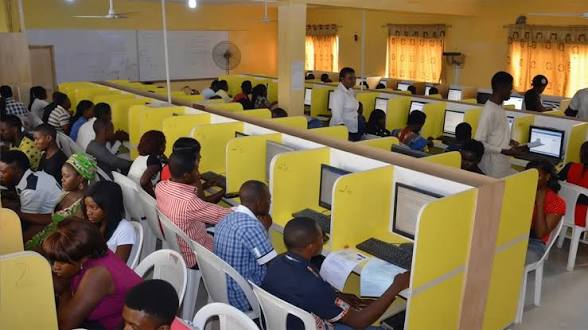
The 2026 Unified Tertiary Matriculation Examination (UTME) has officially commenced across Nigeria, with more than 2.2 million candidates participating in the nationwide exercise.
The examination, conducted by the Joint Admissions and Matriculation Board (JAMB), began on April 16 and is scheduled to run until April 22, with multiple sessions held daily at approved centres.
JAMB Registrar, Prof. Is-haq Oloyede, urged examination officials to uphold professionalism and diligence, noting that the credibility of the UTME largely depends on their performance.
He gave the directive during a virtual briefing with technical officers ahead of the examination, where he also acknowledged the contributions of staff, ad hoc personnel and service providers involved in the process.
Oloyede explained that issues recorded during the earlier mock examination were mostly due to inadequate centre assessments by some officials, adding that improvements had been made ahead of the main exercise.
To encourage efficiency, the registrar revealed that JAMB would reward teams that demonstrate outstanding performance, particularly in handling examination logistics and submitting timely reports.
He reaffirmed the board’s strict stance against examination malpractice, warning candidates to avoid bringing prohibited items into examination halls.
According to him, advanced technology such as biometric verification and real-time monitoring systems has been deployed to ensure transparency and prevent fraud during the examination.
Oloyede also noted that candidates who experience biometric verification issues would be rescheduled to take the examination at designated centres approved by JAMB.
The UTME remains one of Nigeria’s largest coordinated academic exercises, involving extensive logistics, technology and personnel across the country.
For the 2026 edition, about 966 Computer-Based Test (CBT) centres are participating, each required to meet strict operational standards, including reliable internet connectivity, functional systems and trained personnel.
To improve organisation and reduce overcrowding, each examination day has been divided into four sessions.
At one of the monitored centres in Jahi, Abuja, the first session, scheduled for 8:30 a.m., commenced slightly behind schedule at about 8:40 a.m., reflecting minor operational delays.