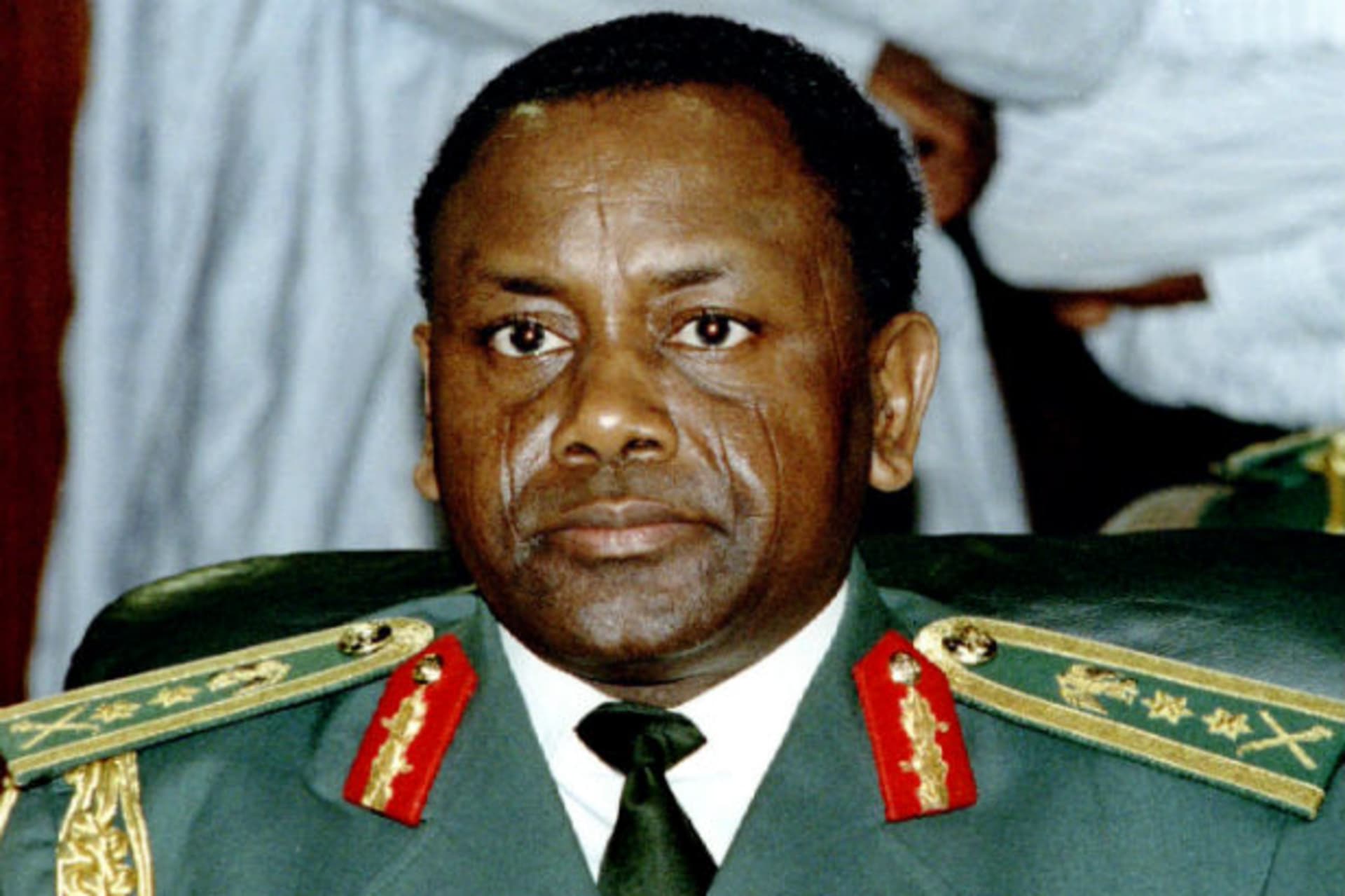
A professor at Lagos State University (LASU), Stephen Adebayo Ogunpitan, has recounted how the late military Head of State, General Sani Abacha, allegedly ordered security operatives to capture him dead or alive in September 1995 over a critical book review published in The Guardian newspaper.
Ogunpitan disclosed the experience on Tuesday while delivering LASU’s 130th inaugural lecture at the Buba Marwa Auditorium, Main Campus, Ojo, Lagos.
The lecture, titled “Narrative as Cartography: Enlarging Human Vision Through Fiction,” examined the influence of storytelling and literature on human understanding, society and the exercise of power.
Recounting the incident, the professor said the publication of his book review attracted the attention of Abacha’s military administration, triggering a search for him at the university.
He alleged that individuals who arrived on the campus in September 1995 were acting on specific instructions to locate and apprehend him.
According to Ogunpitan, the directive came directly from Abacha, who allegedly ordered that he be captured dead or alive.
The professor said he eventually escaped the situation after securing a Fulbright Fellowship to Cornell University in the United States, taking him beyond the reach of those searching for him.
He described the experience as a defining moment that demonstrated how written words could challenge political authority and provoke reactions from those in power.
Professor says book review attracted Abacha’s attention
Explaining the circumstances surrounding the incident, Ogunpitan said the review, which appeared in The Guardian, became the subject of attention from the military government at a time when political activities and public criticism were under intense scrutiny.
He described the experience as evidence of the power of literature and intellectual expression to unsettle political leaders, even when the work involved was seemingly an ordinary literary assessment.
Reflecting on the relationship between writers and authoritarian power, he argued that intellectual expression could challenge established authority without the writer possessing political or military influence.
He illustrated the point with a humorous remark that a writer did not need an army to frighten a dictator, but only a pen and a deadline.
The professor also referenced Nobel Prize-winning Nigerian author Wole Soyinka, who famously observed that books and other forms of writing could threaten those seeking to suppress the truth.
LASU don explains how fiction shapes society
Beyond his personal experience under military rule, Ogunpitan used the inaugural lecture to examine the importance of fiction in understanding human behaviour, social relationships and the complexities of the human condition.
Using the biblical account of Cain and Abel, he explained how narratives could illuminate issues such as jealousy, betrayal, sibling rivalry, domestic violence, guilt and punishment.
He noted that the story also provided an early framework for crime-and-punishment narratives through elements such as criminal acts, motives, investigations, trials and punishment.
The professor argued that fiction offers readers opportunities to examine human experiences from different perspectives, helping them develop empathy, ethical reasoning and a deeper understanding of society.
Science fiction can shape technological development, professor says
Ogunpitan also highlighted the contribution of science fiction to scientific imagination and technological advancement.
He described the literary genre as a conceptual laboratory where writers explore possibilities that may eventually become scientific or technological realities.
According to him, ideas explored through science fiction have influenced thinking and developments in fields such as artificial intelligence, physics, computer science, telecommunications, military strategy, bioengineering and space exploration.
He also identified mobile communication technologies as examples of developments that have featured prominently in imaginative literary representations of the future.
The professor described writers as explorers who use imagination to examine possible futures and help humanity prepare for emerging challenges.
Ogunpitan advocates recognition of African literary scholarship
Another major aspect of the lecture was the professor’s contribution to comparative literary studies, particularly his development of a theoretical framework for analysing classics of war fiction.
He explained that the framework examines common literary, philosophical and humanistic themes in fictional accounts of wars across different historical and cultural settings.
According to him, the approach brings American and Nigerian civil war narratives into comparative discussion while challenging the dominance of Western literary traditions in academic theory.
He argued that African literature should be recognised not merely as material for applying foreign literary theories but also as an important source of original intellectual frameworks.
Ogunpitan said this approach would strengthen efforts to decolonise comparative literature and establish African scholarship as a contributor to global academic knowledge.
Professor calls for stronger integration of literature into education
The LASU don urged universities to recognise literature as an important instrument for moral instruction, civic responsibility and intellectual development.
He called for greater integration of literary studies with disciplines such as science, technology, psychology and medicine to encourage interdisciplinary research and address societal challenges.
He also urged educators to promote reading as a lifelong habit rather than treating literature merely as a subject students study to pass examinations.
Criticising inadequate literary content in English language teaching, Ogunpitan compared the practice to attempting to start a car without an engine.
The professor further called on policymakers and national development planners to support literary projects, translations and archives as instruments for promoting national identity, cultural awareness and social cohesion.
He concluded that storytelling and fiction remained essential to helping individuals understand their identities, appreciate different human experiences and imagine possible futures.