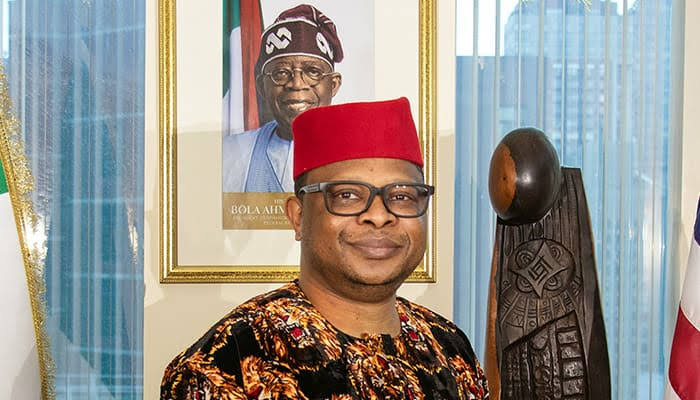
Nigeria’s Consul-General in New York, Amb. Abubakar Jidda, has described Nollywood as one of the country’s most powerful economic drivers and a key instrument of cultural diplomacy, rivaling the oil and gas sector in global influence.
Jidda made the remark during a North American special screening of the socio-political film “Kalakiri”, held at St. John’s University, New York on Sunday.
According to the envoy, Nollywood has significantly expanded Nigeria’s international visibility and strengthened the country’s soft power across global audiences.
He said the film industry reflects the creativity, resilience and entrepreneurial spirit of Nigerians.
“Nollywood gives Nigeria wider global visibility and demonstrates that Nigerians are industrious, innovative and exceptionally talented,” he said.
Jidda noted that the Nigerian government is increasingly investing in the creative sector by strengthening regulatory frameworks and supporting intellectual property rights to help creators access financing.
He described the industry as a major tool for youth employment, job creation and economic diversification, reducing overdependence on oil revenue.
“The creative industry is one of Nigeria’s greatest vehicles for youth empowerment, employment generation and economic diversification,” he added.
The envoy encouraged Nigerians in the diaspora to take advantage of opportunities in the entertainment sector, describing it as an underutilised “goldmine” with global potential.
He also highlighted the growing influence of Nigerian music, fashion and film as pillars of the country’s soft power diplomacy.
The screening featured Kalakiri, a film adapted from “Prisoner of the Kalakiri”, a stage play by Nigerian academic Prof. Chudi Uwazurike.
Directed by Chika Onu, the movie explores themes of democracy, justice, political repression and Nigeria’s transition from military rule to civilian governance.
The production features top Nollywood actors including Segun Arinze, Nancy Isime and Charles Okocha, alongside over 100 cast members.
Executive producer Obi Emekekwue said the project created employment for over 500 people, including actors, writers, technicians and production crew.
He added that the release was intentionally timed around June 12 Democracy Day to align with the film’s political message.
According to him, the film is expected to feature in international festivals and may be distributed on global streaming platforms such as Netflix.
The screening attracted diplomats, academics and members of the Nigerian diaspora, including former Chief of Staff to the late President Muhammadu Buhari, Prof. Ibrahim Gambari.