A security analyst and Convener of the Katsina Security Community Initiative, Bashir Kurfi, has questioned Nigeria’s intelligence and security screening process following the reported arrest of suspected terrorists leaders returning from the 2026 Hajj pilgrimage in Mecca.
They were arrested at the Katsina Airport.
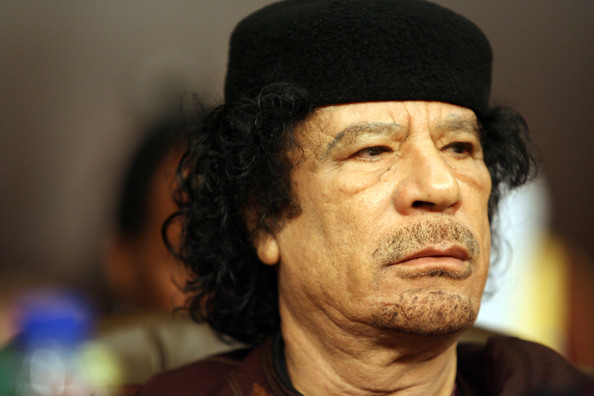
Kurfi served as consultant on Alternative to World Bank to the late Libyan strongman, Col. Muammar Gaddafi.
Speaking on Tuesday during an interview on Frontline, a current affairs programme on Eagle 102. 5FM, Ilese Ijebu, Ogun State, Kurfi explained that his comments were based on allegations circulating at the time, including claims that some bandit leaders travelled to Saudi Arabia and that some may have received sponsorship from state governments.
He insisted that the responsibility rested on government officials to either substantiate or disprove the allegations through transparent investigations.
According to Kurfi who is also a retired University lecturer at the School of Business of ABU: “Now, I said that there is an allegation that these bandits, there are many of the commanders in Saudi Arabia. So and also, I said that there is another allegation. Some of them were actually sponsored by the state government. So, what we want, let the government come out and disprove this, and also prove that that is not because it’s an allegation. Nobody said that this is confirmed”.
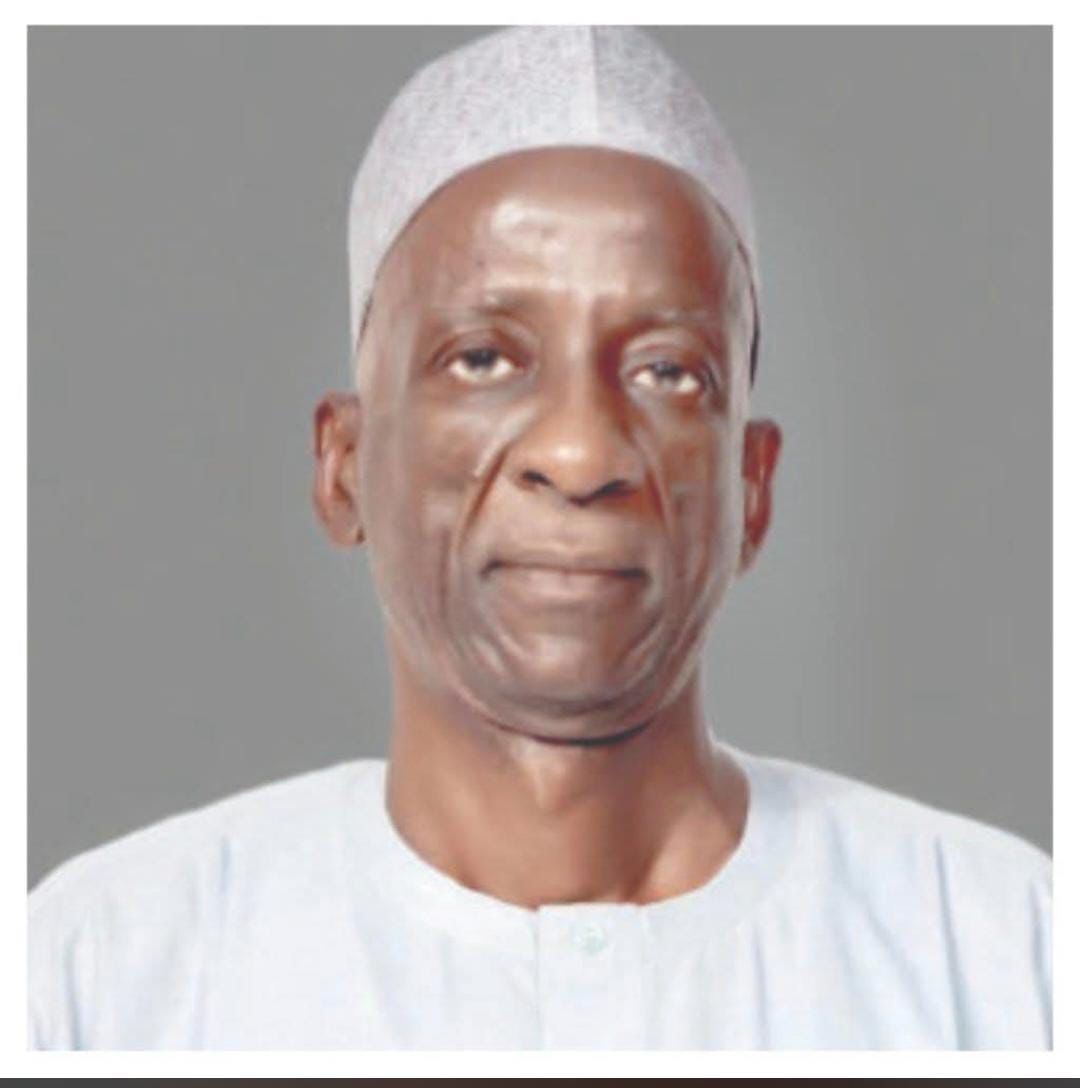
Kurfi recalled that the controversy began after an interview he granted to Trust TV, where he raised allegations that some bandit commanders were in Saudi Arabia during the pilgrimage, stressing that the claims were never presented as established facts but as allegations that deserve thorough investigation by the authorities.
He noted that while the Katsina State Commissioner for Internal Security initially dismissed the allegations, the narrative changed shortly afterwards when the Minister of Interior confirmed that suspected terrorists had been arrested upon their return from the pilgrimage through the Katsina Airport.
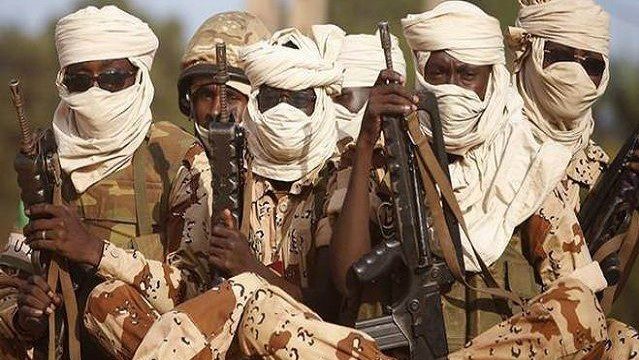
“Now, the first report came from the Commissioner for Security in the state. He said there is nothing like that. Then 24 hours after, the Minister of Interior in the presidential palace, confirmed that terrorists were arrested coming back from Mecca in the airport of Katsina. So, what more proof do you want?”.
The retired University lecturer at the School of Business of ABU further questioned how individuals suspected of terrorism could successfully navigate Nigeria’s travel and Hajj screening procedures without being detected.
He explained that the pilgrimage involves several layers of verification, including documentation, local government authentication and orientation programmes.
“Now, the issue is that when we talk of security, using intel, the intelligence, we must know that there is a process anywhere in the world in terms of international travels. We must have valid travel documents. And also in the case of pilgrims going to Hajj, there are processes. You have to come from your own local government. It has to be verified. And also the source of where it is coming from, all that must be in place.
“And also, they also have this orientation. They give them some training programme before they go. So, how can all this process be followed and there is no detection?” he said.
Kurfi also argued that allegations of official involvement should not be ignored, adding that if public funds were used to sponsor pilgrimages for religious leaders, such an action would contradict Islamic principles regarding Hajj.
“When government paid for them, even if it were Imams, paying Imams to go to Hajj with public funds is un-Islamic. Because Islam says that you go to Hajj when you can afford. Not you go with public funds,” he said.
He also expressed concern over the potential security risks of allowing individuals accused of terrorism-related activities to participate in international religious travel, warning that such movements could expose the country to further threats if not properly monitored.
“It may be part of a peace deal. But, the danger of taking them to Mecca is clear. They will meet up with some international groups. And that will become also another tragedy locally. And then, they will start to improvise bombs and all this kind of thing. I think if the government is serious, they should ignite security assets to make sure that everybody, whether in Katsina or Lagos or whatever, there should be thorough checks for those coming back”.
Speaking on banditry in northern Nigeria, Kurfi described the perpetrators as individuals without stable economic or social identities, making them difficult to organise or integrate into legitimate economic activities.
According to him, many initially engaged in cattle rustling before expanding into kidnapping for ransom and collaborating with terrorist groups for logistics and financial gains.
He said: “I think it is important to understand this banditry and how it is happening in the north. These bandits are basically those kind of people, kalamatas, elements. And they are very dangerous to our system because they have no definite class identity. You cannot mobilise bandits on fertilizer because he is not a farmer. He is a typical gangster, you can give him money to kill a revolutionary and he will”.
Explaining the evolution of banditry in northern Nigeria, Kurfi said many of those involved initially engaged in cattle rustling before expanding their criminal activities into kidnapping for ransom and forging alliances with terrorist groups for logistics and financial gains, while also describing their operations as typically involving armed groups who live in forests before launching attacks on travellers and communities, where they carry out kidnappings and other violent crimes.
“Now, a lot of them get involved initially in basic cattle rustling. They will attack Fulani. They are also from Fulani’s stock, but not all of them are Fulani. So, they will attack, take their cows and rustle them. So later on, they went wild. They went to the extent that they will kidnap people and ask for ransom. And then they link up with other terror organisations, like the Boko Haram, this one, and all this for logistic purposes to make some money. Usually they live in the bush and then they come and get people either on the road or in their homes. And all the atrocities they do. It’s unbelievable”, he lamented.
To illustrate the brutality of the attacks, Kurfi recounted an incident from his own village involving a theatre nurse whose wife and children were abducted by bandits;
“In my own village, they went to one house. The husband is a theater nurse. He was in the hospital in the middle of an operation. They came and took his wife. She has a two-month-old baby. Then they said, OK, let’s go to the bush. And while they were going out, her 5-year-old boy woke up. And he held her leg. He said that they have to go together.
“So they took that lady with the children and they were in the bush for two months. That theater nurse had to pay N5 million. And you know when they take you to the bush, what they do? They tie you on a chain. You urinate there. You do whatever you do”, he narrated.
He further added that victims are often subjected to additional demands and severe abuse even after ransom payments have been made,
“When he wanted to pay the money, he was asked to bring it. He took the money to the bandits. After they released the wife and the twins, they said they will not release the 5-year-old until they added additional N1 million. The lady was telling me because she was in my house in the village. She said she saw that they are going with that 5-year-old. And she was seeing them moving up to the time she couldn’t see them anymore. And then she came back to the house, to the village, with the twins. But that boy, he had to stay an additional two weeks. And they raised the N1 million there. When they brought him to my house with over 20 fireburns because there were drops of cigarette on his back. This is what they are doing”, Kurfi said.
Kurfi, however, insisted that the perpetrators of banditry are not external actors but individuals drawn from within local communities, arguing that their proximity and familiarity with their environment make the situation more complex for security agencies to address.
“Now all these things are going on in this country. And the question is, who are these people? They are indigenes of the place. They are not from any country or even far away. Many of the bandits in my area, I know their location. I know their houses. Some of them, I know their parents. And we know where they are. Whoever wants to know where they are, to go and bomb them or whatever, let them come, I will show them”, he said.