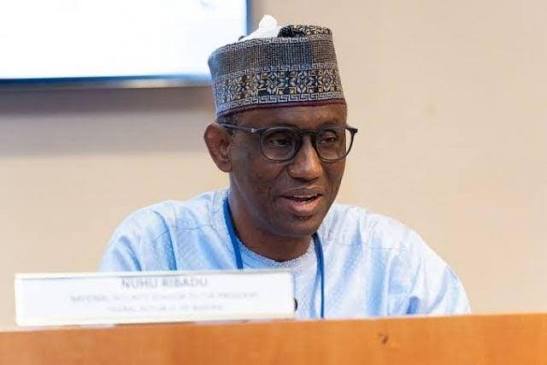
Nigeria’s National Security Adviser, Mallam Nuhu Ribadu, has raised alarm over the impact of porous national borders on the country’s security situation, warning that they continue to enable terrorism, arms smuggling, human trafficking, and irregular migration.
Ribadu made the remarks in Abuja during the opening session of the 15th National Security Seminar, organised by the Alumni Association of the National Defence College (AANDEC) in partnership with the Office of the National Security Adviser (ONSA) and the National Defence College (NDC).
He was represented at the event by Ambassador Yazid Gbemudu, Director of Policy and Strategy at ONSA. The seminar focused on the theme: “Strengthening Nigeria’s Border Security Architecture for National Stability.”
According to Ribadu, Nigeria’s vast land and maritime borders play a key role in trade and regional cooperation. However, they also expose the country to serious transnational security risks.
He explained that criminal groups and terrorist networks exploit weak border control systems to move weapons, drugs, and people across West Africa.
“These vulnerabilities make it easier for terrorism, arms trafficking, smuggling, and human trafficking networks to operate,” he said.
The NSA stressed that effective border governance remains critical to protecting Nigeria’s sovereignty and ensuring long-term national stability.
Ribadu emphasized the need for a stronger and more coordinated border management system to address growing security threats.
He noted that Nigeria’s National Border Management Strategy is designed to improve intelligence sharing, strengthen surveillance systems, and modernise border infrastructure.
He also highlighted ongoing efforts to deploy Border Management Information Systems (BMIS) at key entry points to enhance traveller screening and migration tracking.
According to him, better coordination between security agencies is essential for effective border control.
The NSA called for increased investment in modern security technologies such as biometric identification systems, advanced surveillance tools, and data-driven monitoring systems.
He also stressed the importance of collaboration between Nigeria and neighbouring countries in tackling cross-border crime.
Ribadu further noted that many of the security challenges facing Nigeria are regional in nature and require joint operational responses.
Beyond enforcement, Ribadu highlighted the importance of improving living conditions in border communities.
He said infrastructure development, job creation, and economic empowerment would reduce vulnerability to criminal recruitment and enhance national stability.
The Abuja seminar brought together senior military officers, diplomats, policymakers, academics, and security experts.
Participants discussed practical strategies to improve Nigeria’s border security system and strengthen national defence architecture against evolving threats.