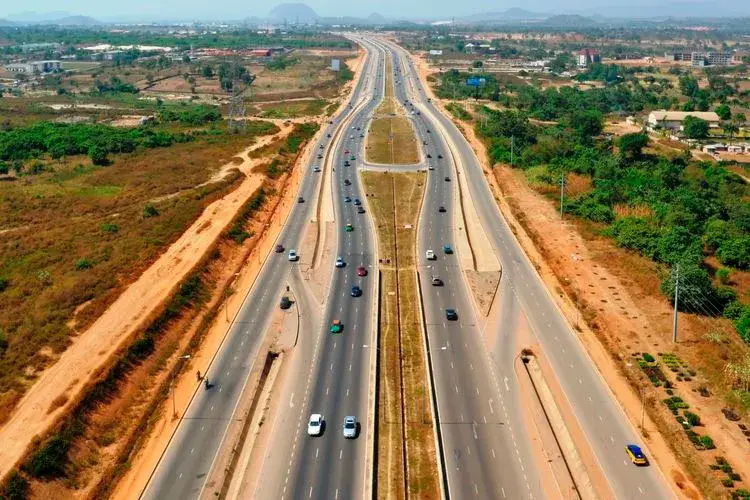
The Presidency has pushed back against criticism surrounding the Lagos-Calabar Coastal Highway, insisting that construction is progressing across sections of the multibillion-naira infrastructure project in the South-South region.
Senior Special Assistant to President Bola Ahmed Tinubu on Community Engagement, South-South, Gift Johnbull, urged residents to assess the project based on verifiable construction activities rather than conflicting public claims.
Johnbull spoke on Tuesday during an inspection of Sections 3A and 3B of the coastal highway in Akwa Ibom and Cross River states.
The visit brought together engineers, government officials and young people operating under the Community of Comrades, a South-South civic group.
According to the presidential aide, the highway represents an opportunity to improve transportation, strengthen regional trade and address longstanding infrastructure challenges in the Niger Delta.
Tinubu’s Aide Challenges Critics of Coastal Highway
Johnbull argued that the South-South had experienced years of inadequate road infrastructure, limiting economic activities and making transportation difficult for residents and businesses.
She attributed some of the region’s road problems to insufficient political commitment over the years.
The presidential aide praised President Tinubu, Minister of Works David Umahi and construction firm Hitech Construction Company for adopting concrete pavement technology on the coastal highway.
She maintained that durable road construction could help reduce recurring maintenance problems and improve connectivity between coastal communities.
Johnbull also referenced the East-West Road, which has experienced prolonged construction delays and repeated changes in project execution arrangements.
She urged residents to examine the coastal highway’s progress independently and participate in discussions about its economic implications.
Her comments came amid criticism and questions about construction progress, the road alignment and the handling of compensation for affected property owners.
Engineers Reveal Progress on Akwa Ibom, Cross River Sections
During the inspection, Vincent Okuduwa, Controller of Works at the Federal Ministry of Works, provided an update on construction activities across the two sections.
AKWA IBOM — SECTION 3A
41 km
Section length
18%
Overall completion reported
About 9 km at concrete pavement stage
CROSS RIVER — SECTION 3B
30 km
Section length
6 km
Reported construction progress
Overall completion rate not specified
Okuduwa said approximately nine kilometres of Section 3A had reached the Continuously Reinforced Concrete Pavement stage, while about six kilometres of Section 3B had been completed.
He placed the overall completion level of Section 3A at 18 per cent.
The engineer explained that work involved clearing construction corridors, removing unsuitable soil, laying approved foundation materials and using dredged sand to stabilise swampy areas.
He said these activities were essential to preparing the road for durable pavement construction, particularly in locations with challenging ground conditions.
The two sections cover a combined 71 kilometres across Akwa Ibom and Cross River states.
Federal Government Denies Coastal Highway Abandonment
Responding to concerns about the project’s route, Okuduwa rejected suggestions that the Federal Government had abandoned the coastal highway or completely changed its original alignment.
He explained that a proposed connection to the East-West Road was an additional infrastructure link rather than a replacement for the main coastal highway.
The clarification followed public questions about whether changes to construction routes could affect the project’s original objectives.
Okuduwa maintained that construction was continuing in the affected states.
However, the progress figures he presented relate specifically to the inspected sections and should not be interpreted as the completion rate for the entire Lagos-Calabar Coastal Highway.
90% of Compensation Claims Paid in Akwa Ibom, Official Says
The Federal Ministry of Works also addressed concerns about compensation for property owners affected by construction.
Okuduwa said approximately 90 per cent of compensation claims in Akwa Ibom had been settled.
He explained that outstanding cases were largely connected to locations affected by proposed changes in road alignment.
The official did not provide a breakdown of the total compensation amount, the number of affected property owners or the expected timeline for resolving the remaining claims.
Compensation remains an important issue for communities along the proposed route, particularly where construction requires land acquisition or the removal of existing structures.
South-South Youth Group Reacts After Highway Inspection
Kelvin Eyam, convener of the Community of Comrades in the South-South, said the group organised the inspection to obtain firsthand information about construction progress.
He explained that conflicting reports had prompted members to visit the project locations and speak with engineers.
Following the tour, Eyam said the participants were encouraged by the construction activities and employment opportunities they observed.
He expressed the group’s support for the completion of the highway.
The inspection, however, represented the observations of the participating group and government officials, rather than an independent technical audit of the project.
Lagos-Calabar Coastal Highway to Connect Nine States
Construction of the Lagos-Calabar Coastal Highway began in March 2024 as one of the Federal Government’s major infrastructure projects.
The proposed route is intended to connect nine coastal states: Lagos, Ogun, Ondo, Edo, Delta, Bayelsa, Rivers, Akwa Ibom and Cross River.
The highway is designed to improve movement between coastal communities, support commercial transportation and create opportunities for economic activities along the corridor.
The Federal Government has promoted the project as part of its wider transport infrastructure programme.
Nevertheless, questions about construction costs, environmental effects, land acquisition, compensation and implementation timelines have continued to feature in public discussions.
The latest inspection provides an update on work in Akwa Ibom and Cross River, but the completion dates for the two sections were not disclosed.