



The Nigerian Senate has called on the Federal Government to urgently address the worsening security crisis in Kebbi State, warning that continued attacks by armed groups are forcing residents from their homes, destroying livelihoods and exposing vulnerable communities to further violence.
The lawmakers want a coordinated military and humanitarian response to protect affected communities, support displaced families and prevent additional loss of life.
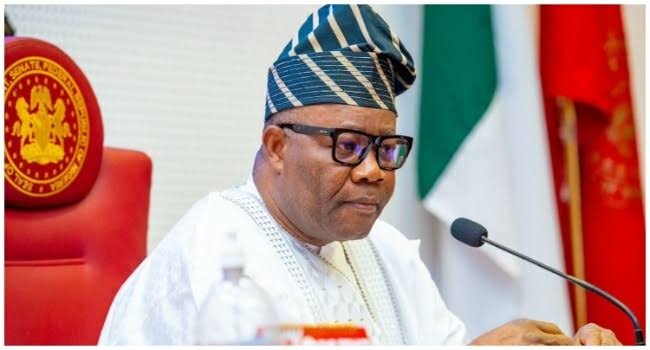
The appeal followed a motion presented by Senator Adamu Aliero, representing Kebbi Central, during Tuesday’s plenary session in Abuja on October 13, 2026.
Senator Francis Fadahunsi of Ondo South seconded the motion, which drew attention to the growing movement of armed groups across state boundaries and its impact on residents of Kebbi.
Senate Raises Alarm Over Bandit Attacks in Kebbi
Presenting the motion, Aliero expressed concern over repeated attacks on communities already struggling with insecurity and economic hardship.
He said intensified military operations in neighbouring states had contributed to the movement of armed groups into parts of Kebbi, putting more settlements at risk.
The senator warned that the violence had disrupted farming, forced families to abandon their homes and created uncertainty for residents who depend on agriculture and local trade.
He called for stronger security coordination, more effective intelligence gathering and urgent intervention to prevent the situation from deteriorating further.
Following deliberations, the Senate urged the Federal Government to provide the personnel, equipment, funding and operational support needed to confront the threat.
Army, Air Force and Police Asked to Strengthen Operations
The lawmakers called on the Chief of Army Staff, Chief of Air Staff and Inspector-General of Police to expand joint security operations in vulnerable areas of Kebbi State.
They emphasised the importance of intelligence sharing, surveillance and coordinated action against armed groups responsible for attacks on civilians.
The Senate also requested greater logistical support for security personnel operating in communities exposed to cross-border criminal activity.
Lawmakers maintained that protecting residents would require sustained security operations rather than temporary deployments after attacks had already occurred.
They called for measures that would allow residents to live safely, return to their farms and resume their daily activities without fear.
Senate Demands Immediate Relief for Displaced Families
Beyond military intervention, the Senate expressed concern about the growing humanitarian needs of families displaced by the violence.
It urged the National Emergency Management Agency (NEMA) to assess conditions in affected communities and provide urgent assistance to those who had fled their homes.
The requested relief includes food, clean drinking water, temporary accommodation, clothing, bedding, essential medicines and sanitation facilities.
Lawmakers stressed that women, children, older people and other vulnerable residents should receive appropriate assistance while they remain displaced.
They also called for better coordination between federal and state authorities to ensure that humanitarian support reaches affected households.
Federal, Kebbi Governments Asked to Coordinate Emergency Response
The Senate proposed a joint security and humanitarian response arrangement involving the Federal Government and the Kebbi State Government.
Under the proposed approach, relevant agencies would coordinate security assessments, relief distribution and efforts to restore essential services in affected communities.
The lawmakers said emergency assistance should be accompanied by plans to rehabilitate damaged infrastructure and help residents rebuild their livelihoods.
They also stressed that displaced families should only be assisted to return when conditions are safe and that such returns must be voluntary and dignified.
The call comes as the Kebbi State Government continues efforts to resettle families displaced by attacks in Danko-Wasagu and other troubled areas.
Governor Nasir Idris recently announced financial assistance for victims and pledged further security measures to support affected communities.
Senate Seeks Investigation Into Killing of Road Project Workers
The lawmakers also demanded a thorough investigation into recent killings, including a deadly attack connected to the Hitech construction project in Kebbi.
The attack occurred on October 8 at Gubba village in Maiyama Local Government Area, where gunmen suspected to be members of the Lakurawa armed group targeted workers associated with the Sokoto-Badagry Superhighway project.
According to the Kebbi State Police Command, two security personnel and a foreign construction worker were killed, while two civilians sustained injuries.
Police said the attackers were suspected of entering the area from neighbouring Sokoto State.
The incident raised fresh concerns about the security of road construction sites and other infrastructure projects in communities affected by armed violence.
The Senate urged security agencies to investigate the killings and ensure that those responsible are identified and brought to justice.
Kebbi’s Security Crisis Has Deepened Over Several Years
Parts of Kebbi State, particularly communities around Danko-Wasagu, Zuru, Fakai and border areas, have experienced repeated incidents of banditry, kidnapping and attacks on civilians.
The violence has disrupted agricultural activities and forced some families to seek safety in neighbouring communities and states.
Security researchers have linked the spread of armed violence across the North-West to the movement of criminal networks, weak protection in remote settlements and the exploitation of poorly secured rural routes.
The emergence of armed Islamist groups in parts of the Sokoto-Kebbi border area has added another dimension to the security challenge.
Humanitarian agencies have repeatedly warned that displacement creates additional difficulties for families who lose access to farmland, shelter, education and basic healthcare.
These longstanding problems have intensified the demand for a response that addresses both immediate security threats and the needs of affected residents.
Akpabio Assures Affected Communities of Federal Support
Senate President Godswill Akpabio, who presided over the plenary, expressed sympathy for families affected by the attacks.
He conveyed President Bola Tinubu’s commitment to protecting lives and property, restoring peace and supporting displaced residents.
The Senate subsequently observed a minute of silence in memory of those killed in the attacks and extended its condolences to grieving families.
Although the resolution increases pressure on federal authorities to act, the Senate’s appeal does not itself amount to a formal declaration of a national emergency.
The immediate focus now turns to the response of security agencies, the delivery of humanitarian assistance and the measures taken to prevent further attacks.
For residents who have fled their homes, the most urgent concern remains whether security can be restored sufficiently for them to return and rebuild their lives.
Kebbi’s present security problems are part of a wider pattern of armed violence across north-western Nigeria, but the state has experienced its own distinct developments.
Early spread of banditry
Armed banditry expanded across parts of the North-West during the 2010s, with criminal groups exploiting rural insecurity, cattle theft, kidnapping and the movement of weapons.
Research by ACLED and the Global Initiative Against Transnational Organized Crime indicates that some bandit leaders began relocating into Kebbi around 2022, partly as cattle and their owners moved away from violent areas of Zamfara and Sokoto.
The movement of armed groups between these states complicated the security response, as operations in one location did not necessarily eliminate threats across the wider region.
Kebbi’s earlier humanitarian crisis
Kebbi’s experience of displacement is not new.
In February 2022, the National Assembly discussed attacks affecting Danko-Wasagu, Sakaba and Yauri. A Senate statement described destroyed homes, abandoned communities and the movement of residents into temporary places of safety.
Aliero, then also representing Kebbi Central, argued that coordinated military operations were needed across Kebbi and its neighbouring states.
The National Emergency Management Agency conducted an assessment in July 2023 in the Zuru Emirate, covering Danko-Wasagu, Fakai, Sakaba and Zuru. NEMA reported that attacks had destroyed food supplies and displaced residents, some of whom were sheltering in schools or with relatives.
The emergence of Lakurawa
The security situation became more complicated with the emergence of armed Islamist militants commonly called Lakurawa.
The European Union Agency for Asylum reported that the group became prominent in northern Kebbi in 2024. By November of that year, Nigerian authorities had publicly acknowledged its presence.
Amnesty International documented at least 70 deaths across 22 attacks connected to the emergence of Lakurawa in Kebbi between May 2023 and May 2025.
ACLED’s June 2026 assessment also reported claims by Islamic State Sahel Province (ISSP) of operations in the Nigeria–Niger border region, including an attack in Kebbi. This suggests that some threats in the area go beyond conventional banditry, although not every armed attack should automatically be attributed to the same group.