


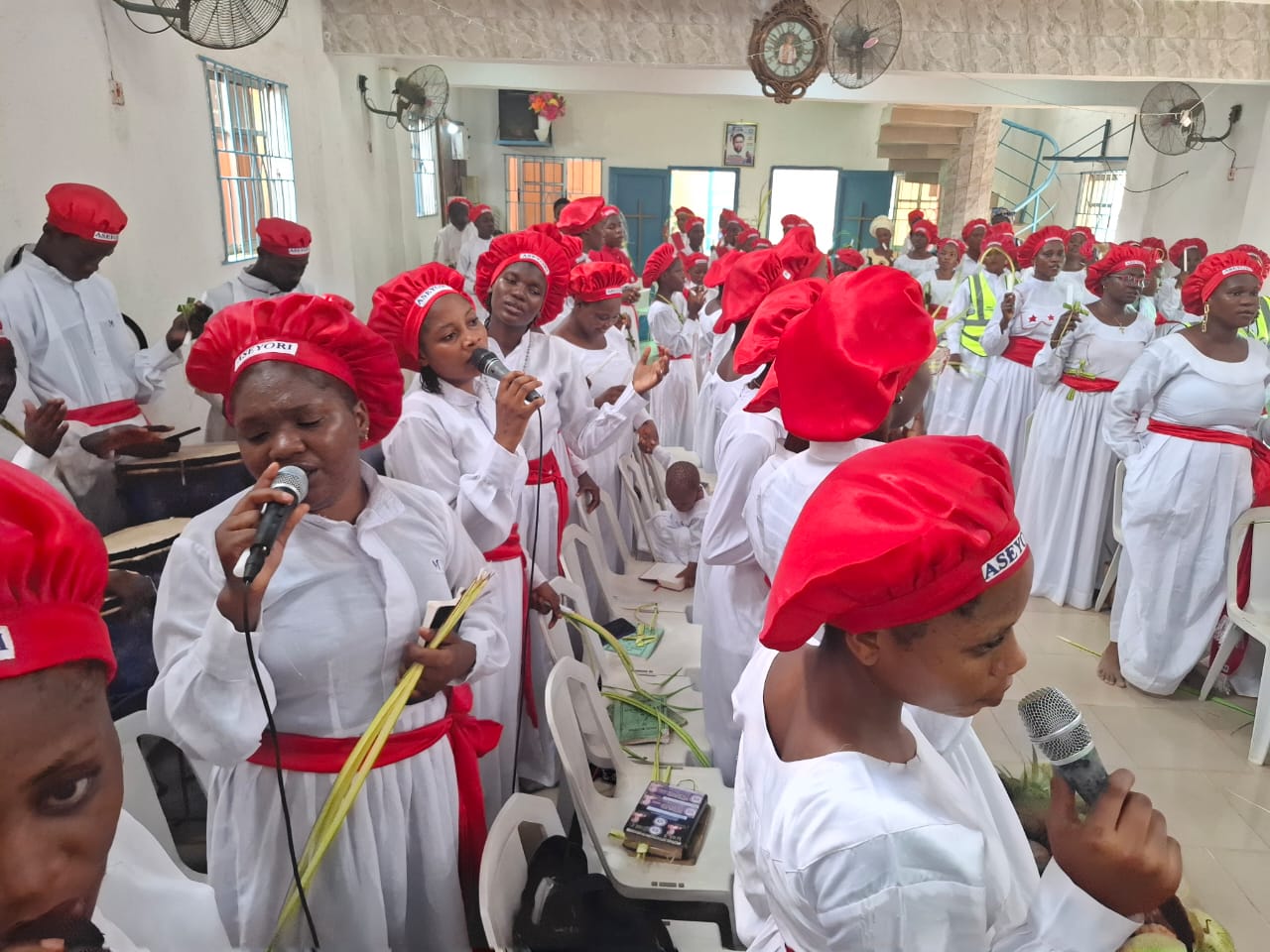
Every September 29, members of the Cherubim and Seraphim band across Nigeria and beyond commemorate what has become known as Holy Michael Day. To an outsider, or even to a young member of the movement who has not taken time to study its history, the celebration may raise questions: Why does the Cherubim and Seraphim celebrate an angel? Does the designation of Saint Michael as “Captain” amount to the worship of an angel? Why is September 29 so important to the C&S?
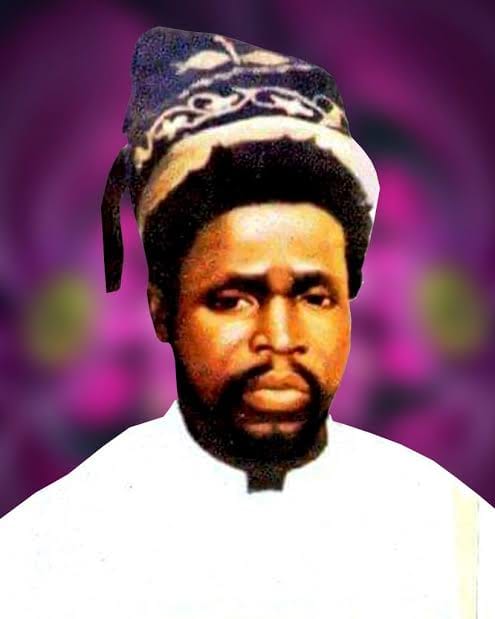
These are legitimate questions, and they deserve answers based on Scripture, history and the spiritual heritage handed down from the founder, Saint Moses Orimolade Tunolase.
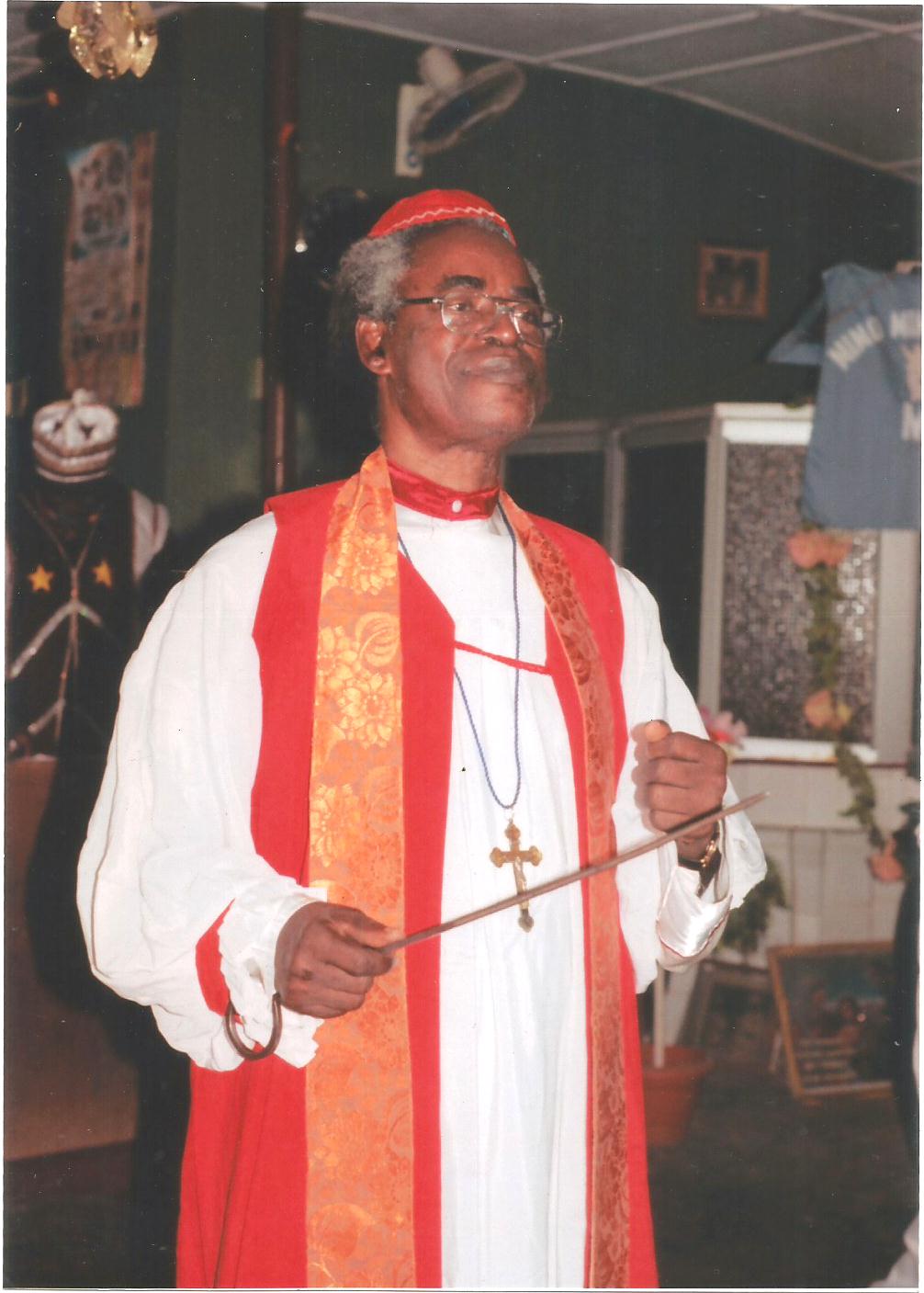
The first point that must be made unequivocally is this: the Cherubim and Seraphim does not worship Saint Michael. The worship of the C&S is directed to God through Jesus Christ. Saint Michael is honoured as the heavenly Captain whom the founder, Saint Moses Orimolade, designated in the formative days of the movement.
There is therefore an important theological distinction between worshipping an angel and honouring or commemorating a heavenly servant of God.
The Bible itself makes that distinction necessary. In Revelation 19:10, when John fell before an angel, the angel immediately corrected him: “See thou do it not: I am thy fellowservant… worship God.” Similarly, Revelation 22:8-9 records another occasion when John attempted to worship at the feet of an angel and was told again to worship God.
The C&S position is consistent with this fundamental Christian principle: God alone is worshipped. Angels are God’s servants.
Hebrews 1:14 describes angels as “ministering spirits, sent forth to minister for them who shall be heirs of salvation.” They are therefore not rivals to God, nor objects of the worship due to God. They are heavenly ministers carrying out divine assignments.
WHO WAS SAINT MOSES ORIMOLADE TUNOLASE?
Any serious discussion of Holy Michael Day must begin with the man who gave the Cherubim and Seraphim its foundational identity.
Saint Moses Orimolade Tunolase was a Nigerian evangelist whose ministry became central to the emergence of the Aladura movement in the 1920s. The Dictionary of African Christian Biography records him as an evangelist involved in founding the Cherubim and Seraphim movement in Nigeria. It describes him as a man who, despite being illiterate, developed a remarkable ability to quote the Bible and became known for preaching, prayer, visions and healing.
This point is significant.
Orimolade was not a university-trained theologian. He did not attend a theological seminary in the conventional sense. Yet historical accounts describe him as a man deeply immersed in Scripture and prayer.
His ministry developed within the spiritual ferment of early twentieth-century Nigeria, when African Christians were seeking forms of Christianity that spoke directly to their experiences of prayer, healing, visions, spiritual warfare and divine intervention.

By the middle of the 1920s, Orimolade’s ministry in Lagos had attracted a growing following. The movement that eventually became the Cherubim and Seraphim was formally organised in 1925.
The historical record of the Eternal Sacred Order of the Cherubim and Seraphim identifies September 9, 1925 as the date on which Orimolade named the organisation the Band of Seraph, following a period of fasting and prayer by members. It further records that on September 29, 1925, Orimolade named Holy Michael as Captain of the Holy Order. In 1926, “Cherub” was added to the name, producing the designation Cherubim and Seraphim Band.
Thus, September 29 is not an arbitrary date subsequently attached to the C&S calendar. It is connected directly with one of the formative events in the movement’s history.
THE DAY ORIMOLADE NAMED HOLY MICHAEL
According to the established C&S historical tradition, when the organisation was developing, there was a need to establish leadership and organisational structures within the growing movement.
In the Nigerian social and ecclesiastical environment of the period, titles such as Captain, Baba Ijo, Iya Ijo and other forms of leadership were familiar. Different Christian organisations and social institutions had their own structures and officers.
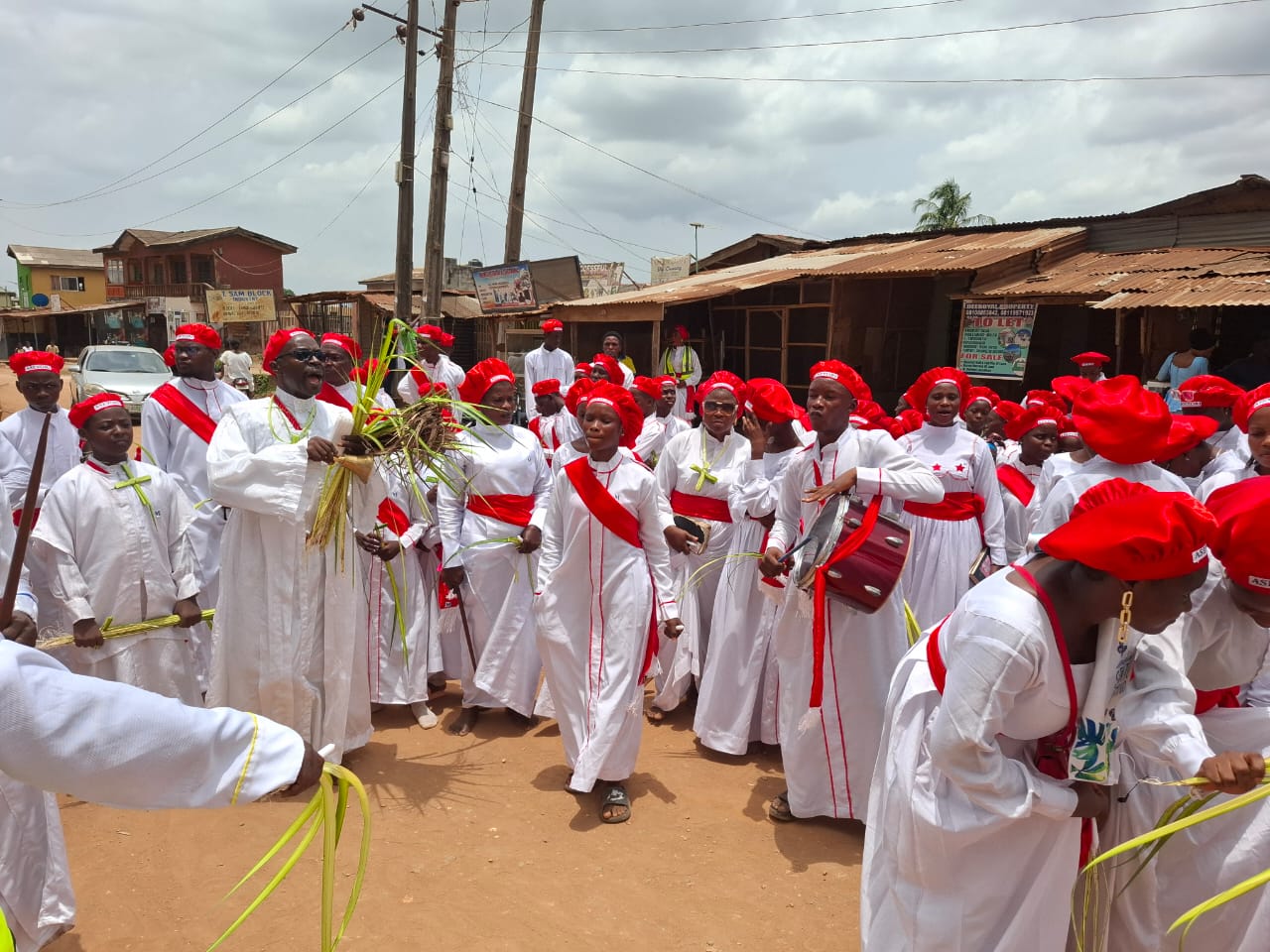
Within the developing C&S movement, there was also an expectation that a captain should emerge.
The story handed down within the movement is that several people were interested in occupying the position. Some had gone around seeking support and mobilising people.
But when the decisive day came, Orimolade did something that reportedly surprised everyone.
He did not appoint any of the human contenders.
Instead, he named Holy Michael as Captain.
The reaction of those present can easily be imagined: Who is Michael among us?
According to the C&S tradition, Orimolade pointed heavenward and made it clear that the Captain was not a human being standing among them but the heavenly Michael.
The historical record of the Eternal Sacred Order confirms the central fact of the tradition: on September 29, 1925, Orimolade named Holy Michael Captain of the Holy Order.
The more detailed circumstances surrounding the event—including the reactions of particular individuals, the atmospheric change and the exact words spoken by Orimolade—belong till date to the band’s oral and devotional tradition.
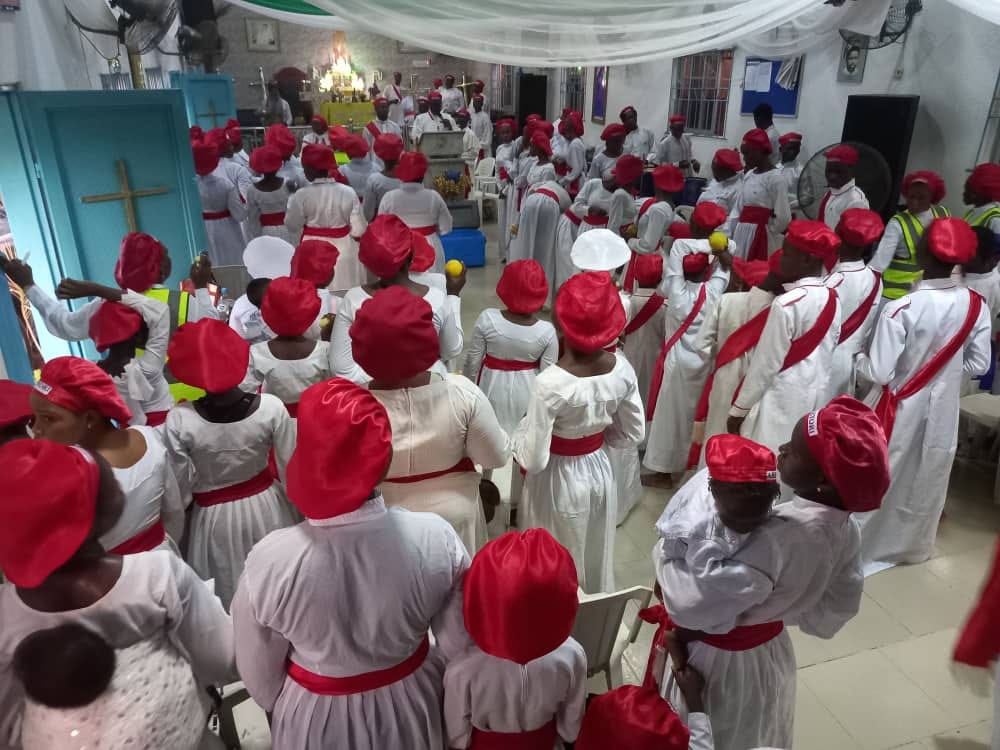
WHY MICHAEL?
The significance of Orimolade’s choice becomes clearer when examined against Scripture.
Michael is not an unknown or insignificant figure in the Bible.
The name Michael appears prominently in the books of Daniel, Jude and Revelation.
In Daniel 10:13, Michael is described as one of the chief princes. Daniel 10:21 identifies him in connection with God’s people, while Daniel 12:1 calls him “the great prince which standeth for the children of thy people.”
The picture is therefore that of a powerful heavenly being operating under God’s authority in the spiritual conflict surrounding God’s purposes.
The New Testament strengthens this picture.
Jude 9 specifically calls Michael “the archangel.” Even when disputing with the devil over the body of Moses, Michael does not claim independent authority. His words are: “The Lord rebuke thee.”
That statement is theologically important.
Michael’s authority is derivative.
He does not say, “I rebuke you by my own power.”
He invokes the authority of the Lord.
This reinforces the Christian understanding that angels, however powerful, remain servants of God.

MICHAEL IN THE BOOK OF REVELATION
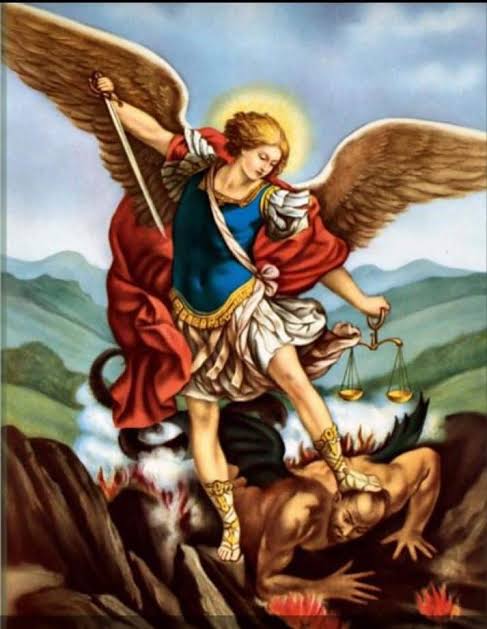
The strongest biblical basis for understanding Michael as a heavenly warrior is perhaps Revelation 12:7-9.
The passage says:
“And there was war in heaven: Michael and his angels fought against the dragon; and the dragon fought and his angels.”
The dragon—identified with the devil and Satan—is defeated and cast down.
This is the biblical foundation for describing Michael as a warrior and defender in the heavenly realm.
It is therefore understandable why Orimolade, in establishing the spiritual identity of a movement that placed enormous emphasis on prayer, spiritual warfare, deliverance and divine intervention, would identify Michael with the role of Captain.
Indeed, the traditional C&S understanding of Michael as Captain is not based on the claim that Michael is God. It is based on the biblical picture of Michael as an archangel engaged in the execution of God’s purposes.
The distinction is crucial:
God is the Commander-in-Chief; Michael is God’s servant.
Christ is Lord.
Christ is the Saviour.
Christ is the author and finisher of our faith.
Hebrews 12:2 tells Christians to look unto Jesus, “the author and finisher of our faith.”
Michael does not occupy Christ’s position.
Michael does not redeem humanity.
Michael does not die for the sins of the world.
Michael does not receive the worship that belongs to God.
Michael serves.
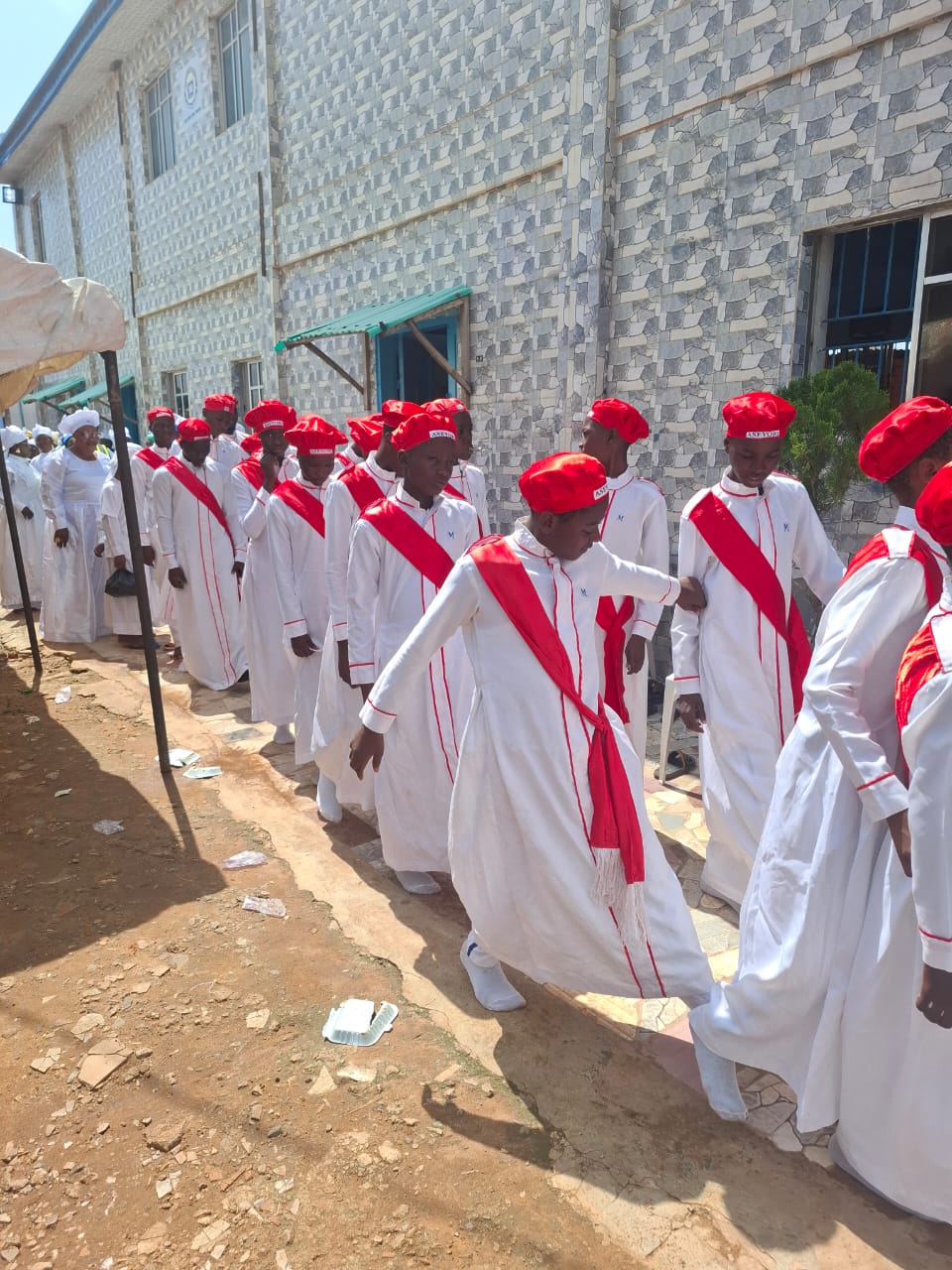
“THE CAPTAIN OF THE LORD’S HOST”
There is another biblical passage that has traditionally influenced Christian thinking about heavenly warfare.
In Joshua 5:13-15, Joshua encounters a mysterious heavenly figure who identifies himself as “captain of the host of the LORD.”
The passage does not explicitly identify this figure as Michael, and therefore it would be theologically careless to state that Joshua 5 definitively says the figure was Michael.
Nevertheless, the passage establishes an important biblical concept: God’s heavenly host has a commander associated with divine warfare.
When this is considered alongside Daniel’s description of Michael as a great prince and Revelation’s description of Michael leading the heavenly forces against the dragon, the C&S understanding of Michael as a heavenly Captain becomes intelligible within its biblical framework.
The Bible presents heaven as an ordered realm in which angels carry out assignments given by God.
Psalm 103:20 declares:
“Bless the LORD, ye his angels, that excel in strength, that do his commandments, hearkening unto the voice of his word.”
Angels are therefore not independent spiritual powers competing with God.
They are servants executing God’s commands.
SEPTEMBER 29: A DATE WITH A WIDER CHRISTIAN HISTORY
It is also important to note that the C&S did not invent September 29 as a day associated with Saint Michael.
September 29 has long been associated in historic Christianity with Michael and the archangels.
For example, the Roman Catholic liturgical calendar commemorates Saint Michael, Saint Gabriel and Saint Raphael on September 29. Vatican News describes September 29 as the feast of St Michael, Gabriel and Raphael and identifies Michael with the heavenly hosts.
The United States Conference of Catholic Bishops likewise lists September 29 as the Feast of Saints Michael, Gabriel and Raphael, Archangels, with Revelation 12:7-12 among the readings associated with the celebration.
Historical Christian devotion to Michael is considerably older than the C&S movement. Franciscan Media notes that devotion to Michael arose in the Christian East as early as the fourth century, while Western observances honouring Michael and the angels developed by the fifth century.
Consequently, when Cherubim and Seraphim members celebrate September 29, they are participating in a date that already has a long Christian association with Michael.
But the C&S meaning of the day is distinctive.
For the C&S, September 29 is not merely an ordinary feast of an archangel. It recalls the historical moment in 1925 when Saint Moses Orimolade designated Holy Michael as Captain of the Holy Order.
That is what gives the day its particular place in C&S history.
THE C&S DOES NOT WORSHIP MICHAEL
This point deserves emphasis because misunderstanding often develops when religious practices are viewed without knowledge of their theological context.
To celebrate someone is not automatically to worship that person.
A nation celebrates its heroes without making them gods.
An organisation may celebrate its founder without worshipping its founder.
A church may commemorate missionaries, apostles or martyrs without making them divine.
Likewise, the C&S can commemorate Michael without making Michael God.
The Bible itself provides a distinction between worship and honour.
Angels are servants of God. Hebrews 1:14 calls them ministering spirits. Psalm 103:20 describes them as mighty beings who obey God’s word. Revelation 19:10 and 22:9 expressly reject the worship of angels.
Therefore, the proper theological statement is:
The Cherubim and Seraphim worships God; it honours and commemorates Michael as the heavenly Captain associated with the movement’s foundational history.
That distinction should be taught clearly, especially to younger members.
WHY CALL HIM “CAPTAIN”?
The word “Captain” should also be understood within its spiritual and organisational context.
A captain is one who leads an army or group.
The Bible repeatedly uses military imagery to describe spiritual conflict.
Ephesians 6:12 says:
“For we wrestle not against flesh and blood, but against principalities, against powers, against the rulers of the darkness of this world, against spiritual wickedness in high places.”
The Christian’s struggle is therefore presented as a spiritual struggle.
Revelation 12 presents Michael leading the heavenly forces against the dragon.
Daniel portrays Michael as a great prince standing for God’s people.
Jude identifies him as an archangel.
These passages provide a biblical background for understanding why a movement deeply rooted in prayer, spiritual warfare and divine intervention would adopt the language of a heavenly Captain.
Nevertheless, the C&S doctrine should always retain the hierarchy:
God is sovereign.
Jesus Christ is Lord and Saviour.
The Holy Spirit is Third in Trinity.
Angels are God’s ministers.
Michael is a servant of God.
Nothing about the honour given to Michael should diminish the supremacy of Christ.
THE HYMN THAT EMERGED FROM THE EXPERIENCE
One of the cherished traditions surrounding the 1925 event is the emergence of the hymn: “Okunkun su, imole kan si tan…”
The imagery is powerful.
Darkness gives way to light.
It corresponds closely with one of the most enduring themes in Scripture.
John 1:5 declares: “And the light shineth in darkness; and the darkness comprehended it not.”
Isaiah 60:1 says: “Arise, shine; for thy light is come, and the glory of the LORD is risen upon thee.”
The Christian understanding of light, however, must ultimately lead back to God and Christ.
Jesus declared in John 8:12: “I am the light of the world.”
Thus, even when C&S hymns and traditions speak about Michael’s intervention, the final source of victory remains God.
Michael does not replace the Light.
He serves the One who is the Light.
MICHAEL AND VICTORY IN SPIRITUAL WARFARE
The history of the C&S is filled with testimonies of prayer, fasting, deliverance, healing, prophecy and spiritual warfare. The movement emerged within an environment where people were seeking answers to both physical and spiritual crises.
The Dictionary of African Christian Biography records that Orimolade’s ministry emphasised healing, visions and the power of prayer.
The C&S historical tradition similarly portrays Orimolade’s ministry as one characterised by prayer and spiritual confrontation.
Within that tradition, Michael became associated with victory in spiritual battles.
But there is a theological caution that should never be forgotten.
A testimony that a person experienced deliverance after invoking Michael should not be interpreted to mean that Michael possesses independent supernatural power.
Biblically, God’s servants act under God’s authority.
In Acts 3:12, Peter rejected the idea that the miracle of healing was produced by his own power or holiness. The glory belongs to God.
The same principle applies here.
If Michael fights, he fights under God’s command.
If Michael protects, he protects under God’s authority.
If Michael defeats an enemy, the ultimate victory belongs to God.
ORIMOLADE’S ILLITERACY DOES NOT INVALIDATE HIS SPIRITUAL LEGACY
Another aspect of Orimolade’s story deserves attention.
Historical accounts state that he was illiterate. Yet the Dictionary of African Christian Biography specifically notes that he possessed considerable ability to quote the Bible.
This is important because Christianity has never taught that academic literacy is the only avenue through which God can use a person.
Moses was not a university graduate.
David was a shepherd.
Amos was a herdsman.
Peter and some of the other apostles were ordinary working men.
Paul, on the other hand, had considerable learning.
God has used people from different educational backgrounds throughout salvation history.
Therefore, the fact that Orimolade was not formally lettered does not automatically invalidate the spiritual experiences or organisational decisions associated with his ministry.
At the same time, reverence for a founder should not prevent historical examination.
Faith and responsible scholarship can coexist.
A mature religious movement should be capable of saying: this is what Scripture teaches; this is what historical records establish; and this is what our inherited C&S tradition tells us.
That approach strengthens rather than weakens faith.
THE C&S CAPTAIN IS NOT CHRIST
Perhaps the most important theological boundary is this: Saint Michael must never be placed where Jesus Christ belongs.
Jesus is the only begotten Son of God.
Jesus is the Saviour.
Jesus is Lord.
Jesus is the Mediator of the new covenant.
Jesus died and rose again.
Jesus will return.
Jesus is the author and finisher of our faith.
Michael does none of these things.
Michael is an angel.
Therefore, the expression “Captain of the C&S” is a historical and spiritual designation within the movement. It should never be interpreted as meaning that Michael is the founder of Christianity, the head of the Church universal, or the source of salvation.
The founder remains Saint Moses Orimolade.
The Lord remains Jesus Christ.
The object of worship remains God.
Michael remains the heavenly servant honoured as Captain.
WHAT SEPTEMBER 29 MEANS TO THE C&S
For this reason, September 29 should be understood at several levels.
It is a day of historical remembrance, because it recalls the 1925 designation of Michael as Captain.
It is a day of spiritual reflection, because it reminds members that Christian life involves spiritual warfare.
It is a day of gratitude, because members remember the victories and testimonies associated with the movement’s prayer tradition.
It is a day of instruction, because younger members should be taught why the movement has retained the tradition.
And it is a day of rededication, because the ultimate purpose of every Christian commemoration must be to draw believers closer to God.
The historical record confirms that Orimolade named Holy Michael Captain on September 29, 1925.
That single event became embedded in the identity of the movement.
A WORD TO THE YOUNGER GENERATION
There is therefore a need for younger members of the Cherubim and Seraphim band to learn before they criticise.
Every generation has a responsibility to examine inherited traditions, but examination should be accompanied by knowledge.
A person who does not understand why Holy Michael Day exists may understandably ask questions.
Questions should not be suppressed.
But neither should ignorance become an excuse for casting aspersions on matters that one has not investigated.
The appropriate response is research.
Read the Bible.
Study Daniel.
Read Jude.
Study Revelation.
Study the history of Saint Moses Orimolade.
Examine the history of the C&S band.
Listen to the testimonies and traditions handed down by earlier generations.
Then ask the hard questions.
Faith does not fear knowledge.
Indeed, Hosea 4:6 warns that God’s people can be destroyed for lack of knowledge.
The answer to misunderstanding is therefore not anger but teaching.
MICHAEL’S GREATNESS IS IN HIS SERVICE
There is also a lesson here for every Christian.
Michael’s significance in Scripture is not that he seeks to replace God.
It is that he serves God.
In Daniel, he stands for God’s people.
In Jude, he submits the dispute to the authority of the Lord.
In Revelation, he fights under the divine order.
This is the true meaning of spiritual greatness.
Jesus said in Matthew 20:26: “Whosoever will be great among you, let him be your minister.”
The greatest heavenly servants are not those who demand worship but those who faithfully execute God’s command.
This is why Michael can be honoured without being worshipped.
His greatness lies in his obedience.
His honour lies in his service.
His victory lies in God’s authority.
And his Captaincy, in the C&S understanding, ultimately points beyond him to the God whom he serves.
A LEGACY THAT SHOULD BE PRESERVED WITH KNOWLEDGE
Over a century after the event of 1925, the Cherubim and Seraphim band has become one of the most recognisable indigenous Christian movements to emerge from Nigeria.
Historical scholarship recognises Orimolade’s importance in the development of the Aladura tradition. The Dictionary of African Christian Biography identifies him as the founding evangelist of the C&S movement and notes that later C&S bodies continued to recognise him as their spiritual father.
The C&S historical record itself preserves September 29, 1925 as the day Orimolade named Holy Michael Captain.
The biblical record, meanwhile, gives Michael an extraordinary place among God’s heavenly servants: he is identified as an archangel, a great prince associated with God’s people, and the heavenly warrior who leads God’s angels against the dragon. Daniel 10:13, Daniel 12:1, Jude 9 and Revelation 12:7-9 provide the principal scriptural foundation.
These three strands—Scripture, history and C&S tradition—help explain why September 29 occupies such an important place in the spiritual calendar of the movement.
CONCLUSION: “WHO IS LIKE GOD?”
There is something profound even in the name Michael.
The Hebrew name Mikha’el is commonly understood as meaning “Who is like God?”
The question itself contains a theological answer.
Who is like God?
Nobody.
Not Michael.
Not an angel.
Not a prophet.
Not a founder.
Not a bishop.
Not a priest.
Not a pastor.
Not any human being.
God alone is God.
That is why the proper celebration of Holy Michael Day must ultimately point beyond Michael to the God whom Michael serves.
The Cherubim and Seraphim therefore does not gather on September 29 to replace God with an angel. It gathers to remember a foundational event in its history and to honour, within its inherited spiritual tradition, the heavenly servant whom Saint Moses Orimolade designated Captain in 1925.
And if Michael is indeed the Captain, his biblical example gives the C&S and every Christian a profound lesson: the highest form of spiritual authority is obedience to God.
Michael did not say, “Worship me.”
He fought under God’s authority.
Michael did not claim God’s throne.
He served God’s purpose.
Michael did not seek the glory that belongs to God.
He stood in the battle as God’s servant.
Therefore, as the Cherubim and Seraphim celebrates Holy Michael Day, the final cry should not be directed away from Christ, but toward Him:
Jesus Christ is Lord.
God alone is worthy of worship.
Michael is God’s servant.
And the victory belongs to the Lord.
May every celebration of Holy Michael renew the C&S movement in holiness, prayer, discipline, unity, spiritual knowledge and unwavering faith in Jesus Christ.
Holy Michael, Captain of the Holy Order, pray for us and stand with us in every battle, under the authority of the Almighty God.
To God alone be the glory.
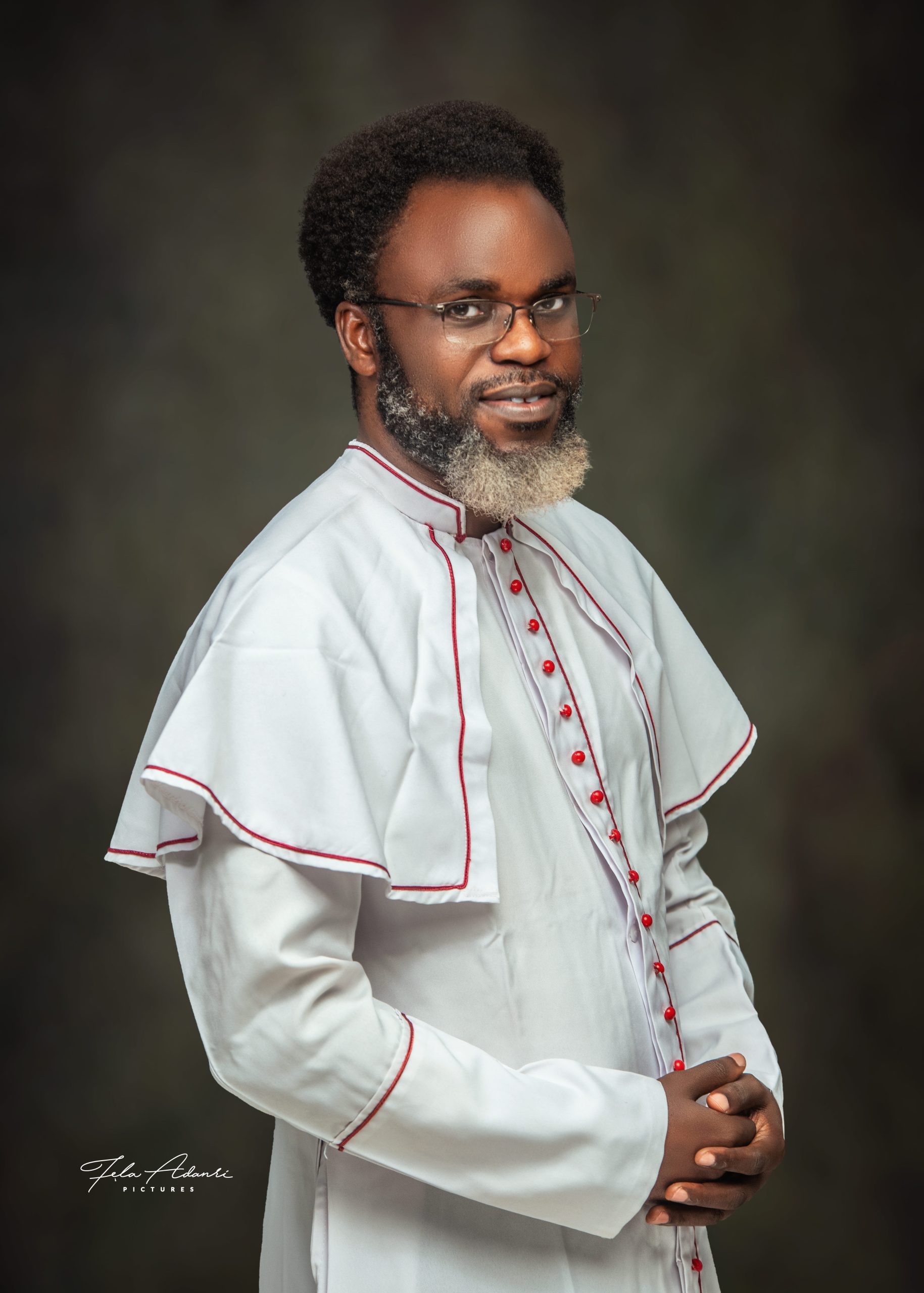
*Very Rev’d David Akinadewo-Adekahunsi (Aremolekun) is Editor-in-Chief of Nigerian Monitor Magazine. He is also a preacher, and music minister with a deep interest in Yoruba history, religion, education, and politics.
Email: [email protected]
08082870456