


*In this report, ENYINNAYA APPOLOS examines the political and legal interruptions that affected the governorship of some states in the South-East and South-South regions between 1999 and 2027.
The 1999 Constitution, as amended, grants Nigerian governors the right to an eight-year tenure, divided into two four-year terms.
Yet, the political reality in the South-East and South-South regions, as it is in other regions of the country, has often diverged sharply from this constitutional provision.
Between 1999 and 2027, several governors experienced interrupted tenures due to impeachments, judicial interventions, suspensions and other political disruptions, leaving their leadership incomplete and highlighting the fragility of executive mandates.
This analysis goes beyond cataloging dates. It examines how courts, electoral disputes, internal party dynamics and institutional mechanisms have shaped, and sometimes destabilised, the trajectory of governance in many states in the country. The pattern of broken tenures underscores the challenges of democratic consolidation in Nigeria, raising critical questions about the resilience of political institutions and the balance between legal authority and popular mandate.
For political analysts, historians, and engaged citizens, understanding these disruptions is key to appreciating the complex interplay between law, power, and society in Nigeria’s evolving democracy.
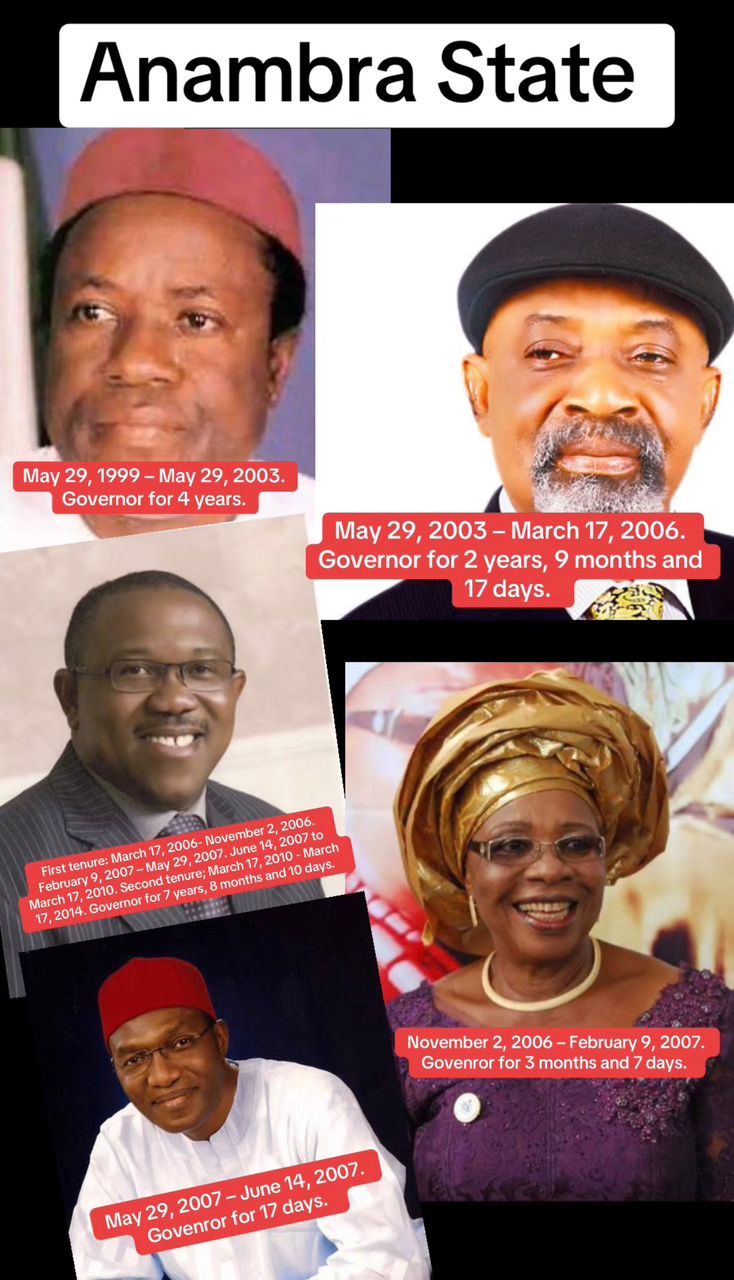
Anambra State
• Dr. Chinwoke Mbadinuju: May 29, 1999 – May 29, 2003. He was governor for 4 years.
• Dr. Chris Ngige: May 29, 2003 – March 17, 2006. He was governor for 2 years, 9 months, 17 days. He was removed by court.
• Peter Obi: First tenure: March 17, 2006, impeached November 2, 2006, returned from impeachment on February 9, 2007 – May 29, 2007. Re-instated June 14, 2007 to March 17- 2010. Second tenure; March 17, 2010 – March 17, 2014. Governor for 7 years, 8 months and 10 days.
• Dame Virgy Etiaba: November 2, 2006 – February 9, 2007. She was governor for 3 months, 7 days. She is Nigeria’s first female governor, became governor after Obi’s impeachment. She was deputy to Obi.
• Senator Andy Uba: May 29, 2007 – June 14, 2007. He was governor for just 17 days. He was removed by court.
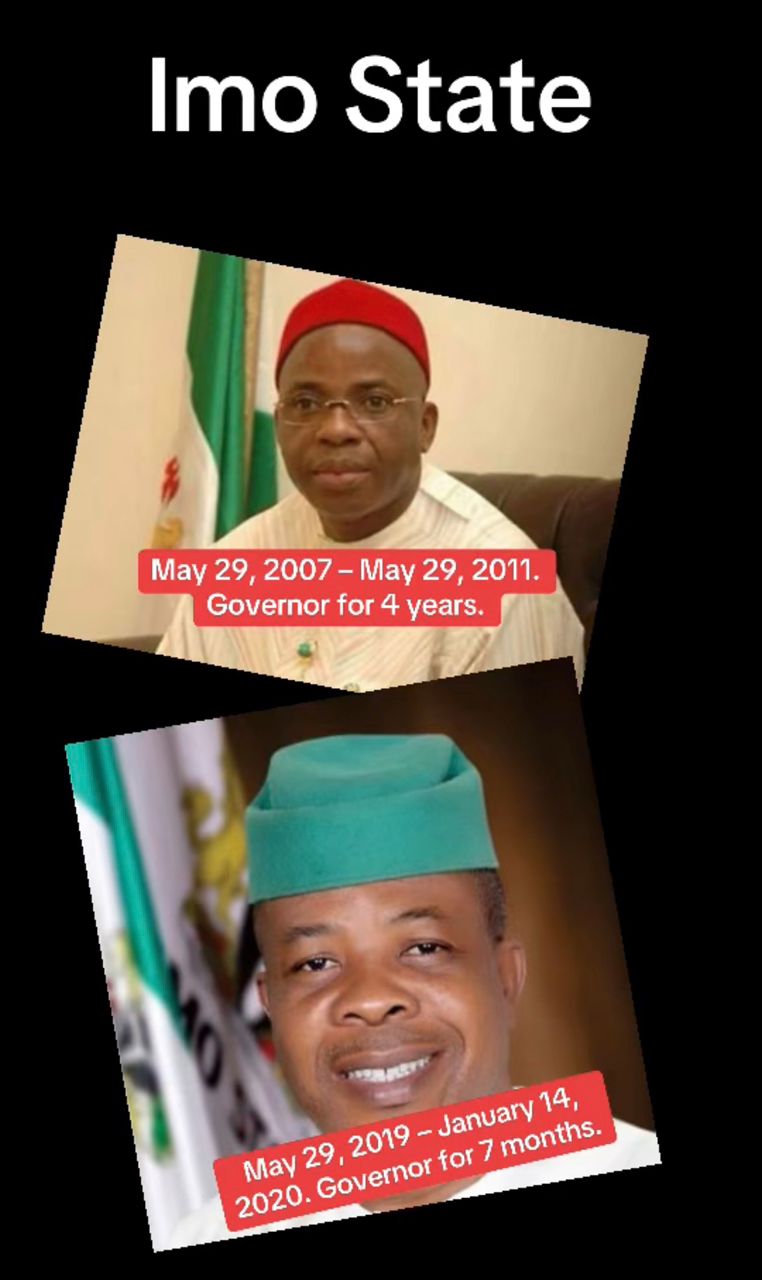
Imo State
• Chief Ikedi Ohakim: May 29, 2007 – May 29, 2011. He was governor for 4 years.
• Hon. Emeka Ihedioha: May 29, 2019 – January 14, 2020. He was governor for 7 months; removed by court.
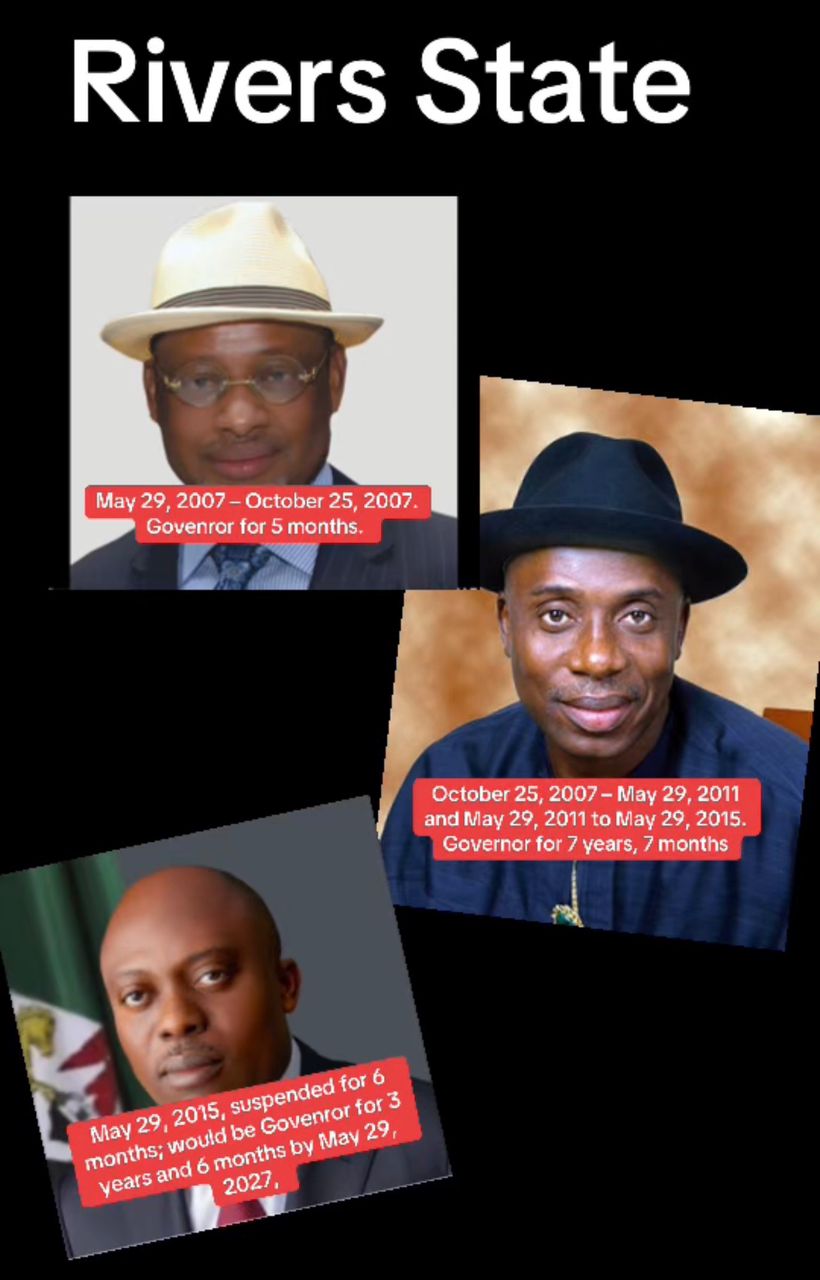
Rivers State
• Sir Celestine Omehia: May 29, 2007 – October 25, 2007. He was governor for 5 months; removed by court.
• Rotimi Amaechi: October 25, 2007 – May 29, 2015. He was governor for 7 years, 7 months. He was installed by Supreme Court in his first tenure.
• Sim Fubara: May 29, 2015, suspended for 6 months (March 18 to September 18 2025); by May 29, 2027, he would be governor 3 years and 6 months for his first tenure.
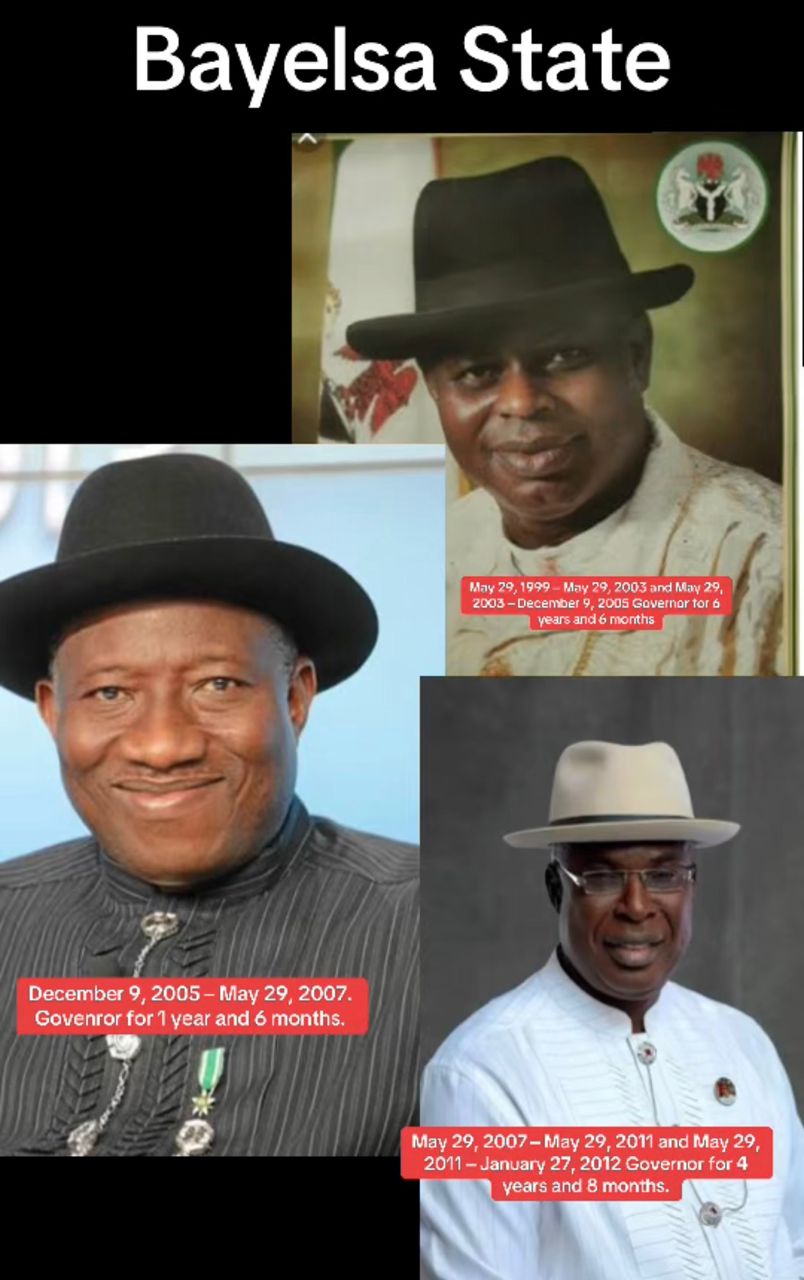
Bayelsa State
• Chief Diepreye Alamieyeseigha: May 29, 1999 – December 9, 2005. He was governor for 6 years, 6 months; impeached during second term.
• Dr. Goodluck Jonathan: December 9, 2005 – May 29, 2007. He was governor for 1 year, 6 months. He was deputy to Alamieyeseigha.
• Chief Timipre Sylva: May 29, 2007 – January 27, 2012. He was governor for 4 years, 8 months; removed by court during second term.
The history of broken gubernatorial tenures in these regions illustrates the ongoing tensions involving constitutional provisions, judicial authority and political realities. Each interruption is a case study in the challenges of sustaining democratic governance amidst contested elections, party intrigues, and institutional vulnerabilities.
As Nigeria continues to navigate its democratic journey, these examples provide lessons on the need for stronger institutions, the importance of legal safeguards, and the imperative of political accountability.
*Report and Photo Edits by Enyinnaya Appolos