


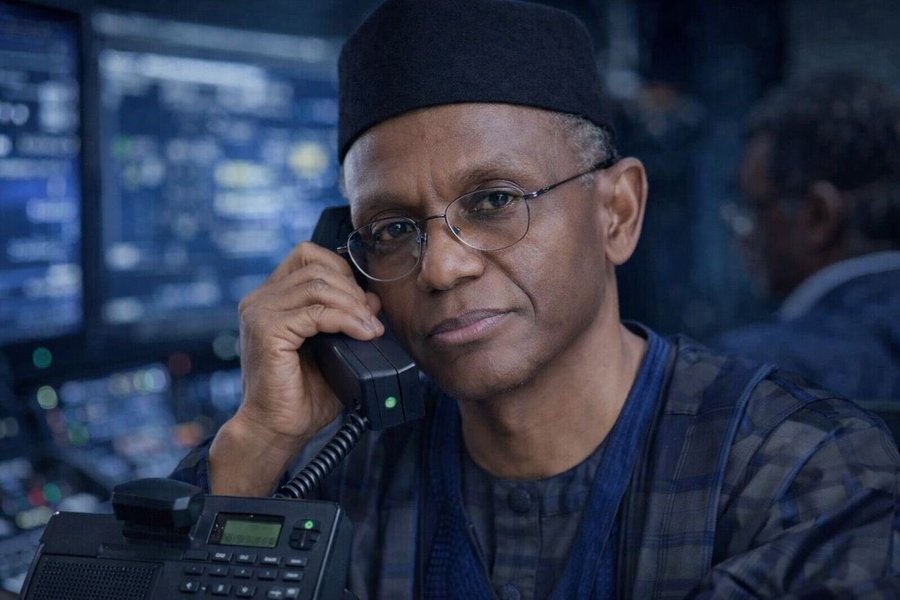
Former Kaduna State Governor Nasir El-Rufai has told the Federal High Court in Abuja that his earlier claim that the telephone conversations of National Security Adviser (NSA) Nuhu Ribadu were intercepted was not based on an actual phone-tapping operation but was political rhetoric intended to put the government under pressure.
El-Rufai made the clarification on Wednesday while opening his defence in the criminal proceedings instituted against him by the Department of State Services (DSS).
Testifying before Justice Joyce Abdulmalik, the former governor acknowledged that his February 13 television interview on Arise News contained statements suggesting that he and other opposition figures had access to intercepted conversations involving senior government officials.
However, he told the court that his remarks should not be understood literally.
El-Rufai explains controversial phone-tapping statement
During the February interview, El-Rufai had alleged that the government was monitoring opposition politicians, former presidents and senior judicial officers.
He specifically claimed that he knew about an alleged instruction by Ribadu to security operatives to arrest him because, according to his statement, those conversations had been intercepted.
When the interviewer asked how he obtained the information, El-Rufai responded that the NSA’s telephone conversations were being monitored by people within his circle.
But while giving evidence in court, the former governor said he had used the expression to create the impression that opposition politicians were aware of what government officials were doing.
Led in evidence by his senior lawyer, Paul Erokoro, SAN, El-Rufai said he never intended to suggest that he or his associates had actually intercepted Ribadu’s telephone conversations.
He described his statement as a rhetorical expression designed to make government officials uncomfortable over allegations of surveillance against opposition figures.
According to him, his real concern was that the government was allegedly monitoring political opponents without the necessary legal authorisation.
He maintained that he was highlighting what he considered unlawful surveillance by the authorities rather than admitting to an illegal interception operation.
Court listens to Arise News interview
The clarification followed the playing of a portion of El-Rufai’s earlier Arise News interview in open court.
His defence counsel had requested permission to play the recording to establish the context of the disputed remarks.
After the recording was played, Erokoro asked his client to explain what he meant when he claimed that they were listening to conversations involving the NSA and other government figures.
El-Rufai acknowledged making the statements but insisted that they were political expressions rather than descriptions of actual events.
He also maintained that unauthorised interception of telephone communications was illegal.
When questioned about the word “we” used during the interview, the former governor explained that he was referring to himself and other prominent opposition figures.
He denied that they had intercepted Ribadu’s telephone conversations.
Instead, he said information about an alleged plan to arrest and detain him had come through a mutual acquaintance.
El-Rufai declined to identify the individual, explaining that disclosing the person’s identity could compromise the source.
He further told the court that the acquaintance later visited him after the television interview and clarified that he had not actually tapped the NSA’s telephone.
El-Rufai traces relationship with Ribadu to 2003
The former governor also used his testimony to explain the history of his relationship with Ribadu.
He told the court that he had known the NSA since 2003, when he was heading the Bureau of Public Enterprises (BPE).
According to El-Rufai, he assisted Ribadu in establishing the Economic and Financial Crimes Commission (EFCC) by providing office accommodation and financial support.
He said their relationship subsequently deteriorated during the 2011 presidential contest, when Ribadu pursued the presidency and El-Rufai supported the candidacy of former President Muhammadu Buhari.
He further alleged that Ribadu’s position towards him was influenced by his opposition to President Bola Tinubu’s bid for another term in office.
These assertions were presented as El-Rufai’s account of their political differences and were not independently established by his testimony.
Former governor refuses to identify alleged sources
During cross-examination by the prosecution counsel, Oluwole Aladedoye, SAN, El-Rufai maintained that he would not disclose the identities of the people he had referred to as “we” during his television interview.
He similarly refused to identify the person who allegedly informed him about a meeting involving Ribadu, Kaduna State Governor Uba Sani and the Chairman of the Independent Corrupt Practices and Other Related Offences Commission (ICPC).
El-Rufai had claimed that the meeting involved discussions about ensuring his arrest.
He told the court that he became aware of the alleged plan before returning to Nigeria from Cairo on February 12.
The former governor also explained that he resisted an attempted arrest by DSS operatives at the airport because, according to him, they did not present a valid arrest warrant.
The prosecution challenged aspects of his account during the cross-examination.
El-Rufai denies involvement in Dadiyata’s disappearance
The former governor also addressed other allegations raised during his February television interview.
He maintained that his statements denying the theft of public funds and any knowledge of the disappearance of activist Abubakar Idris, popularly known as Dadiyata, were truthful.
Dadiyata disappeared in Kaduna in August 2019, during El-Rufai’s administration.
The former governor denied responsibility or knowledge of the circumstances surrounding the activist’s disappearance.
He insisted that the only statement from his television interview that was not factual in its literal sense was his claim concerning the interception of Ribadu’s telephone conversations.
El-Rufai also acknowledged during cross-examination that legal challenges he had filed over the alleged search of his residence using what he described as a defective warrant had been dismissed by the relevant courts.
Defence seeks to invite Ribadu and ICPC chairman
Towards the end of Wednesday’s proceedings, the prosecution disclosed that El-Rufai’s defence team had approached it before the sitting to seek assistance in securing the attendance of Ribadu and the ICPC chairman as defence witnesses.
Aladedoye told the court that he could not facilitate the request because arranging their appearance was outside his authority.
Erokoro subsequently indicated that the defence would make the appropriate applications to secure the attendance of the proposed witnesses.
The proceedings were adjourned by Justice Abdulmalik until February 15 and 16, 2027, for the continuation of El-Rufai’s defence.
The latest testimony introduces a significant development in the case, particularly because the former governor has now acknowledged that his widely reported phone-tapping statement was political rhetoric rather than a factual account of an interception operation.
Nevertheless, the court proceedings remain ongoing, and the allegations raised by both sides will have to be considered through the judicial process.