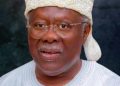



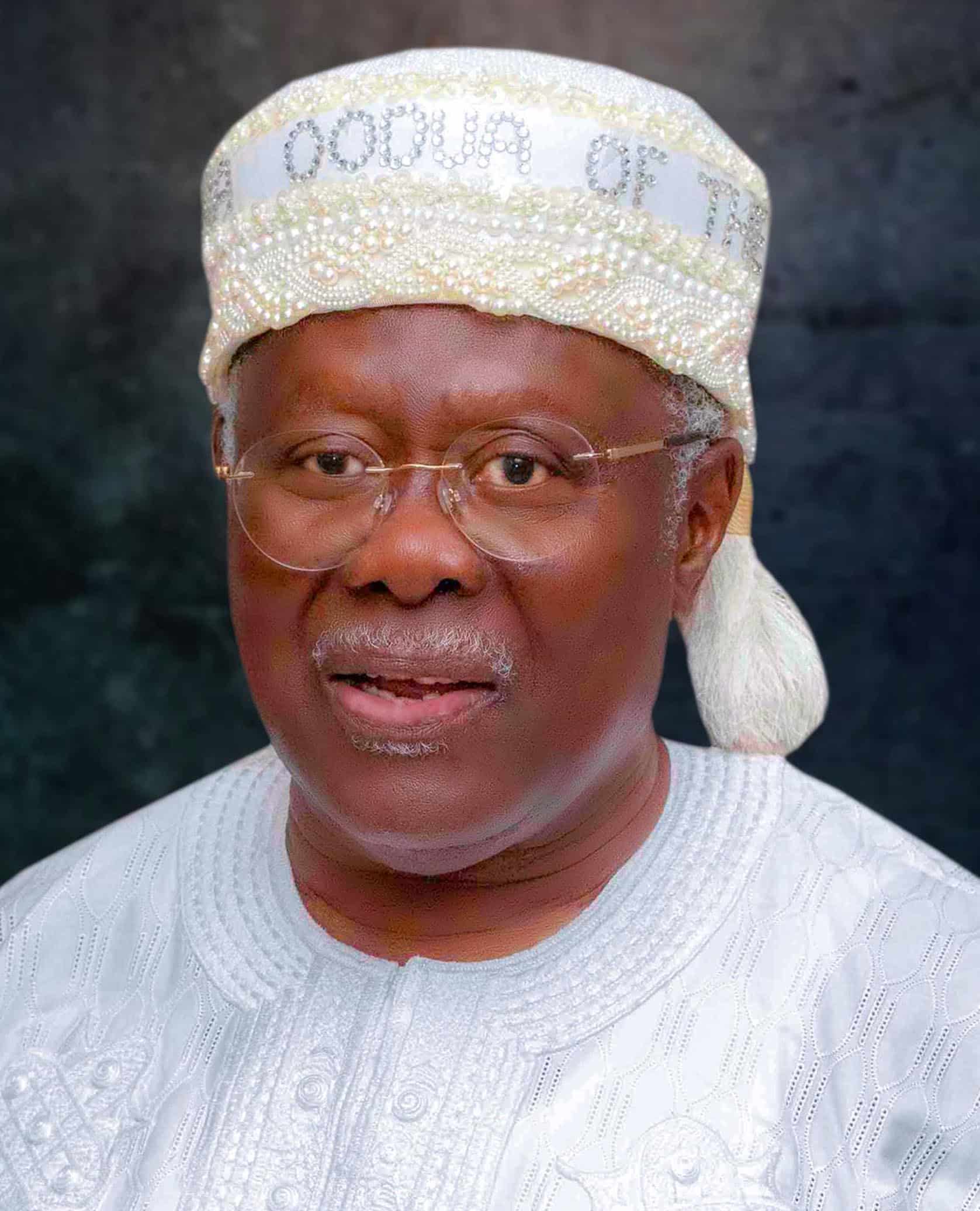
Former Deputy National Chairman of the Peoples Democratic Party (PDP), Chief Olabode George, has restated his opposition to former Vice-President Atiku Abubakar’s ambition to become Nigeria’s president in 2027, arguing that the country’s informal power-rotation arrangement requires the South to complete its eight-year turn before the presidency returns to the North.
George made his position known on Wednesday during a press conference in Lagos organised to mark his 81st birthday. He maintained that allowing another northern candidate to take over from President Bola Tinubu in 2027 would undermine the principle of political balance and fairness between Nigeria’s northern and southern regions.
The former military governor of Ondo State said the rotation arrangement was conceived by the founding leaders of the current democratic dispensation to promote national unity and ensure that the country’s major political interests were fairly represented.
According to George, the understanding was that the presidency and other strategic national positions would be distributed equitably among the six geopolitical zones, with power alternating between the North and South after every eight years.
George tells Atiku to wait until 2031
The PDP chieftain recalled that he opposed Atiku’s presidential ambition ahead of the 2023 general election because he believed the presidency should move to the South after Muhammadu Buhari’s eight-year administration.
He argued that the same consideration should apply in 2027, insisting that President Tinubu’s administration should be allowed to complete the South’s expected eight-year tenure.
George questioned why Atiku continued to pursue the presidency at every election cycle, suggesting that the former vice-president should put his ambition on hold until 2031, when the presidency would ordinarily be expected to return to the North under the rotation principle he advocates.
He also questioned whether Atiku was the only northern politician capable of seeking the country’s highest office.
George noted that Atiku would be approaching 85 years of age by 2031, adding that Nigerians would ultimately determine whether he remained suitable for the position.
Concern over conflicting court judgments
Beyond the presidential succession debate, George expressed serious concern about the state of Nigeria’s judiciary and its handling of politically sensitive disputes ahead of the 2027 general elections.
He criticised what he described as contradictory rulings by courts of equal jurisdiction on similar political matters, warning that such developments could create confusion for political parties, aspirants and electoral stakeholders.
According to him, unresolved legal disputes could undermine preparations for the forthcoming elections and potentially trigger political tension.
He urged judicial authorities to address outstanding cases without unnecessary delays and strengthen public confidence in the courts through consistency, fairness and respect for the rule of law.
George maintained that the judiciary must remain independent and impartial, particularly at a time when political parties and their candidates are preparing for another major electoral contest.
Calls for fairness in El-Rufai’s detention
The former PDP national officer also raised concerns about the continued detention of former Kaduna State Governor, Nasir El-Rufai.
George called on the judiciary to review the bail conditions imposed on El-Rufai, arguing that the legal process should not become an instrument for political intimidation or persecution.
He maintained that bail should be considered within the framework of constitutional rights, fairness and the presumption of innocence.
George urged the relevant judicial authorities to allow El-Rufai to return home while continuing to attend court proceedings, stressing that justice must be administered without political considerations.
Warns against political violence ahead of 2027
On the growing political atmosphere ahead of the 2027 elections, George condemned reported attacks on opposition gatherings and campaign activities in parts of the country.
He warned that violence, intimidation and deliberate attempts to weaken opposition parties could damage Nigeria’s democratic institutions.
The elder statesman appealed to President Bola Tinubu to caution members and supporters of the ruling All Progressives Congress (APC), as well as politicians across other parties, against acts capable of threatening peaceful political participation.
He stressed that opposition parties must be allowed to organise, express their views and compete for political power without fear.
George also called on the National Peace Committee, led by former Head of State, General Abdulsalami Abubakar, to intensify its engagement with political leaders and stakeholders to prevent violence before, during and after the 2027 elections.
Backs establishment of state police
George further renewed his support for the establishment of state police, describing decentralised policing as an important response to Nigeria’s worsening security challenges.
He identified kidnapping, banditry, terrorism and other violent crimes as threats that require a more responsive security structure.
Recalling his participation in the 2014 National Conference convened under former President Goodluck Jonathan, George said the proposal for state police had received unanimous approval at the conference.
He expressed satisfaction with the reported endorsement of the constitutional amendment proposal by lawmakers across Nigeria’s 36 states and called on President Tinubu to give the necessary assent and ensure effective implementation.
Calls for national unity and skills development
George also urged political leaders and citizens to reject ethnic divisions, religious intolerance and other forms of discrimination that continue to threaten Nigeria’s national cohesion.
He argued that the country’s development would remain difficult without deliberate efforts to promote equal opportunities and mutual respect among its diverse communities.
The retired naval commodore also advocated the establishment of skills acquisition centres across the country, saying vocational education and practical training could create opportunities for young people and strengthen national productivity.
He maintained that Nigeria needed stronger democratic accountability, judicial independence, respect for constitutional rights and institutions capable of serving the public without partisan interference.
‘We have only one country’
Reflecting on his 81 years of life and public service, George said his experiences had strengthened his determination to speak against injustice, political impunity and practices that could threaten Nigeria’s unity.
He urged Nigerians to place the collective interest of the country above personal ambitions and party loyalties.
George maintained that political differences should not prevent citizens from working together towards a common national future.
His remarks come as political parties and leading political figures continue to position themselves ahead of the 2027 general elections, with questions surrounding presidential zoning, party alliances, judicial disputes and electoral security expected to feature prominently in the unfolding political debate.
The central question remains whether Nigeria’s established political understanding on power rotation will influence the 2027 presidential contest or whether competing political interests will take precedence.