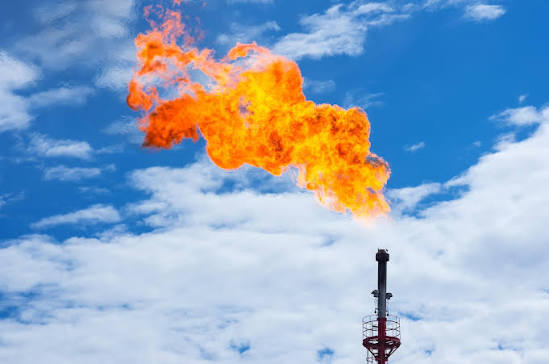
A Netherlands-based energy company has started preparations for a major project aimed at converting Nigeria’s wasted flare gas into electricity and Liquefied Petroleum Gas (LPG) for domestic use.
The initiative, being developed by Energy Ventures BV through its Nigerian subsidiary, Africa Gas Technology Company Ltd., began in Igwuruta, Ikwerre Local Government Area of Rivers State.
The company said the project would help transform gas currently being burned as waste into useful energy resources for Nigerians.
Project to Utilise Millions of Cubic Feet of Flared Gas
The Chief Executive Officer of Energy Ventures BV, Mr Herbert Okibe, announced the development during an inspection visit to the project site in Rivers State.
He said the planned facility would use about 5 million standard cubic feet (scf) of flared gas daily to generate electricity and produce cooking gas.
According to him, the objective is to reduce energy waste while expanding access to cleaner and more affordable energy sources.
“What we are trying to do is convert waste gas to sustainable energy for Nigerians who have been underserved,” Okibe said.
Pilot Project Designed for Wider Expansion
Okibe explained that the Rivers facility would serve as a pilot project to demonstrate the technical and commercial potential of converting flare gas into valuable energy products.
He said similar projects could later be developed across Nigeria and other countries.
The company estimated that Nigeria has more than 100 locations where large volumes of gas are currently being flared.
Okibe said the country remains among the world’s leading gas-flaring nations and must accelerate efforts to capture and utilise the wasted resource.
Gas Flaring Remains Long-Standing Challenge
Gas flaring has been a major environmental and economic concern in Nigeria’s oil-producing regions for decades.
The practice involves burning associated gas produced during crude oil extraction when the gas cannot be captured or processed.
Experts have linked prolonged gas flaring to environmental pollution, greenhouse emissions and health concerns among communities living near oil-producing areas.
Okibe said Nigeria had experienced gas flaring for more than 60 years, making conversion projects important for both environmental protection and energy development.
Regulatory Approvals Secured
The Energy Ventures chief executive said the project had received support from Nigerian and Dutch authorities.
He explained that the company had completed an Environmental Impact Assessment approved by the Federal Ministry of Environment.
The project has also obtained approval from the Nigerian Midstream and Downstream Petroleum Regulatory Authority (NMDPRA) to establish the gas processing facility.
Okibe added that the company had received approval from the Port Harcourt Electricity Distribution Company (PHED) and was seeking further approval from the Nigerian Electricity Regulatory Commission (NERC) before full construction begins.
Construction Preparation Underway
The company has commenced early physical activities at the project location, including fencing of the site.
Okibe said the development would require investment running into tens of millions of dollars, with funding expected from private and public sector partners.
He noted that support was coming from the Dutch Government and Nigerian initiatives, including the Midstream and Downstream Gas Infrastructure Fund.
Power Infrastructure Challenges Remain
Despite progress, the company identified challenges that could affect implementation.
Okibe pointed to weaknesses in Nigeria’s electricity infrastructure, including ageing power facilities, overloaded transformers and inadequate metering systems.
“We are not shying away from the challenges, we are fully aware that they are there,” he said.
He expressed optimism that government agencies, regulators and host communities would support efforts to overcome these obstacles.