


The Democratic Republic of the Congo has confirmed 3,200 Ebola infections and 1,405 related deaths as health authorities struggle to contain sustained transmission across several provinces.
The latest figures, based on data recorded up to July 25, also showed that 571 patients had recovered from the disease, while 773 remained in isolation for treatment and medical monitoring. (ECDC)
Health officials recorded 125 additional confirmed infections and 51 deaths within the latest 24-hour reporting period.
Most of the new infections were detected in Ituri Province, with smaller increases reported in North Kivu and Haut-Uélé. (ECDC)
Ituri remains the centre of the Ebola outbreak, accounting for 2,848 of the country’s confirmed cases—about 89 per cent of the national total.
The province has also recorded 1,184 deaths, with 28 of its 36 health zones affected by the virus. (ECDC)
North Kivu has reported 306 confirmed cases and 196 deaths, while Haut-Uélé has recorded 38 infections and 20 fatalities.
Cases have also been confirmed in South Kivu and Tshopo, bringing the number of affected provinces to five and the number of affected health zones to 47. (ECDC)
Health authorities said the outbreak remained in a period of sustained transmission, with continued circulation of the virus in affected communities.
The World Health Organization has linked the difficult response environment to insecurity, population displacement, mining-related movement and cross-border travel and trade. (World Health Organization)
These conditions can make it harder for health teams to identify suspected infections, trace contacts and safely transport patients to isolation and treatment facilities.
Officials said surveillance and response measures would be strengthened to detect cases earlier, limit community transmission and prevent the disease from spreading into additional areas.
The outbreak is caused by the Bundibugyo virus, one of the viruses capable of causing Ebola disease.
Unlike the Zaire strain of Ebola, there is currently no licensed vaccine or approved treatment specifically targeting Bundibugyo virus disease. Patients are mainly treated through early and intensive supportive care. (WHO | Regional Office for Africa)
The current outbreak was declared in May 2026 and has since become the Democratic Republic of the Congo’s 17th recorded Ebola outbreak since the virus was first identified in 1976.
The World Health Organization classified the outbreak as a Public Health Emergency of International Concern, triggering greater international coordination and support. (WHO | Regional Office for Africa)
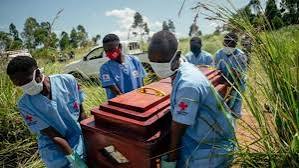
Response measures include laboratory testing, contact tracing, infection prevention in health facilities, safe burial procedures and the expansion of isolation and treatment services.
Health authorities are also increasing surveillance at border crossings and strengthening information-sharing arrangements with neighbouring countries. (WHO | Regional Office for Africa)
The outbreak has already been linked to cross-border infections in Uganda, highlighting concerns about continued population movement from affected areas.
Public-health agencies have stressed the importance of early reporting, community cooperation and strict infection-control practices in slowing transmission. (ECDC)
People in affected communities have been advised to avoid direct contact with the bodily fluids of infected individuals and to immediately report suspected cases to health authorities.
Officials have also warned against handling the bodies of people suspected to have died from Ebola without trained burial teams and appropriate protective measures.