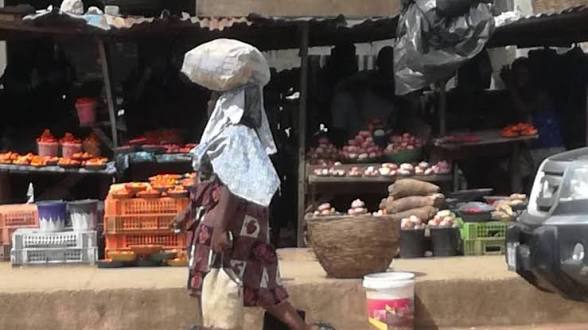
Vegetable traders and consumers in Lagos State have raised concerns over rising prices as persistent rainfall and flooding affect farms, supplies and market activity.
Residents said vegetables that are usually more affordable during the rainy season had become increasingly expensive in several Lagos markets.
Some traders attributed the price increases to flood damage on farms, while others said reduced customer turnout and supply shortages were affecting business.
Nancy Umoh, a resident of Agege, said she recently paid ₦3,000 for a bunch of waterleaf that previously sold for about ₦1,000.
Umoh said the price was unexpectedly high, particularly because waterleaf and pumpkin leaves, popularly known as ugwu, are generally expected to be cheaper during the rainy season.
According to her, the trader explained that flooding had destroyed more than half of the vegetables on her farm, reducing the quantity available for sale.
Umoh said consumers were now being forced to adjust their purchases and buy only what they could afford.
A vegetable seller who requested anonymity said she had only recently entered the business and had not personally suffered major rain-related losses.
She, however, acknowledged that some traders whose produce was damaged by flooding had increased their prices to recover part of their losses.
The trader suggested that not every price increase could be directly linked to flooding, noting that some sellers might have adjusted prices independently.
At Tejuosho Market, fruit and vegetable trader Ebele Okafor said she had not lost any produce to the rains.
Okafor said her main challenge was the decline in customer traffic during periods of heavy rainfall.
She explained that the rainy season could provide favourable conditions for vegetable production, but farmers risked losing crops if they failed to harvest before farms became flooded.
According to her, prompt harvesting could prevent losses and help reduce the cost of vegetables reaching Lagos markets.
Okafor said she usually sourced her produce from Mile 12 Market, one of the major food distribution centres in Lagos State.
She added that demand for fruits and vegetables often declined during prolonged rainy periods because fewer customers visited markets.
Another resident, Ruth Ike of Surulere, said high vegetable prices were reducing the quantity many households could include in their meals.
Ike said consumers now spent more money to obtain smaller portions of vegetables than they previously purchased.
She noted that pumpkin leaves were difficult to find for less than ₦500 in many Lagos markets.
According to her, some traders had no vegetables to sell because flooding had damaged their supplies.
The experiences shared by traders and consumers highlight how flooding can affect agricultural production, transportation, market supply and household food costs.
As the rainy season continues, Lagos residents said they hoped improved drainage, better farm protection and a more stable supply chain would help reduce vegetable prices.